

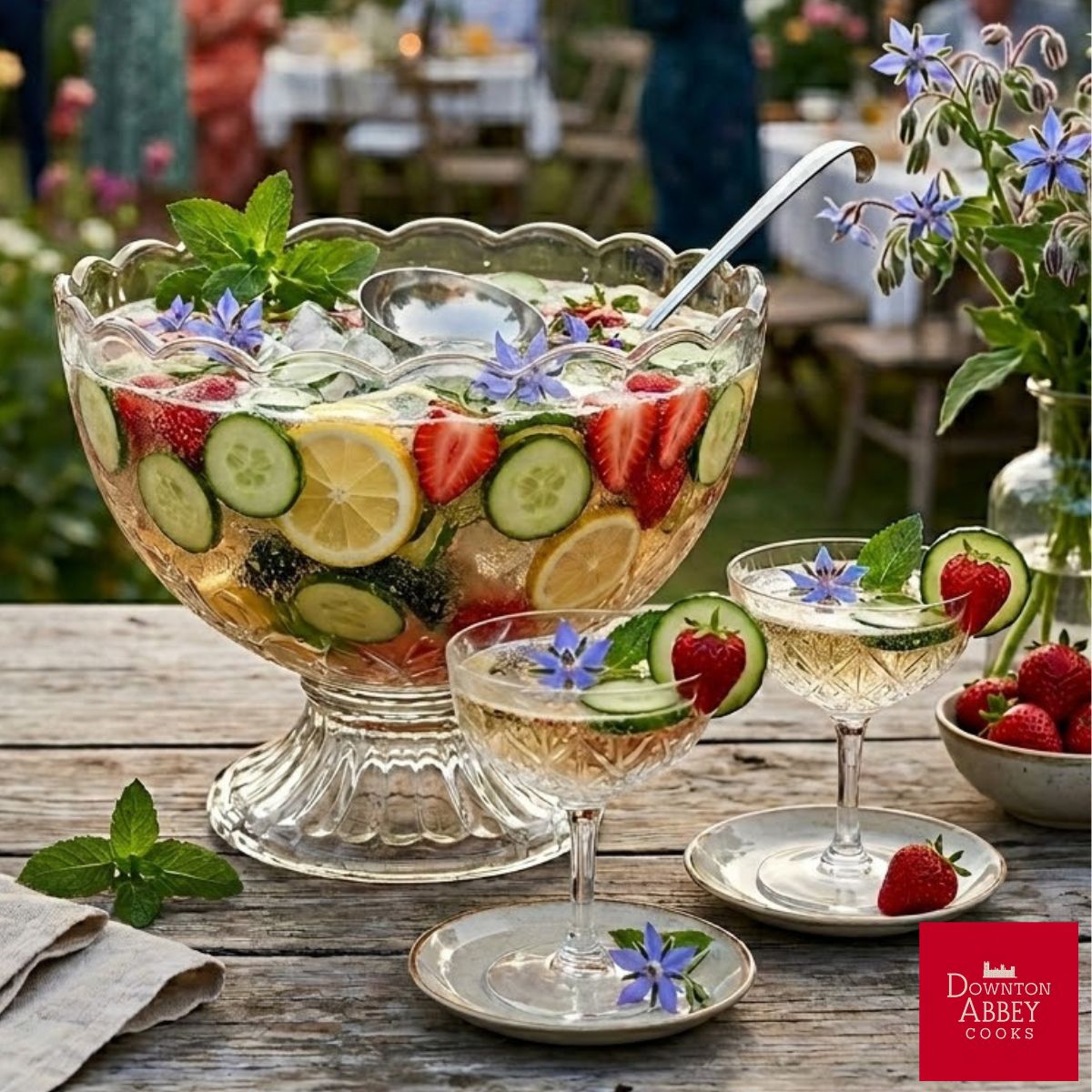
If you have ever wondered what the guests at a Downton Abbey garden party were drinking while they stood on the lawn making conversation, this is likely it. The Champagne cup was the standard outdoor drink of the Gilded Age and Edwardian era. It appeared at race meetings, regattas, garden parties, and cricket matches. It was elegant enough for society and practical enough for a crowd.
It is also, by modern standards, very easy to make.
What It Is
Champagne cup is a wine punch built on a bottle of dry champagne, stretched with soda water and given depth by brandy, a splash of liqueur, lemon, fresh fruit, cucumber, and mint. The result is light, cold, and refreshing. It reads as more festive than wine and less serious than cocktails.
The cucumber is not a garnish. It is a flavour element. Thinly sliced and steeped in the base for 30 minutes before the champagne goes in, it gives the cup a clean, slightly vegetal note that balances the fruit’s sweetness. Victorian hosts understood this. The cucumber belongs there.
The Cup Tradition
In British and American entertaining of the 19th and early 20th centuries, “cups” were a category of their own. Wine cups, cider cups, champagne cups, and claret cups all followed the same principle: a base wine diluted with soda water, sharpened with citrus, softened with a little spirit, and loaded with seasonal fruit and herbs.
Mrs. Beeton’s Book of Household Management (1861) includes a champagne cup as Recipe No. 1832: champagne, soda water, brandy or Curaçao, sugar, pounded ice, and a sprig of borage. She notes that when borage is unavailable, substitute cucumber rind. The cucumber was always the backup plan, not an afterthought. Most of the major Victorian and Edwardian household guides include similar versions. They were fixture drinks for any event that lasted more than an hour outdoors. They could be batched in large quantities, kept cold, and replenished easily. No bartender required.
Champagne cup sat at the top of the hierarchy. Claret cup was slightly more restrained, served at events where red wine was preferred or where the host was watching costs. A hostess who served champagne cup was signalling generosity.
The Derby Connection
At Churchill Downs, wealthy Gilded Age guests drank champagne cups alongside their mint juleps. The julep was the local tradition. The champagne cup was the society gesture, a nod to the transatlantic culture of entertaining that Louisville’s elite aspired to. Both drinks were in the hampers. Which one you reached for said something about who you were trying to be.
For a modern Derby party, a champagne cup works well for guests who do not drink bourbon. It is period-appropriate, easy to batch, and goes with everything on the table.
A Note on the Champagne
The Victorians and Edwardians used dry (brut) champagne in their cups. Sweeter styles will make the cup cloying. A dry prosecco or other dry sparkling wine works perfectly well and is considerably more affordable. The fruit, brandy, and soda water do most of the work. The base wine does not need to be expensive.
Champagne Cup
Equipment
Ingredients
- 1 750 ml bottle 750ml dry champagne or dry sparkling wine
- 1 cup 250ml soda water, chilled
- 2 oz 60ml brandy
- 2 oz 60ml Maraschino liqueur or Cointreau
- Juice of 1 lemon plus 1 lemon thinly sliced into rounds
- 1/2 English cucumber thinly sliced
- 1 cup fresh strawberries hulled and halved
- Fresh mint sprigs
- Borage flowers if available (traditional garnish)
- Ice


Instructions
Build the base
- Combine the brandy, liqueur, lemon juice, lemon rounds, cucumber slices, and strawberries in a large glass jug or punch bowl. Stir gently. Cover and refrigerate for at least 30 minutes to let the flavours come together.
Finish and serve
- Just before serving, pour in the champagne and soda water. Stir once, gently. Add ice and tuck in the mint sprigs and borage flowers if using.
- Serve immediately in wine glasses or champagne flutes
Notes
- Do not add the champagne and soda water until guests are ready. The cup goes flat quickly.
- Maraschino liqueur is the more period-accurate choice. Cointreau works well and is easier to find.
- For a non-alcoholic version, substitute sparkling white grape juice for the champagne and omit the brandy and liqueur. Add a splash of white grape juice concentrate for body.
- The cup can be scaled easily. Double or triple the base ingredients and keep chilled until needed, then add champagne and soda water in batches as glasses are refilled.