


For centuries in Britain, from the medieval period through the Georgian era, Epiphany marked the true height of festive celebration. While we now pack away decorations on Boxing Day, our ancestors were warming up. The Twelve Days of Christmas culminated in Twelfth Night, a riotous evening of feasting, role reversals, and one essential cake.
The Twelfth Night Cake: A Centrepiece of Fortune
The Twelfth Night Cake held a significance that our modern Christmas cake can only dream of. This wasn’t merely dessert—it was theatre, lottery, and social experiment rolled into one.
Bakers concealed a dried bean and pea within the rich, spiced fruitcake. Whoever discovered the bean in their slice became King of the Bean (or Lord of Misrule), while the finder of the pea was crowned Queen for the evening. These temporary monarchs ruled the festivities, their commands—however absurd—obeyed by all present. The tradition echoed the Roman Saturnalia, where masters served slaves, and the ordinary world turned delightfully upside down.
By the Regency period, confectioners transformed these cakes into spectacular showpieces. Queen Victoria’s 1849 Twelfth Cake measured thirty inches across, adorned with gilded sides and intricate sugar-paste figures depicting an elegant picnic scene. London pastry shops displayed elaborate examples in their windows, drawing crowds of admirers—both those who could afford such luxuries and the “little ragged boys” Charles Dickens described, admiring the heaven within.
Wassail, Lambswool, and the Warming Bowl
No Twelfth Night celebration was complete without wassail, the communal punch that gave the evening its other name: Wassailing. The word derives from the Old English “wæs hál,” meaning “be well” or “good health.”
The drink varied by household and region, but a proper wassail typically combined hot ale with sugar, nutmeg, ginger, and cinnamon. Roasted apples floated atop the brew, their flesh bursting and creating a fluffy white surface that earned the drink its affectionate nickname: lambswool. Some households added slices of toast to the bottom of the bowl—the origin of our phrase “to toast” someone’s health.
Beyond the drawing room, wassailing took to the orchards. In cider-producing counties like Somerset and Devon, villagers processed through apple orchards at dusk, singing to the trees and drenching their roots with wassail to ensure a bountiful harvest. This practice continues in parts of the West Country today, though now on “Old Twelfthy Night” (January 17th, the date before the calendar change of 1752).
What Happened to Twelfth Night?
The Industrial Revolution dealt the first blow. Workers who had once celebrated for twelve days found themselves permitted only on Christmas Day. The festive season compressed dramatically.
Queen Victoria administered the final strike. Finding Twelfth Night celebrations increasingly rowdy and inappropriate, she effectively discouraged their observance. By the 1870s, the tradition had faded mainly from fashionable society. The magnificent Twelfth Night Cake was demoted to Christmas cake, the hidden tokens migrated to the Christmas pudding as silver sixpences, and the Lord of Misrule vanished entirely.
Echoes in the Downton Era
By the time the Crawley family gathered at Downton Abbey, Twelfth Night had become a quiet affair—decorations taken down, Christmas officially concluded. Yet traces remained. The Theatre Royal, Drury Lane continued (and continues) serving Twelfth Night Cake on January 6th, honouring a 1795 bequest from actor Robert Baddeley. Rural communities still wassailed their orchards. And the Christmas cake sitting on Mrs. Patmore’s kitchen table carried within it the ghost of that grander, more theatrical ancestor.
Reviving the Tradition
Today, there’s renewed interest in celebrating the whole Twelve Days of Christmas. Baking a Twelfth Night Cake—whether a traditional rich fruitcake or the almond-filled Galette des Rois favoured in France—offers a meaningful way to extend the season. Hide a bean or coin inside, crown your King and Queen, and raise a glass of something warming.
After all, our ancestors understood something we’ve forgotten: the best celebrations deserve a proper finale.
What Epiphany traditions does your family observe? Share your stories in the comments below.
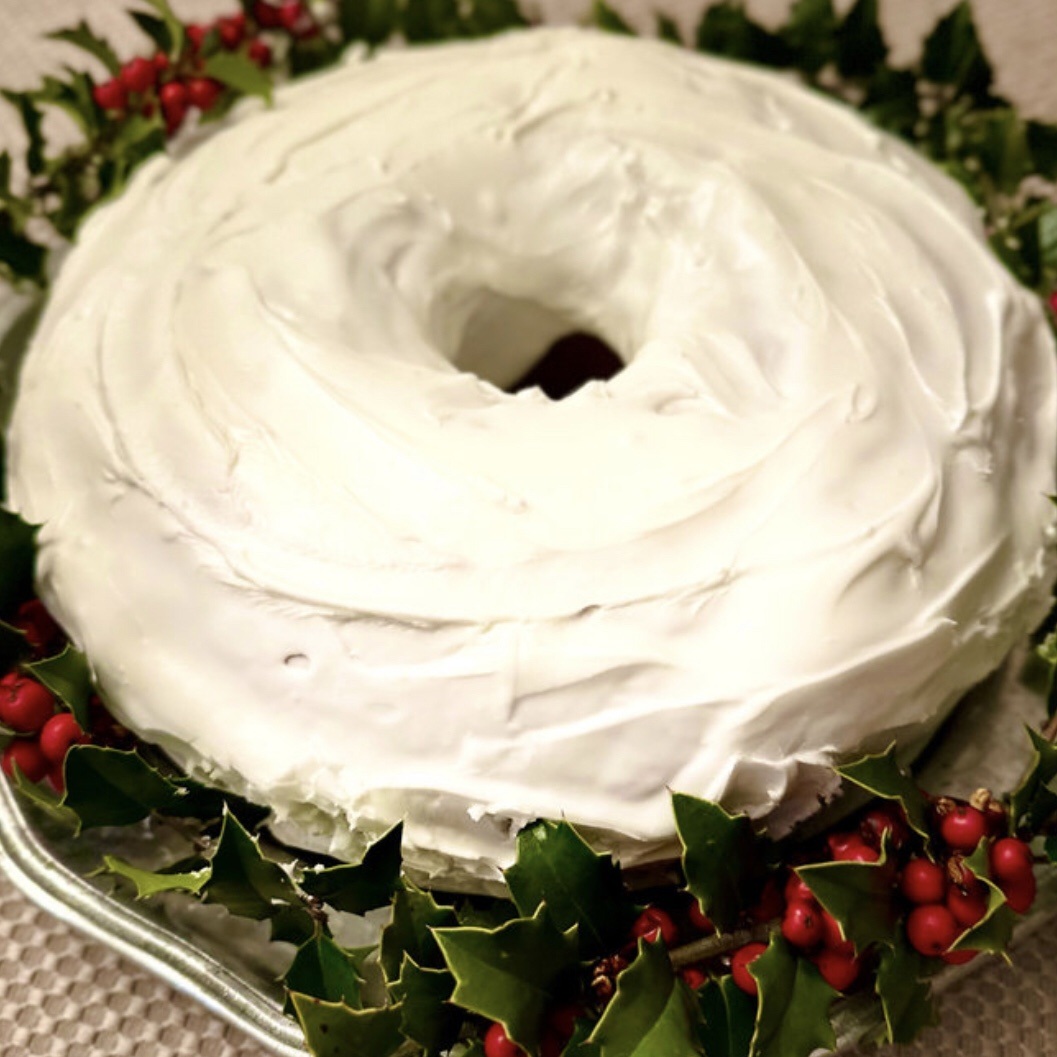
Twelfth Night Cake
Ingredients
- 3 1/2 cups cake flour
- 3 tsp. baking powder
- 1/2 tsp. salt
- 1 cup butter unsalted, softened
- 2 cups sugar
- 5 large egg yolks separated individually (reserve egg whites)
- 1/2 cup orange juice
- 1/2 cup milk
- 3 large egg whites
- 1 dried bean 1 dried black-eye pea, and 1 clove
- Red and white candles and fresh holly for garnish (optional)


Instructions
- Preheat oven to 350°F. Grease and flour a 10-inch tube pan and set aside. Sift flour, baking powder, and salt in a large bowl.
- In a separate bowl, cream butter using an electric mixer on medium-high speed until smooth. Gradually add the sugar, beating until light and fluffy, scraping down the sides of the bowl if necessary. Add the egg yolks one at a time, beating after each addition. Turn mixer speed to low and add flour alternately with orange juice and milk.
- In a separate glass or stainless steel bowl, beat egg whites on low speed until foamy, about 3–4 minutes, then increase speed to medium and continue to beat another 5–8 minutes or until stiff. Fold into the batter (best done by hand).
- Transfer the batter to the tube pan and bake for 1 hour or until a toothpick inserted into the center comes out clean. Cool for 10 minutes on a wire rack, then place another rack on top and carefully flip the cake. It should slide out of the pan onto the rack.
- Remove the bottom of the tube pan. Insert the bean, pea, and clove into different parts of the cake. Allow it to cool completely before frosting with royal icing.