

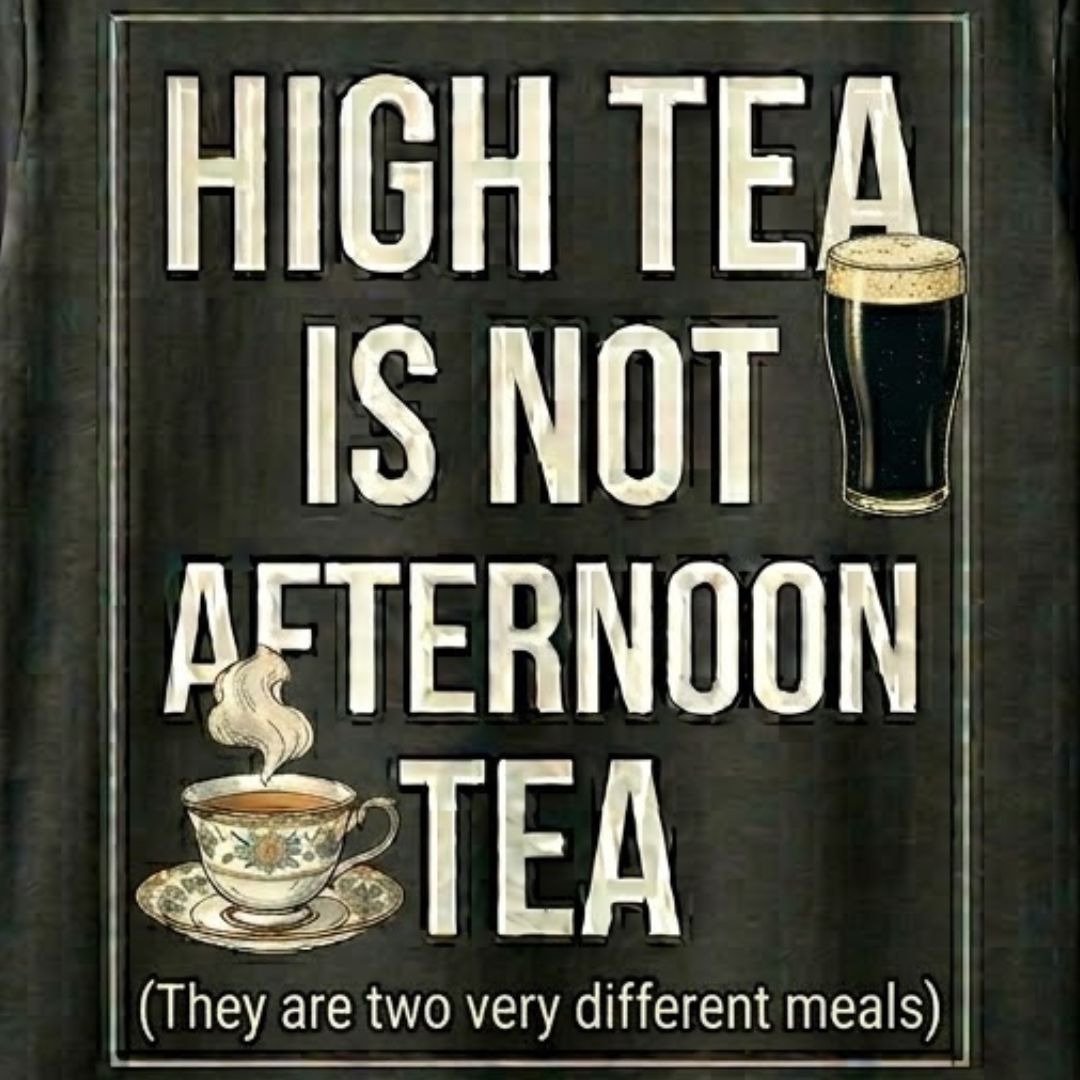
Look at this image. A pint of dark beer on one side. A fine china teacup on the other. Two very different things. Two very different meals.
Now look at how many tea rooms are advertising their Mother’s Day High Tea packages this week.
There is a problem.
If a venue is promoting High Tea for Mother’s Day, one of two things is true: they do not know the difference between these two meals, or they do know and are hoping you don’t. Neither is a good sign for what ends up on your table.
Before you book anything, read this.
A quick note: this is not a manifesto about who likes what. Some dads love a proper Afternoon Tea. Some moms would rather have a pie and a pint. Swap the plans if that fits your family better. The history works either way.
What Afternoon Tea Actually Is
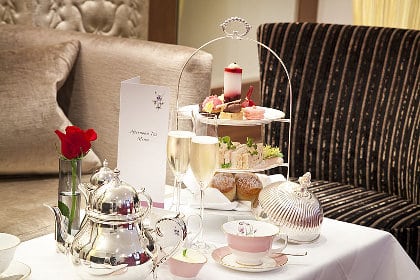
Afternoon Tea was invented around 1840 by Anna, the 7th Duchess of Bedford. The gap between lunch and the fashionably late Victorian dinner was too long. She started requesting a tray of tea, bread and butter, and small cakes to be sent to her rooms around 4 p.m. She invited friends. It spread. By the 1880s it was a social institution.
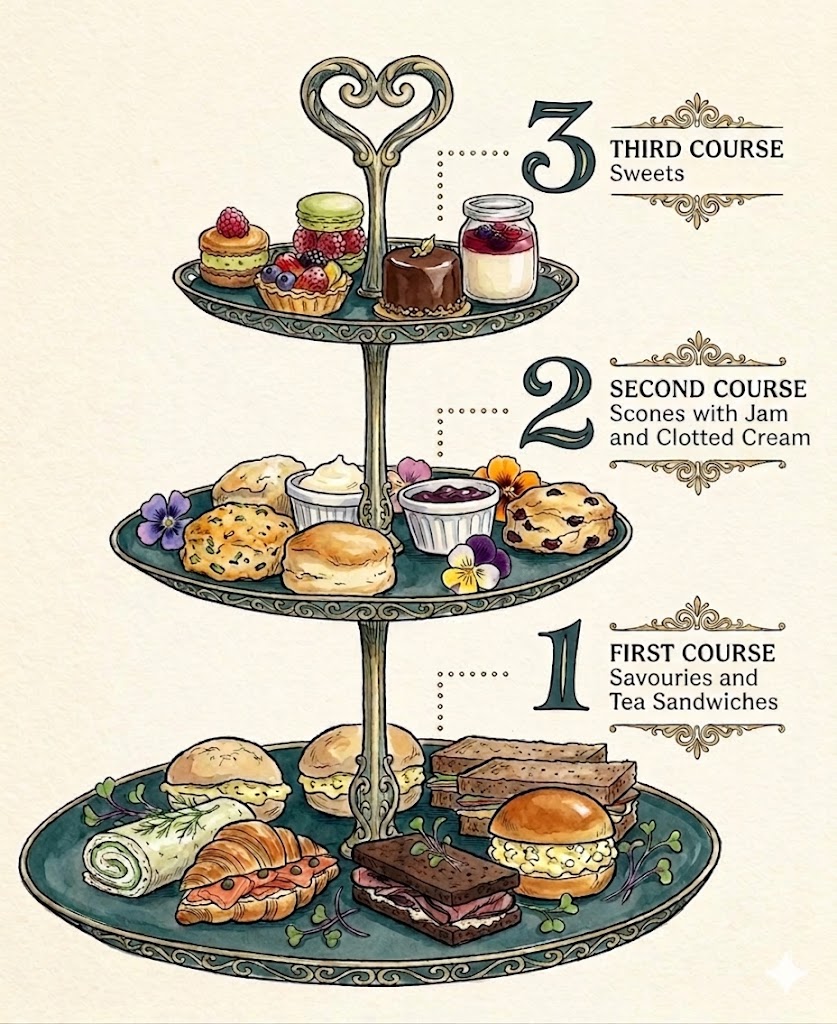
It is served between 3 and 5 p.m. The food is deliberate and delicate: finger sandwiches with crusts removed, warm scones with clotted cream and jam, small pastries and cakes arranged on a three-tier stand. Fine china. Low occasional tables. A drawing room or parlour.
If you have watched Downton Abbey, you have seen it. The upstairs version. That is Afternoon Tea.
This is what your mother is picturing when she drops hints about wanting something special for Mother’s Day.
What High Tea Actually Is
High Tea has nothing to do with elegance. The name refers to the height of the table, not the occasion.
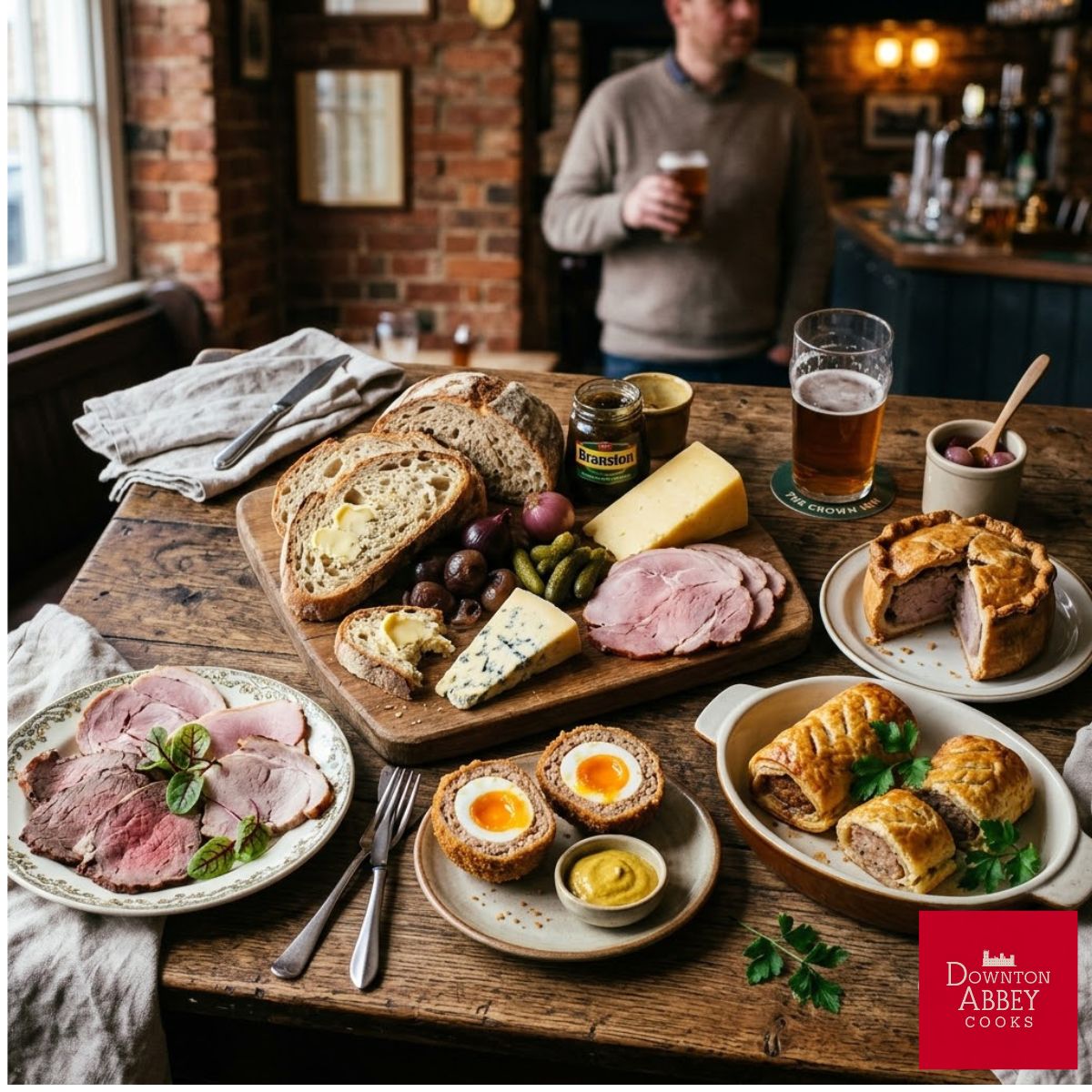
It was a working-class meal eaten at the kitchen or dining table, which stood higher than the low occasional tables used for Afternoon Tea, at the end of a working day around 5 to 7 p.m. The food was substantial and filling: cold meats, pork pies, sausage rolls, bread, cheese, pickles, and strong tea. Hearty. No-nonsense. The kind of meal you need after a full day of physical work.
The Downton Abbey equivalent is the servants’ hall. After a long shift. Before anyone has had a chance to change out of their work clothes.
High Tea is a perfectly good meal. There is nothing wrong with it. It is just not what anyone has in mind when they imagine a gracious Mother’s Day outing.
Why the Name Tells You Everything
When a tea room calls their offering High Tea instead of Afternoon Tea, that name is a signal. It tells you they have not bothered to understand the meal they are serving. And a business that does not understand the difference between its own product and an entirely different meal may also fail to grasp the details that make Afternoon Tea worth the price.
Those details matter more than most people realize.
Clotted Cream Is Not Optional
Clotted cream is not a topping. It is not interchangeable with whipped cream from a tub. It is certainly not a pat of butter. Clotted cream is thick, rich, and slightly golden on top. It has a completely different texture and flavour from anything you can substitute for it.
Substituting it is the clearest possible sign that a kitchen is going through the motions. It is the first thing a knowledgeable kitchen gets right and the first thing a careless one cuts corners on.
Before you book anywhere, ask one question: what comes with the scones? If the answer involves the word “whipped,” or is vague, or sounds defensive, that tells you what you need to know.
The Tea Matters Too
A proper Afternoon Tea uses loose-leaf tea, served in a pot, at the table. Bagged tea in individual cups is not Afternoon Tea. It is a hotel breakfast. A venue that charges Afternoon Tea prices and serves bagged tea has misunderstood the entire point.
The Sandwiches Should Be Made That Day
Finger sandwiches dry out quickly. If the corners are curling, they were made too far in advance. A venue that is serious about Afternoon Tea makes sandwiches fresh. This is a small thing that tells you a lot about everything else.
What to Look For Before You Book
A venue that truly understands Afternoon Tea will call it Afternoon Tea. That is the first filter.
Beyond the name, ask these questions before committing:
- Do you serve clotted cream with the scones? Not whipped cream. Clotted cream. If they pause or hedge, move on.
- Is it loose-leaf tea or bagged? Loose-leaf, served in a pot, is the standard for a proper Afternoon Tea.
- What time is service? Afternoon Tea is served between 3 and 5 p.m. If they are offering it at noon, they are serving a pricey lunch with scones.
- Is it a set menu or a buffet? A proper Afternoon Tea is a set, composed service. A buffet is something else.
Heritage hotels, historic properties, and dedicated tea rooms with a track record are generally safer bets than restaurants adding an Afternoon Tea option to their regular menu.
The Safest Option: Make Your Own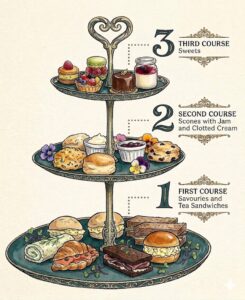
If you cannot find a venue that meets the standard, or you would rather skip the search entirely, make your own at home. You control every detail. No substitutions. No compromises on the cream.
The Menu
Finger sandwiches (bottom tier): Cucumber and cream cheese on white bread, smoked salmon with dill butter on brown bread, egg salad with cress on wholegrain. Trim the crusts. Cut into quarters. Make more than you think you need.
Scones (middle tier): Plain or currant, served warm, with proper clotted cream and good jam alongside. Devon tradition: cream first. Cornwall tradition: jam first. Let your mother decide. It is her day.
Small sweets (top tier): Macarons, jam tarts, shortbread, petit fours, a slice of Victoria sponge. Nothing that requires a fork.
The tea: Loose-leaf. English Breakfast, Darjeeling, or Earl Grey. Pot on the table. Let people pour for each other. That small gesture is part of the point.
Serve between 3 and 5 p.m. Tell your guests this clearly. Someone will eat a full lunch otherwise and then wonder why the scones are not landing.
And for Father’s Day in June: High Tea at the Pub
Here is where High Tea actually belongs.
A good local pub serves exactly what High Tea historically was: pork pies, sausage rolls, a ploughman’s plate of bread, cheese, and pickles, Scotch eggs, cold meats. Hearty, unpretentious, eaten at a proper table early in the evening.
No three-tier stand. No crustless sandwiches. No ceremony. Just good food and, if he likes, a pint alongside.
Dads are going to love this. They have been eating High Tea their whole lives without knowing it had a name. Now it does, and it turns out it is historically accurate.
Unlike every Mother’s Day High Tea package currently being advertised.
The Short Version
Afternoon Tea: delicate, elegant, 3 to 5 p.m., fine china, finger sandwiches, scones with proper clotted cream. Invented by a duchess. What your mother wants.
High Tea: hearty, working-class, 5 to 7 p.m., high table, pies, bread and cheese. Named after the furniture. What your father will happily eat at the pub in June.
If a venue calls it High Tea and means it as a selling point for Mother’s Day, they do not know what they are selling. You deserve better. So does your mother.
Book somewhere that gets it right. Or make it at home. Either way, get the clotted cream.
Happy Mother’s Day.
Frequently Asked Questions
What is the difference between High Tea and Afternoon Tea?
Afternoon Tea is a light, elegant meal served between 3 and 5 p.m., featuring finger sandwiches, warm scones with clotted cream and jam, and small pastries, served on fine china at a low table. It was invented in the 1840s by the Duchess of Bedford and is associated with upper-class British social life. High Tea is a hearty working-class meal served at a high dining table between 5 and 7 p.m., featuring pies, sausage rolls, bread, cheese, and cold meats. High Tea is not the fancier version of Afternoon Tea. They are two completely different meals.
Is High Tea appropriate for Mother’s Day?
No. High Tea is a working-class supper, historically eaten after a long day of physical work. Afternoon Tea is the correct choice for Mother’s Day. Most tea rooms and hotels that advertise High Tea for Mother’s Day are actually serving Afternoon Tea under the wrong name, which suggests they do not fully understand the meal they are offering. Use the name as a warning sign when evaluating venues.
How do I know if an Afternoon Tea venue is good?
Ask whether they serve clotted cream with the scones (not whipped cream). Ask whether the tea is loose-leaf served in a pot. Check that service times are between 3 and 5 p.m. A venue that calls their offering Afternoon Tea, serves proper clotted cream, and uses loose-leaf tea understands what they are doing. A venue that calls it High Tea and cannot answer basic questions about the cream is cutting corners.
What is clotted cream and why does it matter for Afternoon Tea?
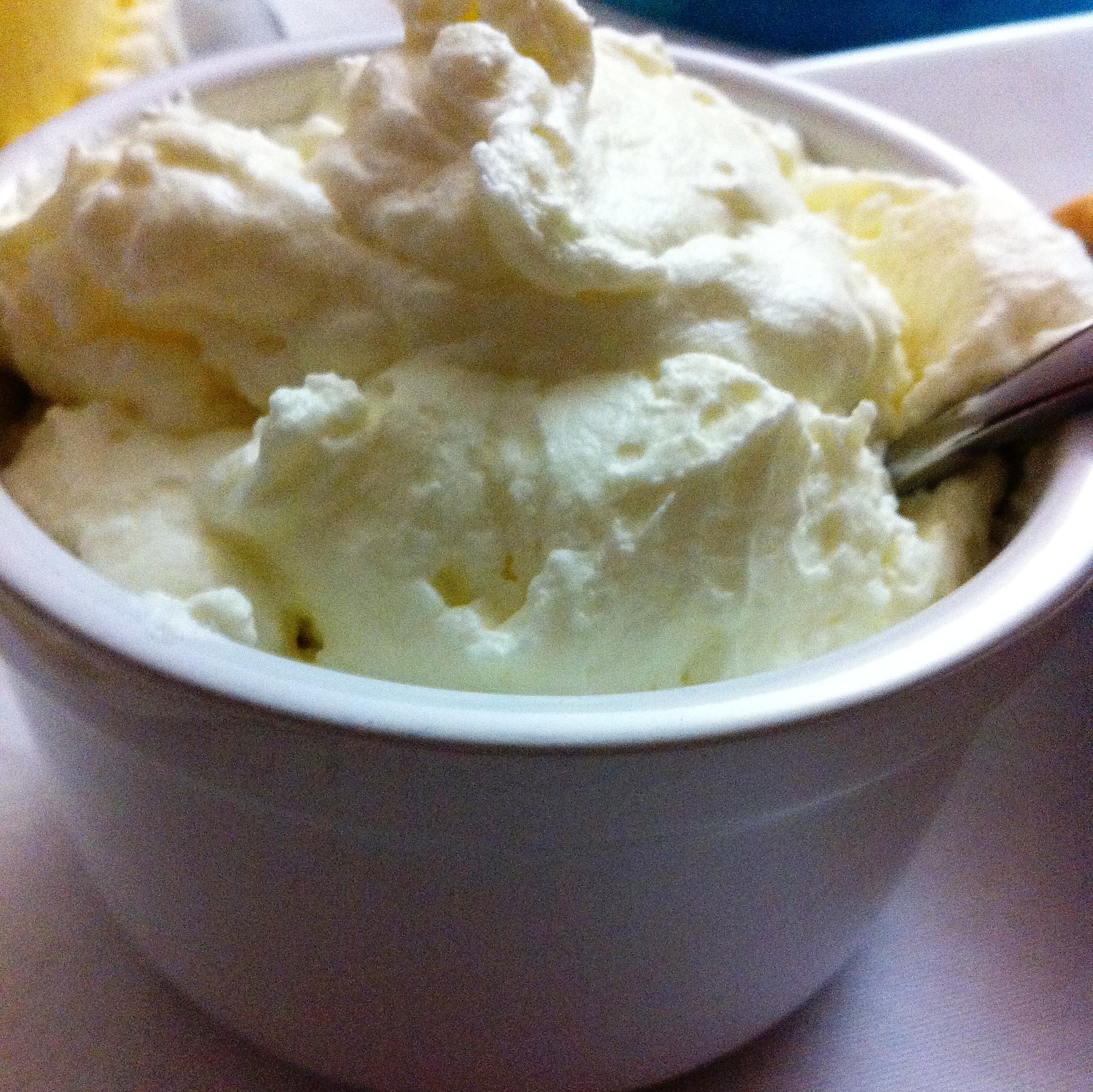
Clotted cream is a thick, rich cream made by slowly heating full-fat cow’s milk until the cream rises and forms a solid, golden-crusted layer. It is a traditional accompaniment to scones at Afternoon Tea and cannot be substituted with whipped cream or butter without changing the experience entirely. A venue that substitutes clotted cream is signalling that it does not take Afternoon Tea seriously.
When was Afternoon Tea invented?
Afternoon Tea was invented around 1840 by Anna, the 7th Duchess of Bedford, who wanted something to fill the long gap between lunch and the late Victorian dinner hour. She began requesting tea, bread and butter, and small cakes in the mid-afternoon. The practice spread through upper- and middle-class British society and became a lasting social institution by the 1880s.
What do you serve at a homemade Mother’s Day Afternoon Tea?
A proper homemade Afternoon Tea includes finger sandwiches (cucumber and cream cheese, smoked salmon, egg salad with cress), warm scones served with clotted cream and good jam, and a selection of small sweets such as macarons, lemon curd tarts, and shortbread. Use loose-leaf tea served in a pot and aim for a 3 to 5 p.m. service time. My Online guide to Afternoon Tea has everything you need.
What is High Tea at a pub for Father’s Day?
A pub High Tea for Father’s Day is a historically accurate and entirely appropriate way to celebrate. Traditional High Tea food includes pork pies, sausage rolls, a ploughman’s plate of bread, cheese, and pickles, Scotch eggs, and cold meats, served in the early evening. A good local pub that makes its own pies is ideal. This is what High Tea actually is, and most dads will enjoy it without needing to know the history behind the name.