

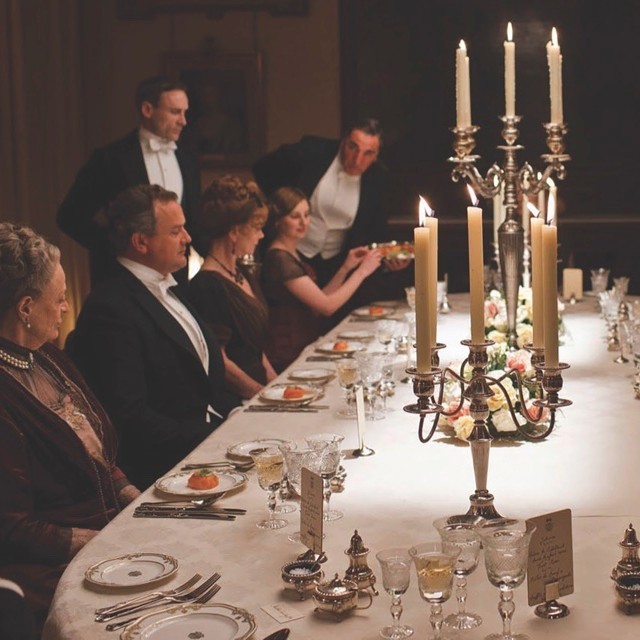
In Edwardian England, the dinner table wasn’t just for eating. It was where social rules played out, respect was earned, and every detail, down to the last piece of silver, was intentional. For families like the Crawleys, it set the tone before anyone even picked up a fork.
And even now, something about that style still sticks with us. So what made the Edwardian dining table so important, and why does it still capture our attention?
Edwardian Dining Tables: Style Meets Status
In Edwardian homes, the dining table didn’t just serve a purpose; it made a point. The bigger and more detailed it was, the more it said about the people who owned it. Most were made from solid woods like mahogany, oak, or walnut. These tables were strong and gave the room a rich, formal feel. They often had carved legs, glossy finishes, and enough presence to anchor the entire space, especially under candlelight and cut glass.
The more guests a table could seat, often 12 or more, the better. It wasn’t just about the size; it was a quiet way of saying, “We can host well!”. Carrying the same mindset today, an Amish dining table, built from solid wood and made to last, stays loyal to that tradition. Amish-made furniture doesn’t follow trends; it’s built with the kind of care, integrity, and class that turns a table into a fixture for generations.
Table Settings: Precision and Beauty
An Edwardian dinner table was staged with care. Every item had a specific spot, and every detail was intentional. Crisp white linens covered the table, sometimes trimmed with lace. Napkins were neatly folded and often placed directly on the plates. Fine china marked each place setting, and silverware was arranged from the outside, matching the course order. Crystal glasses: one for water, another one for wine, or sometimes more, stood in rows.
Centerpieces were elegant but never in the way. Low arrangements of seasonal flowers or polished candelabras made it easy to see and speak across the table. The menu followed a traditional order: soup, fish, meat, game, dessert, then cheese or fruit. At Downton, you’d often see staples like roast beef or a proper pudding making an appearance. If you’d like to bring that feel to your table, a dish like Eve’s Pudding offers a simple way to connect with that tradition and exactly the kind of dessert that would’ve closed a formal evening.
Etiquette: The Unspoken Rules
Edwardian dinners ran on rules. Everything had a system, from where you sat to who you spoke first. The host and hostess sat at opposite ends of the table. Their most important guests sat closest, while couples were deliberately separated to keep conversation flowing. No one started eating until the hostess picked up her fork.
Guests were expected to speak to the person on their right during the first course, then switch to the left for the next. Conversations stayed light; no politics, no money talk. Downton Abbey showed this clearly, with Carson keeping the rules in check and Lady Mary steering things back to safe ground when needed. The goal was to keep the mood pleasant and the evening running without tension or distraction.
Dining Room Layout: Behind-the-Scenes Flow
Edwardian dining rooms were built for efficiency. The layout gave staff the space they needed to serve each course smoothly, without disrupting the flow of the evening. Sideboards and serving tables lined the walls, holding spare plates, cutlery, and anything the staff might need mid-meal. This kept the main table uncluttered and let footmen reset between courses without delay or confusion. There was always enough room for staff to move quietly behind each guest, often without being noticed.
Doors to the kitchen were placed for quick access, so dishes stayed hot and service stayed sharp. Even the spacing of chairs was intentional; tight enough to feel formal, but wide enough for a footman to pass through with ease. Downton Abbey captured this rhythm perfectly. From where the sideboards stood to how much space was left between chairs, the set reflected how carefully Edwardian homes were planned to keep dinner running like clockwork.
Hosting Edwardian-Style Today
You don’t need a grand estate to host like the Crawleys. It’s possible to bring Edwardian charm into a modern dinner party with a few simple touches. Start with vintage-style tableware. Many thrift shops and online sellers offer china, crystal, and silverware that echo Edwardian design without the cost. Pair these with crisp white linens and low floral arrangements: roses, hydrangeas, or whatever’s in season all work well.
If you aim for formality, skip the group chat and send printed invitations. Add in handwritten place cards or polished candlesticks to finish the look. For the meal, stick to a set order and serve in courses; don’t rush everything to the table at once. A classic dish like Beef Wellington makes a perfect centerpiece. It’s rich, impressive, and the kind of main course that wouldn’t feel out of place in the Downton dining room.
A Legacy That Still Belongs at the Table
Edwardian entertaining wasn’t just about showing off. It was about intention; hosting with care, paying attention to the details, and making every guest feel like they mattered. And at the center of it all was the table.
That tradition still holds. At Amish Furniture Factory, dining tables are built the same way: solid wood, skilled hands, and made to last. Whether you’re serving roast beef or takeout, a well-made table brings people together.