

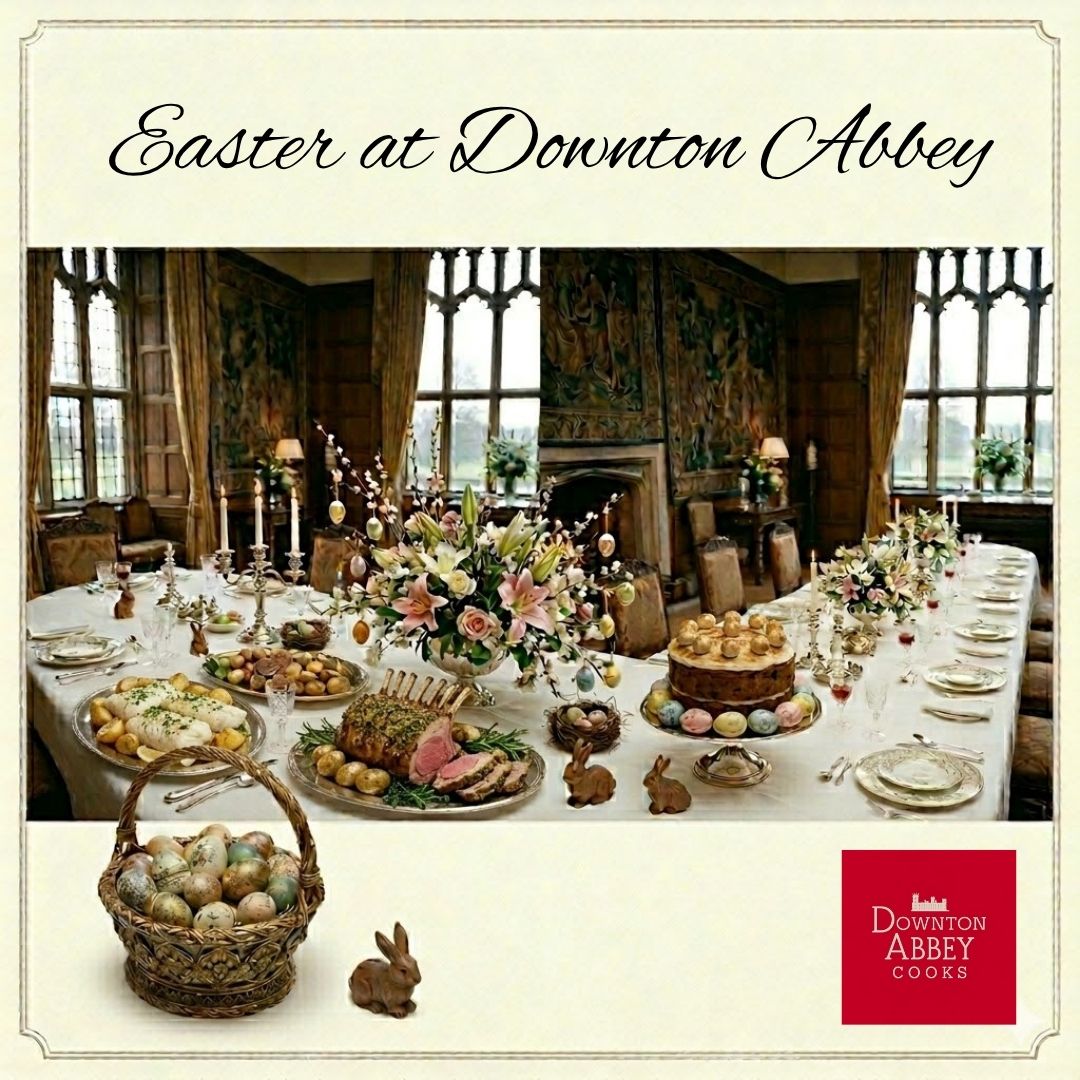
If you are planning your own Easter celebrations this year (Good Friday falls on April 3 and Easter Sunday on April 5, 2026), here is how the Crawley family and their staff would have marked the occasion, and how you can bring those traditions to your own table.
Good Friday: A Day of Fasting and Fish
Good Friday was the most sombre day in the Christian calendar, and the Crawley family would have observed it with genuine reverence. The church played a central role in Edwardian life, and even households that were relaxed about other religious observances took Good Friday seriously.
The rules were clear: no meat. This was not merely a suggestion. Abstaining from meat on Good Friday was a deeply rooted tradition across all classes in England, from the grandest country house to the humblest cottage. For Mrs. Patmore and her kitchen staff, this meant planning an entirely separate set of menus for the day.
Dining Upstairs: Elegant Restraint
The family would have sat down to an elegant but restrained dinner centred on fish. Poached salmon with mousseline sauce was a classic choice for grand households, though sole, turbot, and halibut were equally popular. The fish course would be the centrepiece rather than a prelude, reversing the usual order of importance in the Edwardian meal.
A typical Good Friday dinner upstairs might have included:
- A light consommé or cream of asparagus soup
- Poached or baked fish as the main course, with a rich sauce
- Eggs en cocotte or a savoury egg dish
- Spring vegetables from the kitchen garden
- A simple pudding, nothing too celebratory
Dining Downstairs: Simple and Honest
The servants ate more simply but still observed the no-meat rule. Fish pie, fish cakes made from salt cod, or a hearty kedgeree would have been typical fare. Mrs. Patmore would have been far too busy preparing for the Easter Sunday feast to fuss over an elaborate servants’ meal on Good Friday.
Fish and Chips: The Village Tradition

Beyond the walls of Downton, the village would have had its own Good Friday tradition: fish and chips. By the Edwardian era, chip shops had spread across Britain, and by the 1920s there were some 35,000 of them. The dish had its roots in the fried fish brought to England by Sephardic Jewish immigrants, who coated cod in flour or matzo meal and fried it in oil so it could be prepared before the Sabbath. Paired with chipped potatoes in the 1860s, it became the working-class meal of choice, and Good Friday was its biggest day of the year.
Carson would never have permitted it at the Downton table, but in cottages and servants’ halls across the country, a newspaper-wrapped parcel of fish and chips was Good Friday dinner. It still is for many families today.
Hot Cross Buns: Baked Before Dawn
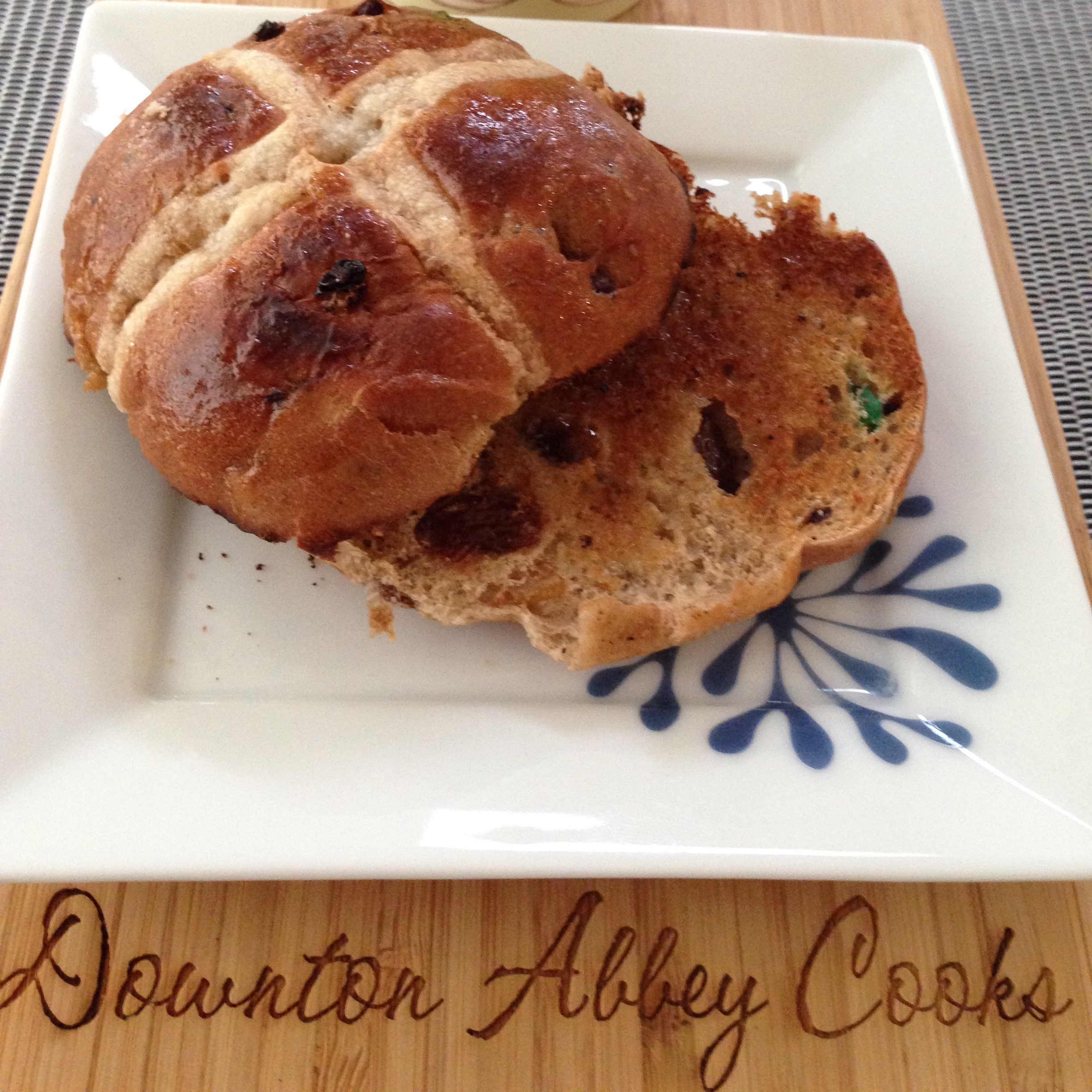
Good Friday meant one thing above all else in the kitchen: hot cross buns. These spiced, fruit-studded buns marked with a cross were baked fresh on Good Friday morning and served warm with butter. The tradition dates back centuries, and superstitions held that buns baked on Good Friday had almost magical properties: they would never go mouldy and could cure illness. Whether Mrs. Patmore believed any of that is debatable, but she would certainly have had a batch in the oven before dawn. If you want the flavour without the yeast work, try my Hot Cross Muffins for a quicker alternative.
Holy Saturday: The Calm Before the Feast
While Holy Saturday receives little attention in most Easter guides, it was arguably the busiest day in any country house kitchen. Mrs. Patmore and Daisy would have been working flat out.
Preparing the Lamb
The lamb for Easter Sunday dinner needed to be selected and prepared. In grand Edwardian households, a whole spring lamb or a crown roast of lamb would have been the centrepiece, requiring careful planning. The joint needed to be trimmed, seasoned, and readied.
The Simnel Cake
The simnel cake would have been baked earlier in the week (or even weeks before, as it keeps beautifully), but the marzipan balls still needed to be formed and the top toasted to a golden brown. Traditionally topped with eleven balls representing the faithful apostles (Judas excluded), the simnel cake was the showpiece of the Easter tea table.
Easter Biscuits and the Kitchen Garden
Easter biscuits would also have been baked on Saturday, their buttery, currant-studded rounds cooling on wire racks in the kitchen. These West Country favourites were a gift-giving tradition: servants returning home for Easter would carry a batch to their mothers, a custom tied to Mothering Sunday that carried into the Easter weekend.
The kitchen garden would have been raided for the first spring vegetables: asparagus, if it was an early year, new potatoes, fresh peas, and tender young carrots. Easter dinner was as much a celebration of spring’s arrival as it was a religious feast.
Easter Sunday: The Grand Celebration
Easter Sunday was the culmination of Lent, the end of weeks of fasting and restraint, and the Crawley family would have celebrated accordingly. After attending the morning church service at St. Michael and All Angels (the village church where we see the family worship throughout the series), they would have returned to Downton for a magnificent dinner.
How Easter Dinner Changed Over the Years
I have written in detail about how Easter dinner service evolved at Downton Abbey from 1912 through the late 1920s, and the changes are fascinating. In the pre-war years, Easter dinner could stretch to eight or ten courses, served by a full complement of footmen in white gloves. By the late 1920s, the meal had been streamlined to five or six courses, reflecting both the post-war servant shortage and changing tastes.
The Lamb: Always the Centrepiece
But one thing never changed: the lamb. Roast spring lamb with mint sauce was the undisputed centrepiece of Easter Sunday dinner, and it carried deep symbolism. The lamb represents both the Paschal lamb of the Jewish Passover and the Christian symbol of Christ as the Lamb of God. This was not simply a menu choice; it was a statement of faith brought to the dining table.
Alongside the lamb, you might have found:
- Duchess potatoes, piped into elegant rosettes and gilded with egg wash
- Fresh spring vegetables, glazed and arranged with care
- A Charlotte Russe or fruit compote for the sweet course
- The simnel cake was served at afternoon tea rather than dinner (by the 1920s, this had become the norm)
- Easter biscuits alongside tea
Easter Sunday was also one of the few days when the boundaries between upstairs and downstairs softened slightly. The servants would have had their own festive dinner, and in some households, the family sent down a portion of the Easter lamb as a gesture of goodwill. Carson would have presided over the servants’ hall meal with the same gravity he brought to the dining room above.
Carrot Cake: Older Than You Think
One Easter sweet with a longer history than most people realize is carrot cake. The cream cheese-frosted version we know is a 1960s American creation. But carrot-based cakes and puddings had been part of English baking for centuries. Medieval cooks turned to carrots as a sweetener when sugar was scarce. Carrot puddings appeared in British cookbooks throughout the 1700s and 1800s. A recipe for “Crocus Carrot Cake” was published in the Ladies’ Home Journal in November 1912. Squarely in the early Downton era.
Bringing Downton’s Easter to Your Table
You do not need a country house or a staff of twelve to recreate the spirit of a Downton Abbey Easter. The traditions translate beautifully to a modern kitchen.
For Good Friday: Bake a batch of hot cross buns (or hot cross muffins if time is short) and serve a simple fish dinner. My Edwardian Baked Cod with Parsley Sauce recipe is exactly what Mrs. Patmore would have prepared for Good Friday: straightforward, comforting, and respectful of the day’s traditions.
For Easter Sunday: A roast lamb or crown roast makes a stunning centrepiece. Serve it with Duchess potatoes and the best spring vegetables you can find. Have a simnel cake ready for tea, and set out a plate of Easter biscuits for anyone who wanders into the kitchen.
For more Easter traditions and recipe ideas, visit my complete Easter traditions guide.
Frequently Asked Questions
What did they eat on Good Friday at Downton Abbey?
The Crawley family would have abstained from meat on Good Friday, as was traditional across England. The main meal centred on fish, typically poached salmon or baked cod with a rich sauce. Hot cross buns were baked fresh in the morning and served warm with butter. The day’s meals were simpler and more restrained than usual, reflecting the solemnity of the occasion.
Why is lamb the traditional Easter meat?
Lamb has been the centrepiece of Easter dinner in Britain for centuries, carrying both religious and seasonal significance. It represents the Paschal lamb of Jewish Passover and symbolizes Christ as the Lamb of God in Christian tradition. Practically, spring lamb was also the freshest meat available at Easter, as ewes lambed in late winter and early spring.
What is simnel cake, and when is it served?
Simnel cake is a rich fruit cake covered in marzipan, traditionally served at Easter and on Mothering Sunday. It dates back to medieval England. The cake is topped with eleven marzipan balls representing the faithful apostles (Judas is excluded). At Downton Abbey, simnel cake would have been served at afternoon tea on Easter Sunday rather than as part of the formal dinner.
What are Easter biscuits?
Easter biscuits are buttery, spiced cookies studded with currants that originated in the West Country of England. They have ancient roots in pagan spring celebrations and were later adopted into Christian Easter traditions. The circular shape represents the cycle of life and renewal. They were traditionally baked on Holy Saturday and given as gifts.
Did the Downton Abbey servants celebrate Easter too?
Yes. The servants would have had their own festive Easter dinner in the servants’ hall, and in many country houses, a portion of the Easter lamb was sent downstairs as a gesture from the family. Easter was also one of the occasions when servants might receive a half-day to attend church services or visit family.