
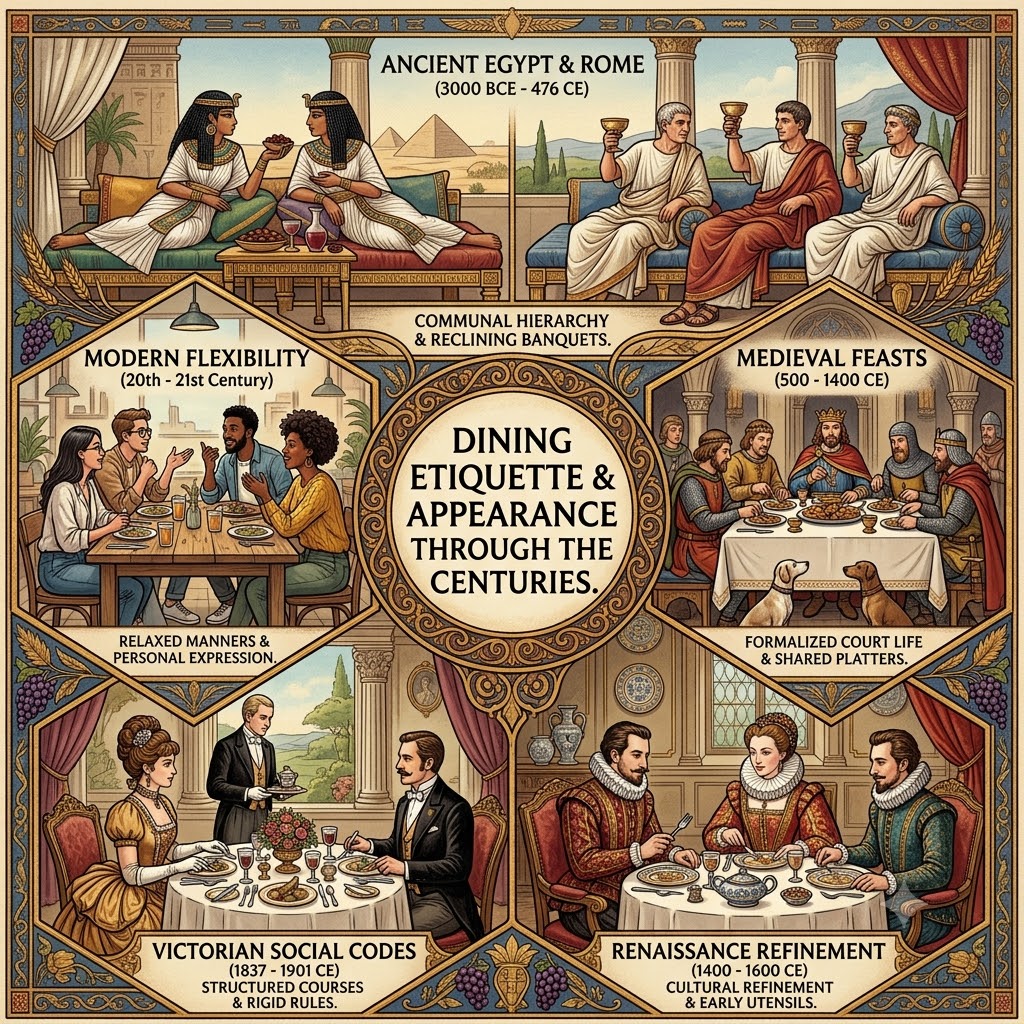
 Dining has always meant more than simply eating a meal. Across different eras and cultures, it has reflected how societies organize themselves, what they value, and how people are expected to behave in social settings. From ancient royal feasts to today’s casual dinner gatherings, the dining table has long been a place where manners, identity, and appearance quietly communicate status and intention.
Understanding how dining etiquette has changed over time helps reveal how deeply social expectations are tied to everyday behavior. Guest appearance, in particular, has always carried meaning. Before a conversation even begins, clothing, grooming, and presentation often shape first impressions and signal respect for the occasion.
Dining in Ancient Civilizations
In ancient Egypt, Greece, and Rome, dining was closely connected to hierarchy and social order. Meals were often communal, especially in Greece and Rome, but the structure of the dining space made status visible. In Roman society, for example, elaborate banquets were held in dining rooms where guests reclined on couches arranged according to rank. The most honored guests were placed closest to the host, while others were positioned further away.
Food itself was also a reflection of status. Certain dishes and ingredients were reserved for wealthier guests, reinforcing social differences during the meal. Dining was not only about nourishment but also about demonstrating power, influence, and belonging within society.
Appearance played an equally important role. Guests were expected to present themselves according to their social standing. Cleanliness, grooming, and clothing all communicated respect for both the host and other attendees. In many cases, appearance acted as a silent indicator of class before any interaction took place.
Medieval Feasts and Structured Hierarchies
During the medieval period in Europe, dining became even more formalized within the noble classes. Large feasts were central to court life and often served political or diplomatic purposes as much as social ones. These gatherings followed strict rules that governed seating arrangements, behavior, and even the order in which food was served.
Communal dining was still common, with shared platters placed on long tables. However, etiquette dictated how guests were expected to eat, when to begin, and how to interact during the meal. Even gestures and conversation were influenced by rank and proximity to the host.
Guest appearance during this period became a strong marker of identity and privilege. Clothing materials, colors, and accessories signaled wealth and social position. Arriving improperly dressed could result in embarrassment or exclusion from certain parts of the event. In this way, appearance was not only personal expression but also a form of social communication.
The Rise of Formal Dining in the Renaissance
The Renaissance period introduced a shift toward refinement in both dining practices and table manners. As cultural exchange expanded across Europe, dining became more structured and sophisticated. Table settings grew more elaborate, and etiquette began to develop into a more standardized system.
One of the most notable changes was the gradual introduction of utensils such as forks, which transformed how food was consumed. This shift influenced not only eating habits but also how guests interacted at the table, encouraging more controlled and deliberate behavior.
During this period, appearance became increasingly tied to cultural refinement. Guests were expected to reflect the elegance and sophistication of their hosts through their clothing and grooming. Fashion began to play a greater role in social life, and presentation became a visible expression of education, status, and taste.
Victorian Dining Etiquette and Social Codes
The Victorian era is often associated with some of the most detailed and structured dining etiquette rules in history. Formal dinners during this time were highly organized, often consisting of multiple courses served in a precise sequence. Each stage of the meal came with its own expectations regarding posture, conversation, and utensil use.
Silence or restrained conversation during certain courses was considered appropriate, while more relaxed interaction was reserved for later stages of the meal. Dining behavior was closely observed, especially in upper-class households, where etiquette reflected upbringing and social discipline.
Guest appearance during the Victorian period became a direct extension of reputation. Dressing appropriately was essential, particularly for formal gatherings. Accessories, hairstyles, and grooming choices all contributed to how a guest was perceived. Presentation was not simply about fashion but about demonstrating respectability and social awareness.
Modern Dining and Evolving Expectations
In contemporary society, dining etiquette has become far more flexible, influenced by cultural diversity and changing social norms. While formal dining still exists in certain contexts, everyday meals are generally more relaxed and informal.
Despite this shift, the importance of presentation has not disappeared. In professional settings, formal dinners, or social gatherings, appearance still plays a role in shaping first impressions. Being well-presented is often interpreted as a sign of respect for both the host and the occasion.
Modern style also allows for more personal expression. Small details in clothing and accessories can reflect individuality and personality. Even practical items, such as eyewear, can contribute to how someone presents themselves in social environments. For example, simple choices like eyeglasses combine function with personal style, showing how everyday items can subtly influence overall appearance.
The Relationship Between Etiquette and Social Identity
Across all historical periods, dining etiquette and guest appearance have shared a deeper social function. They are not only about rules or fashion but about communication. The way a person behaves and presents themselves at the table often signals respect, awareness, and belonging within a social setting.
Even as traditions have evolved and rules have relaxed, the underlying principle remains consistent. Dining is a shared social experience, and both behavior and appearance continue to influence how individuals are perceived within that space.
Conclusion
Dining etiquette has transformed significantly throughout history, shifting from rigid, hierarchical systems to more flexible and inclusive modern practices. However, the connection between behavior, appearance, and social perception has remained constant across centuries.
From ancient banquets to modern dinner tables, guests continue to communicate through both manners and presentation. While the formal rules may change over time, the importance of awareness, respect, and thoughtful presence at the table remains a lasting part of human social life.