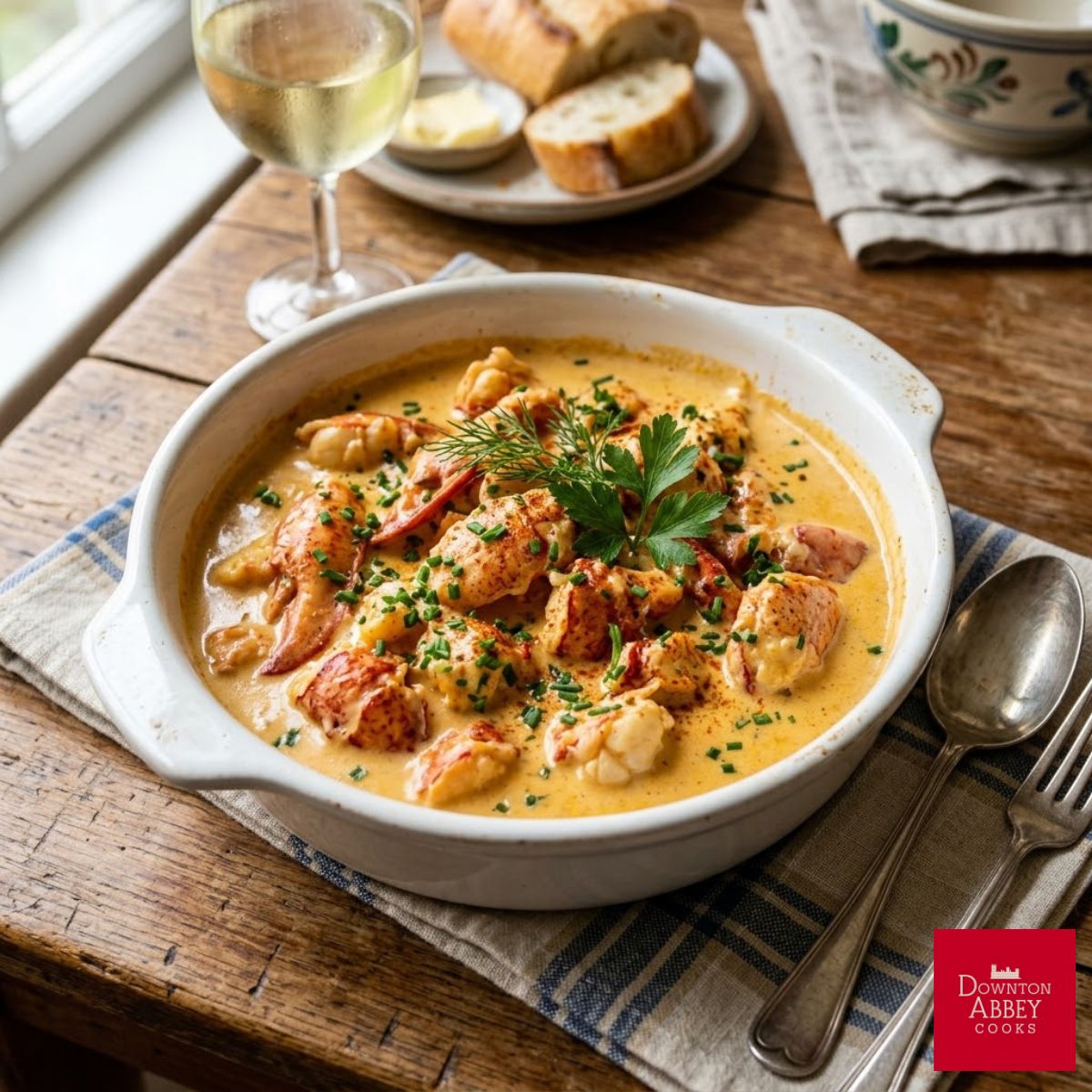
Lobster Newberg
Lobster Newburg was created at Delmonico's in New York, and the original recipe was printed by the restaurant's own chef, Charles Ranhofer, in his 1894 cookbook The Epicurean, as recipe 1037. Ranhofer titled it "Lobster à la Newberg, or Delmonico." Below is his method in his own words, followed by a scaled-down version you can actually cook at home tonight. Make it once and you will taste the dish that told Gilded Age New York what luxury was.
Servings 3 servings
Ingredients
- 1 lb. cooked lobster meat about 1 1/4 lb each, meat removed and sliced (or 1 lb cooked lobster meat)
- 3 tbsp clarified butter plus 1 tbsp cold butter to finish
- 1/2 tsp salt
- 1 cup 250ml heavy cream, divided
- 3 tbsp Madeira wine
- 3 large egg yolks
- 1 Pinch of cayenne pepper
- Buttered toast points to serve

Instructions
Fry the lobster gently
- Warm the clarified butter in a wide skillet over medium-low heat. Lay the lobster slices flat and season with salt. Fry lightly on both sides, about a minute each, without letting them color. This is Ranhofer's step, and it builds flavor into the butter.
Add the cream and reduce
- Pour in about 2/3 of the cream, enough to nearly cover the lobster. Let it bubble gently and reduce by half. It will thicken and turn a pale gold.
Add the Madeira
- Stir in the Madeira and let the sauce come to a boil just once. Then lower the heat right down.
Thicken with the yolks
- Whisk the egg yolks with the remaining cream. Pour this into the pan and stir constantly over low heat. Do not let it boil, or the yolks will curdle. Cook only until the sauce thickens and turns glossy, about 3 minutes.
Finish and serve
- Stir in the cayenne and the cold butter until the sauce is silky. Arrange the lobster in a warm dish, pour the sauce over, and serve at once over buttered toast points.
Notes
Madeira is what Ranhofer specified, and it is worth seeking out for the true flavor. Dry sherry is the common modern substitute and works well.
The dish lives or dies on low heat. If the sauce ever threatens to break, pull the pan off the burner and keep stirring until it settles.
Newburg does not keep, because of the egg yolks. Make only what you will serve.