
One of the most famous dishes in American history was named backwards, out of spite, after a falling-out between a chef and a sea captain. This is the story of Lobster Newburg and the original 1894 recipe you can still make today.
Most great dishes are named after a place or the person who created them. Lobster Newburg was named after a man the restaurant wanted to forget. That small act of revenge gave us the name we still use, and behind it sits the single dish that best captures Gilded Age dining: rich, French in technique, and built to show off. Stay with me and you will get the full story plus the authentic recipe from the chef who invented it.
Delmonico’s, where American fine dining was born
To understand Lobster Newburg, you have to understand Delmonico’s. Opened in New York in the 1830s, it was the first true fine-dining restaurant in the United States. By the Gilded Age it was where the wealthy went to see and be seen. Its chef from 1862 to 1896 was Charles Ranhofer, a French-trained talent who set the standard every other American kitchen chased.
Ranhofer gave us more than one icon. Baked Alaska and Delmonico steak came from his kitchen. But Lobster Newburg is the one that best tells the Gilded Age story, because it took a food that had once been cheap and dressed it in cream, butter, and Madeira until it belonged on the finest table in the country.
The dish named by a grudge
Here is the part people remember. As the story goes, a sea captain and Delmonico’s regular named Ben Wenberg showed the kitchen a lobster dish he had picked up in his travels. The restaurant loved it and put it on the menu as “Lobster à la Wenberg.”
Then the two men fell out. Accounts differ on why, but the result is clear. Delmonico’s pulled the dish, and when demand brought it back, they refused to keep the captain’s name on it. Someone scrambled the letters. Wenberg became Newberg, later spelled Newburg, and that is the name that stuck. A quarrel turned a man’s tribute into a dish that no longer bore his name.
It is a small, human story, and it is exactly the kind of thing that makes food history useful. You will never forget how to spell it now that you know why.
What made it a Gilded Age showpiece
Lobster Newburg is a lesson in Gilded Age taste in one pan. The technique is French: lobster gently cooked in butter, moistened with cream, reduced, lifted with Madeira, and thickened with egg yolks off the heat. Nothing about it is casual. It demands a steady hand and good ingredients, which is precisely why it signaled wealth.
Remember that lobster had been poor people’s food only a few decades earlier, so cheap it was fed to prisoners and servants. By turning it into this, Ranhofer completed lobster’s climb from the bottom of the barrel to the top of the menu. The dish was the flex. It said the kitchen could afford the cream, the Madeira, and the skill.
The original recipe still works
The best part is that you do not need a Delmonico’s brigade to make it. Ranhofer printed the recipe himself in his 1894 cookbook The Epicurean, as recipe 1037, under the title “Lobster à la Newberg, or Delmonico.” It is short, because a Delmonico’s cook was trusted to fill in the gaps. The method is simple: fry the lobster gently in butter without coloring it, reduce it in cream, add a little Madeira, and thicken with egg yolks over low heat, never letting it boil.
Serve it over buttered toast points, exactly as they did, and you have a genuine taste of the Gilded Age.
Lobster Newburg: quick answers
Who invented Lobster Newburg? Chef Charles Ranhofer at Delmonico’s in New York created the dish in the 1870s, based on one shown to the kitchen by a sea captain named Ben Wenberg.
Why is it called Newburg? The dish was first named “Lobster à la Wenberg” after Ben Wenberg. After he and the restaurant fell out, Delmonico’s reversed the first letters of his name to “Newberg,” later spelled Newburg.
What is in Lobster Newburg? Lobster gently cooked in butter, then finished in a sauce of cream, Madeira wine, egg yolks, and a little cayenne, traditionally served over toast points.
What is the difference between Newburg and Thermidor? Both are rich lobster dishes. Newburg is a creamy sauce with Madeira and egg yolks. Lobster Thermidor uses a mustard and cheese sauce and is browned under a broiler.
Where does the original recipe come from? Delmonico’s chef Charles Ranhofer published it in his 1894 cookbook The Epicurean, recipe 1037.
A final thought
Lobster Newburg is proof that a dish can carry history in its very name. A chef, a captain, a friendship gone sour, and a food that climbed from prison rations to the height of American luxury, all folded into one creamy pan. Cook it and you are not just making dinner. You are serving the Gilded Age exactly as Delmonico’s did, right down to the toast underneath. Keep the heat low, pour it while it is glossy, and you will understand why New York’s finest could not get enough of it.
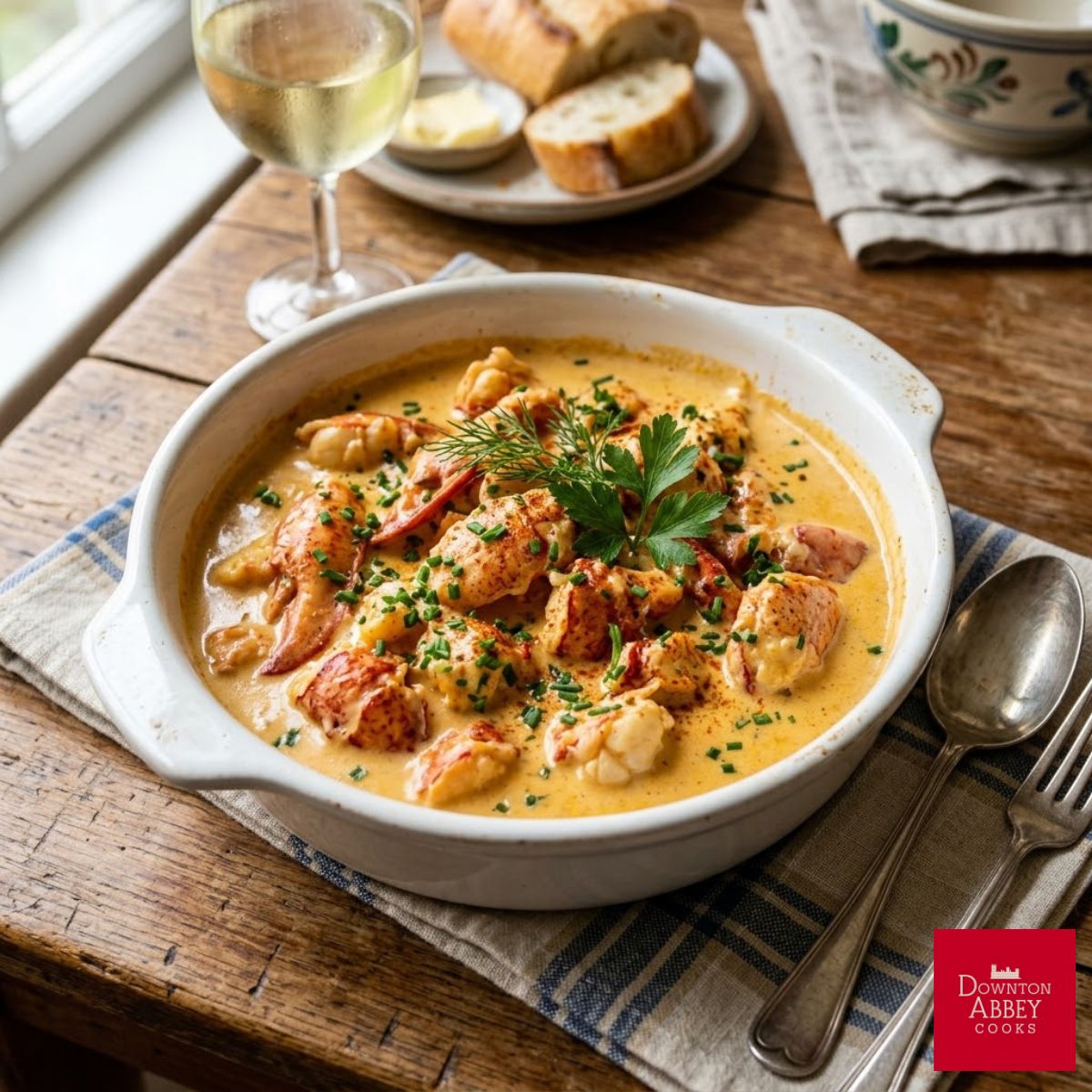
Lobster Newberg
Ingredients
- 1 lb. cooked lobster meat about 1 1/4 lb each, meat removed and sliced (or 1 lb cooked lobster meat)
- 3 tbsp clarified butter plus 1 tbsp cold butter to finish
- 1/2 tsp salt
- 1 cup 250ml heavy cream, divided
- 3 tbsp Madeira wine
- 3 large egg yolks
- 1 Pinch of cayenne pepper
- Buttered toast points to serve

Instructions
Fry the lobster gently
- Warm the clarified butter in a wide skillet over medium-low heat. Lay the lobster slices flat and season with salt. Fry lightly on both sides, about a minute each, without letting them color. This is Ranhofer's step, and it builds flavor into the butter.
Add the cream and reduce
- Pour in about 2/3 of the cream, enough to nearly cover the lobster. Let it bubble gently and reduce by half. It will thicken and turn a pale gold.
Add the Madeira
- Stir in the Madeira and let the sauce come to a boil just once. Then lower the heat right down.
Thicken with the yolks
- Whisk the egg yolks with the remaining cream. Pour this into the pan and stir constantly over low heat. Do not let it boil, or the yolks will curdle. Cook only until the sauce thickens and turns glossy, about 3 minutes.
Finish and serve
- Stir in the cayenne and the cold butter until the sauce is silky. Arrange the lobster in a warm dish, pour the sauce over, and serve at once over buttered toast points.