
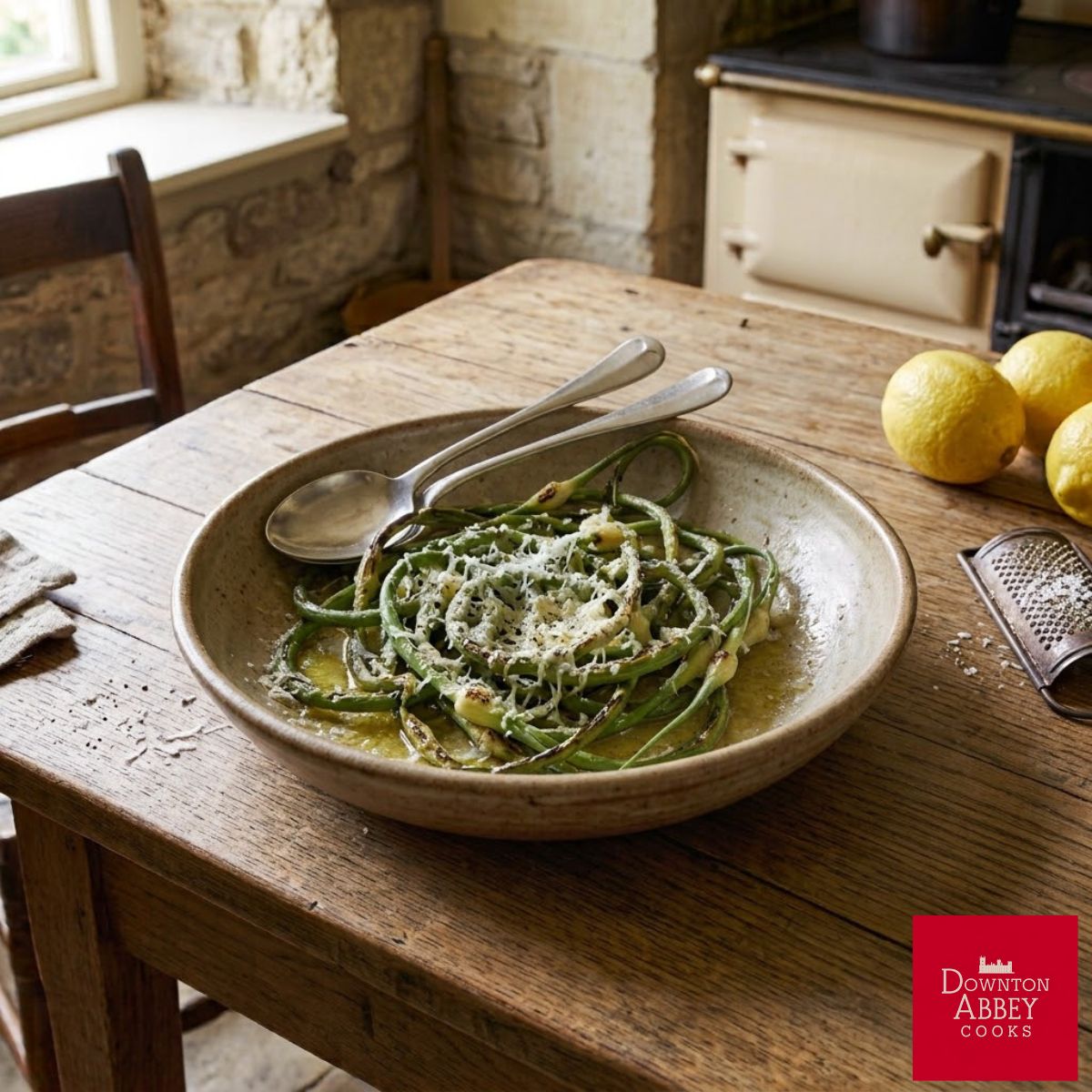
Grilled garlic scapes are the curling flower stalks of hardneck garlic, cooked directly on a hot grill until lightly charred and tender. They take about 10 minutes from start to finish and taste like a cross between asparagus and roasted garlic — mild, slightly sweet, with a smoky edge from the char.
Grilling is the best thing you can do to a garlic scape. The high heat caramelizes the natural sugars, the outside chars just enough to add a smoky note, and the inside goes tender without going soft. It is a better result than you get from sautéing or roasting, and it takes less time than either.
The lemon and Parmesan here are not decorative. The acid from the lemon cuts through the slight bitterness that raw scapes can carry, and the Parmesan — grated finely so it half-melts on contact with the hot scapes — adds a salty, nutty finish that pulls everything together. These three things belong together.
Garlic scapes are available for a short window in late June and early July. If you grow hardneck garlic, they come off the plant whether you use them or not — cutting them is what allows the bulb to develop properly. If you don’t grow your own, look for them at farmers’ markets now. They go fast and the season doesn’t wait.
Grilling in the Edwardian Kitchen — and Why It Suits Scapes
Grilling — or ‘grilling’ in the British sense, meaning cooking directly over or under high heat — was a standard technique in Edwardian kitchens. Mrs. Beeton’s Book of Household Management devoted considerable space to grilled meats and vegetables, and the technique was valued for exactly the reason it works here: speed and flavour development through direct heat.
The kitchen garden at a house like Downton Abbey would have supplied vegetables continuously through the growing season, and a cook like Mrs. Patmore would have been accustomed to working with whatever came in from the garden that day. Garlic scapes, arriving in late June in the weeks before the bulbs were ready to harvest, would have been treated practically — something to use, not waste.
Garlic itself occupied an awkward social position in Edwardian England. It was too continental, too pungent, too working-class for the formal dining room. The scapes are considerably milder than the bulbs, which may have made them more acceptable — or they simply would have stayed below stairs regardless. Either way, grilled over high heat with something acidic and something sharp, they are very good.
The technique note that matters most: the grill needs to be genuinely hot before the scapes go on. Medium-high heat at minimum. A cool grill steams the scapes rather than charring them, and you lose the flavour development that makes this recipe worth making. If the grill isn’t hot enough to make the scapes sizzle on contact, wait. Three to four minutes per side on a properly hot grill gives you the char without cooking them through to mush.
What to Serve These With
Grilled garlic scapes work as a side dish or a standalone appetizer. They are versatile enough to go alongside almost anything coming off the grill.
- Alongside grilled steak, lamb chops, or chicken thighs
- As part of a grilled vegetable platter with courgette, peppers, and asparagus
- On a charcuterie or antipasto board
- Chopped and tossed through pasta with extra olive oil and Parmesan
- Served at room temperature as part of a summer picnic spread
- Alongside grilled fish — particularly salmon or sea bass
Tips for Getting It Right
- Dry the scapes before oiling them. Wet scapes steam instead of char. Pat them with a paper towel after washing.
- Use a fine grater for the Parmesan — a Microplane or the smallest holes on a box grater. Coarsely grated Parmesan sits on top rather than melting into the scapes.
- Don’t walk away. Scapes go from perfectly charred to overdone quickly. Stay close and check at the three-minute mark.
- Serve immediately. The Parmesan sets as the scapes cool and the texture is best straight off the grill.
- If you don’t have a grill, a cast iron grill pan over high heat on the stovetop gives a comparable result. A regular frying pan will cook the scapes but won’t produce the char.
Storage
Grilled garlic scapes are best eaten immediately. They can be kept in the fridge for up to two days and are good cold or at room temperature — useful for a packed lunch or a picnic. Reheating tends to make them limp. If you have leftovers, chop them and toss through pasta or scrambled eggs rather than reheating as a side.
Frequently Asked Questions
Do I need to trim the garlic scapes before grilling?
Trim the very ends if they look dry or woody, and remove the flower bud at the tip — it tends to be tougher and more fibrous than the stem. The rest of the scape goes on the grill as is. No need to cut them into pieces; the long shape is part of what makes them visually appealing on the plate.
Can I use a grill pan instead of an outdoor grill?
Yes. A cast iron grill pan over high heat on the stovetop works well and produces char marks. Heat the pan until it is very hot before the scapes go in — a drop of water should evaporate immediately on contact. The result is slightly less smoky than an outdoor grill but the char and texture are comparable.
What kind of Parmesan should I use?
Use Parmigiano-Reggiano if you have it — the flavour is sharper and more complex than generic Parmesan. Grana Padano is a good budget alternative. Avoid pre-grated Parmesan from a shaker; it has a dry, powdery texture and doesn’t melt properly on the hot scapes.
Can I make these ahead for a party?
You can grill them up to an hour ahead and serve at room temperature — they hold up well. Add the lemon and Parmesan just before serving rather than in advance, as the lemon juice will make them go soft if left too long.
Are grilled garlic scapes the same as grilled green onions?
No, though they look similar on the plate. Green onions are the immature shoots of a bulb onion and have a sharper, more onion-forward flavour. Garlic scapes are the flower stalks of hardneck garlic and taste like mild roasted garlic — sweeter, less pungent, with more depth when charred. They are not interchangeable, though both are good on the grill.
More Garlic Scape Recipes
If this is your introduction to garlic scapes, there is more to explore. The full garlic scape guide covers the Edwardian history of the ingredient and includes three more recipes: a compound butter that keeps in the freezer for two months, a five-minute kitchen garden green sauce, and a creamy garlic scape soup that is milder than you expect and ready in thirty minutes.
Grilled Garlic Scapes with Lemon and Parmesan
Ingredients
- 1 bunch garlic scapes
- 2 tbsp. olive oil
- 1 medium lemon juiced
- 1 tbsp. Parmesan cheese grated
- Salt and pepper to taste

Instructions
- Preheat your grill to medium-high heat.
- Trim the ends of the garlic scapes and place them in a bowl.
- Drizzle olive oil and lemon juice over the scapes and toss to coat evenly.
- Season with salt and pepper.
- Place the scapes on the grill and cook for about 3-4 minutes per side, or until lightly charred and tender.
- Remove from the grill and sprinkle with grated Parmesan cheese.
- Serve as a flavorful side dish or appetizer.