
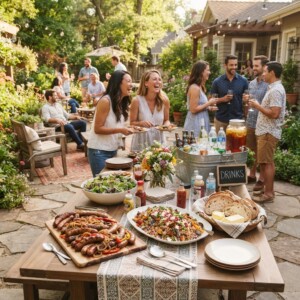
 The best backyard parties feel easy, as if everything simply came together. That rarely happens by accident. Usually the host made a handful of smart decisions early: a short menu, food that can sit out, and a setup that lets guests help themselves.
If your last get-together ended with you stuck at the stove while everyone else was outside, this guide is for you. Here is how to plan a backyard gathering that you actually get to enjoy.
Start by Deciding What Kind of Gathering It Is
Before you think about food, answer three questions: how many people are coming, how long they will stay, and whether they will sit down to eat or graze.
A drop-in afternoon for twenty needs a very different plan than a dinner for eight. Grazing works well for larger groups and loose arrival times, because food can come out in waves and nobody waits for a seat. A sit-down meal suits smaller groups, but it asks more of the host at one specific moment.
Pick one format and plan around it. Stressful parties often try to be a buffet and a plated dinner at once.
Build the Menu Around One Easy Main
The single most useful rule for relaxed hosting is to have only one thing that needs cooking during the party. Everything else should be made ahead, bought ready, or served at room temperature.
That main should cook quickly, need little attention and be easy to eat standing up. Burgers and chicken are the usual choices, but they are not the only ones. A tray of gourmet sausages is a practical swap: they cook in batches, slice easily, and need nothing more than good bread and a couple of mustards to feel like a complete dish. Other good options include marinated vegetable skewers, flatbreads, or a large piece of fish that cooks in one go.
Once the main is settled, round it out with:
- One or two salads that improve as they sit, such as a grain salad, a bean salad or roasted vegetables in vinaigrette.
- One starchy side, like good bread, potato salad dressed with oil and vinegar, or corn.
- Something to snack on while people arrive: cheese, olives, crackers, sliced vegetables with a dip.
- One simple dessert that needs no plating, such as fruit, cookies or a sheet cake.
That is enough food for most gatherings. Adding more dishes rarely makes guests happier, but it always makes the host busier.
Get Variety From Choices, Not Extra Dishes
Variety is what makes a casual spread feel generous. The trick is to create it without multiplying your work.
Offer Two or Three Versions of the Main
Instead of cooking several different mains, offer a few versions of the same one. If you are serving sausages, mixing a few specialty sausages on the same grill, such as a classic French-style Toulouse, a spiced merguez and a pork-free chicken variety, gives guests real choice and helps cover different dietary needs, while the cooking stays exactly the same. The same idea works with skewers: one with chicken, one with halloumi, one with vegetables.
Let Toppings Do the Work
A build-your-own station adds variety for very little effort. Set out bread or buns, two or three condiments, something pickled, something fresh like sliced onions or herbs, and a sauce. Guests enjoy assembling their own plates, and you avoid guessing how everyone likes their food.
Ask About Dietary Needs Early
A short message a week ahead (“Anything you don’t eat?”) saves last-minute stress. It is far easier to add one vegetarian or pork-free option to your plan than to improvise once guests arrive.
Choose Foods That Hold Up Outdoors
Outdoor food has to survive heat, sun and time. Lettuce wilts, cream sauces turn, and anything delicate suffers.
Favor sturdy salads dressed with oil and vinegar, roasted vegetables, grain dishes and breads. Keep cold foods cold by setting serving bowls over a larger bowl of ice, and bring out smaller portions that you refill from the fridge.
Food safety matters at any outdoor meal. The USDA advises that perishable food should not sit out for more than two hours, or one hour when the temperature is above 90°F. Put leftovers away promptly rather than leaving the spread out all afternoon.
Set Up the Space So It Runs Itself
A well-arranged yard does a lot of hosting for you.
- Separate food and drinks. Put drinks in a cooler or tub of ice away from the food table so people do not crowd one spot.
- Make the path obvious. Arrange plates first, then mains, sides and condiments, with napkins and cutlery at the end.
- Plan for shade. An umbrella, a canopy or a table under a tree makes a bigger difference to comfort than any dish on the menu.
- Have more seating than you think you need. Mix chairs with benches, cushions or blankets on the grass.
- Put out a clearly marked trash and recycling bin. Otherwise, empty cups end up everywhere.
- Think about the evening. String lights or lanterns let the party continue comfortably after sunset.
Use a Simple Prep Timeline
Most of a relaxed party happens before anyone arrives.
Two or three days before: Finalize the guest list and menu, shop for nonperishables and drinks, and check that you have enough plates, cups, serving spoons and ice storage.
The day before: Make the salads, dips and dessert. Wash and slice vegetables. Set up tables and chairs if the weather allows.
The morning of: Buy ice and any fresh bread. Arrange serving dishes and label them with sticky notes so you know where everything goes.
One hour before: Set out snacks and drinks, light the grill or preheat the oven, and get yourself ready. When guests arrive, the only job left should be cooking the main.
Keep Guests Comfortable
Comfort comes down to small details. Keep sunscreen and insect repellent within reach, put water and cups where everyone can see them, and tell guests where the bathroom is. For evening gatherings, a basket of light blankets is always welcome.
Give people something to do, too. A lawn game or a playlist keeps the energy easy without you directing it.
Common Hosting Mistakes to Avoid
- Trying a new recipe on the day. Stick to dishes you have made before.
- Making too many dishes. Five well-chosen items beat ten rushed ones.
- Running out of ice. Buy more than you think you need, for both drinks and cold food.
- Timing everything to finish at once. Stagger the food so you are never cooking several things at the same moment.
- Skipping your own plate. Eat with your guests. They came to see you, not your cooking.
The Goal Is Time With Your Guests
A backyard gathering does not need an elaborate menu to feel special. Choose one easy main, let sides and toppings provide variety, prepare ahead, and set up the space so guests can look after themselves. The less time you spend cooking during the party, the more of it you actually get to enjoy.