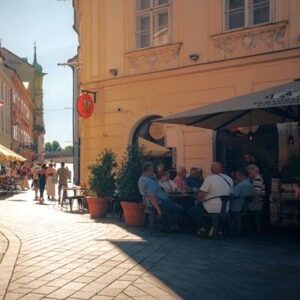
 A friend of mine was travelling to Europe, and when she showed me her Maps, there were over 40 pinned spots. Thirty of them were cafes. You certainly don’t pin a cafe in your Maps because you want to see how coffee tastes at each one.
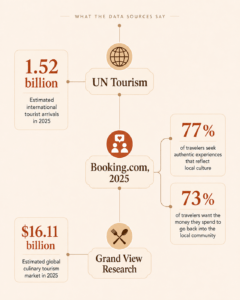
This is now a culinary tourism thing, which means cafes have more to offer, and in fact they have been offering that quietly, positioning this business at a unique spot in countries’ economies. Take a look at what the data says about the economy, tourism, and hospitality, and then we will dive into the almost symbolic perception of cafes.
Why the café mood carries so much value
For hospitality businesses, café culture signals a very specific kind of experience. It suggests ease of entry, time to browse, a menu with range, and a setting that welcomes repeat visits. Guests understand that logic immediately. They expect comfort, a low-friction rhythm, and the option to stay longer than the purchase itself would normally justify. That is why the idea of café travels so well beyond food service.
Beyond where? You ask. Well, look to the gaming industry, where online casinos have capitalized on the popularity of cafés. It is easy for them because casinos work with themes, so creating a café-themed game is very typical. Some of them, such as Cafe Casino, put it right in the name, giving their customers a hint that the platform is all about those chill vibes and café-themed experiences.
On its main site, the platform presents a large game library, welcome rewards, crypto and card payments, mobile play with no download required, and an emphasis on community, support, and ease of use. Its table games page uses terms such as “sharp visuals,” “intuitive gameplay,” and “flexible betting.”
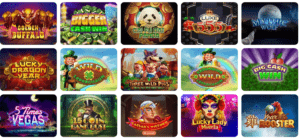
Cafe Casino’s library is largely about food and drinks, but the captured still shows that these thematic platforms don’t limit themselves to that and can offer broader gaming experiences. Perhaps that is what the café atmosphere suggests, right? Flexibility and freedom
That branding choice shows how strong café culture has become as a symbol. The platform is borrowing the emotional code of hospitality. A café implies browsing, settling in, picking a favourite, and returning later. It implies a place with texture. In practical terms, that means the brand wants to feel less like a cold transaction and more like a leisure environment with flow, variety, and a clear visual identity.
For a food and hospitality audience, that is the important point. The café is now such a strong cultural form that businesses outside dining use it to signal comfort, atmosphere, and a longer stay.
Why cafés now function like travel landmarks
Travellers pin cafés because they perform several jobs at once. They provide food, rest, orientation, and local texture in an easy-to-access format. They also fit the current shape of tourism, which is increasingly driven by local spending, authenticity, and food-led discovery.
Café de Flore in Paris, for instance, is a good example of a tourism attraction. Their site describes generations of writers, photographers, musicians, and stylists moving through the room, and it refers to bay windows and mirrors as part of the setting. The guest experience is built around continuity and visibility.
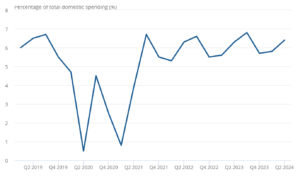
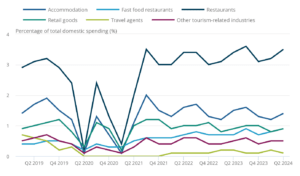
These charts by the UK Office for National Statistics show that restaurants consistently took the largest share of domestic tourism spending across most quarters from 2019 to mid-2024, aside from the sharp disruption around 2020 and early 2021.
Restaurants consistently took the largest share of domestic tourism spending in the UK across most of 2019 to 2024, ahead of accommodation, retail, and other travel-related categories
The café now works as a soft office
Remote and hybrid work have made cafés even more important. Many people do not want to work only at home or only in an office. They want a place in between.
A café gives them: a little structure, and food and coffee nearby, especially for those who always eye the coffee machine even at home:
View this post on Instagram
That is why cafés now feel like more than places to drink coffee. For many people, they are also casual workspaces.
Cafés already know how to provide that. They offer tables that turn over without feeling rushed, staff who can read a room, and menus built around short breaks that can easily stretch into longer stays.
A 2024 Gensler workplace study based on more than 16,000 office workers gives useful context here. It found that 94% of employees in exceptional workplaces have a choice in where they work within the office. It also found that high-performance workplaces have access to 2.6 times as many amenity spaces on-site and 1.6 times as many amenities and services in the surrounding neighbourhood, including cafés, outdoor areas, libraries, and coworking spaces.
Janet Pogue McLaurin, Global Director of Workplace Research at Gensler, talked about the design issue: “A great workplace must not only be a tool to get work done effectively but be intentionally designed for human emotion.”
For the sake of the full experience
So, a café does not compete only on coffee anymore, but also on:
- how long people want to stay,
- how nice the room feels,
- how good the pastries are,
- how smoothly the staff works,
- and how well the space fits different people.
Some guests come alone. Some come for casual meetings. Some are travellers stopping between places.
Cafés have become global magnets because they package hospitality into a form people can use many ways in a single day. Coffee starts the visit, but atmosphere, service rhythm, and spatial comfort are what make people save the pin and come back. And of course, this is part of the impactful tourism we regularly talk about.