
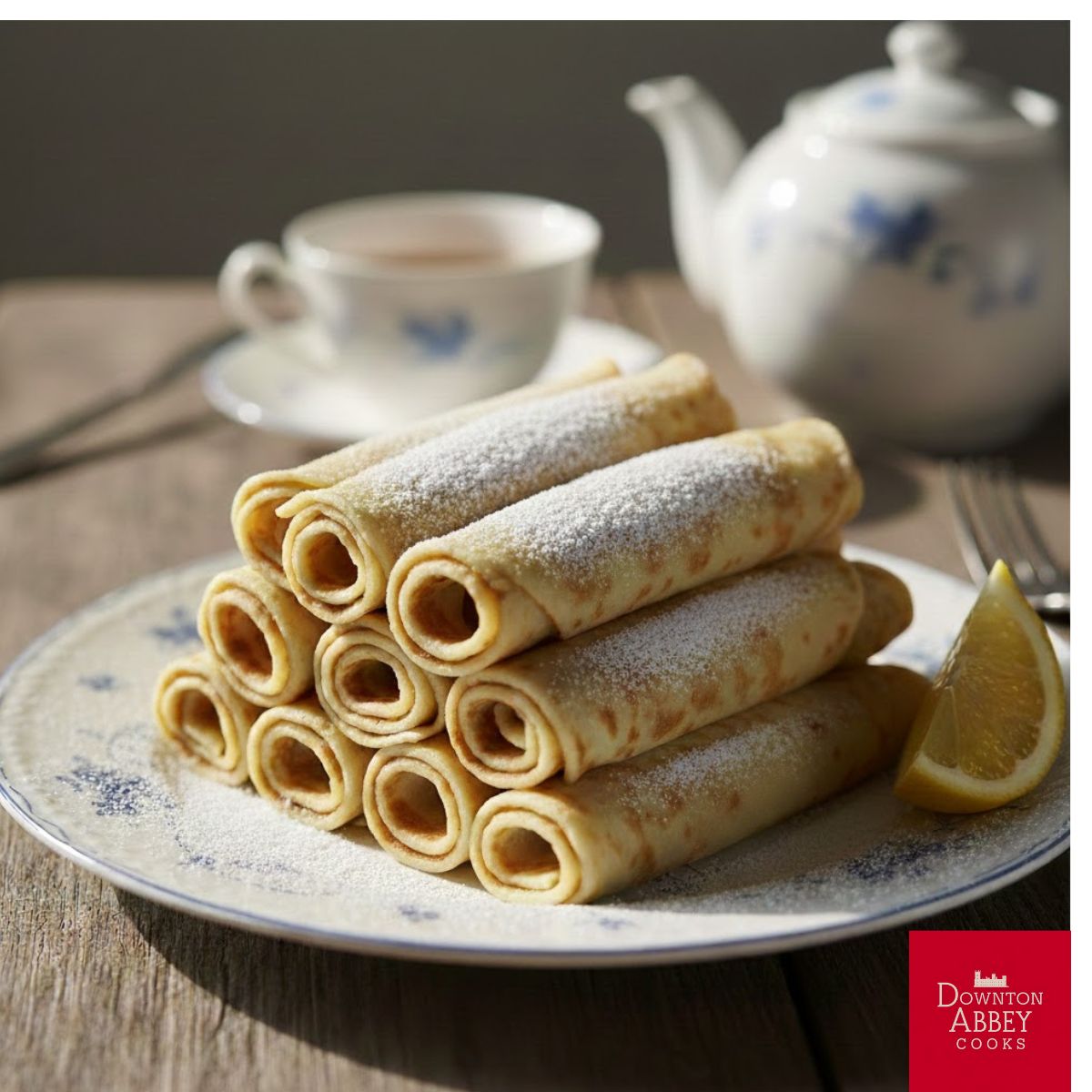
 There’s a reason British pancakes have remained unchanged for centuries—they’re perfect as they are. Thin, delicate, and slightly crispy at the edges, these are nothing like the thick, fluffy American pancakes you might be picturing. Think closer to French crêpes, but with a texture all their own.
This is exactly the style of pancake Mrs. Patmore would have made in the Downton Abbey kitchens every Shrove Tuesday. Daisy and the kitchen maids would have eaten them rolled with lemon and sugar at breakfast, while upstairs, the same batter might reappear at dinner as elegant crêpes Suzette, flambéed tableside for the Crawley family.
The recipe itself is simplicity itself: flour, eggs, milk, and a pinch of salt. No baking powder, no buttermilk, no fuss. What makes or breaks a British pancake is technique—resting your batter, getting your pan properly hot, and having the confidence to flip.
Whether you’re celebrating Pancake Day, preparing for Lent, or simply craving something quick and satisfying, this classic English pancake recipe delivers every time. Serve them the traditional way with fresh lemon juice and caster sugar, or dress them up with Nutella, fresh berries, or golden syrup.
Ready in under 30 minutes, start to finish.
Traditional British Pancakes
Equipment
- 1 8 inch skillet
Ingredients
For the Batter
- 1 cup unbleached all-purpose flour sifted
- 1 pinch salt
- 2 large eggs
- 1.25 cups whole milk
For the Pan
- 2 tbsp. butter clarified if you like, or dripping/neutral oil, as used historically
To Serve
- Caster sugar
- Fresh lemon wedges or lemon juice
- Jam is also historically appropriate as an alternative filling.

Instructions
- Put the flour and salt into a bowl, make a well, crack in the eggs and add a splash of the milk. Whisk from the centre, gradually drawing in flour to make a smooth paste, then whisk in the remaining milk to a thin, pourable batter, about the consistency of cream.
- Let the batter rest 30–60 minutes; Victorian and Edwardian cooks commonly mixed batters ahead, which helps the starch hydrate and the gluten relax for a more tender pancake.
- Heat a small knob of butter or a little clarified fat in a good frying pan until hot but not smoking, swirling to coat the base.
- Pour in just enough batter to coat the base in a very thin layer, tipping the pan to spread it evenly; it should set quickly and start to turn golden on the underside in about a minute.
- Loosen the edges with a palette knife and flip (or toss, if you’re feeling traditional) and cook the second side for about 30 seconds, until lightly speckled with gold but still soft and pliable.
- Slide onto a warm plate, sprinkle generously with sugar, squeeze over lemon juice, then roll or fold into quarters and serve at once; repeat with the remaining batter, adding a touch more fat between pancakes as needed.
Notes
Chef’s notes for an Edwardian touch
- Use whole milk and real butter or dripping: Edwardian kitchens relied on rich dairy and animal fats, which give the pancakes their characteristic flavour.
- Keep them thin: these are not American griddle cakes; they should be almost translucent at the edges, closer to French crêpes but a little sturdier.
- Serve immediately: period sources emphasize eating them straight from the pan, with family members waiting at the table as each pancake emerges, lemon and sugar at the ready.