
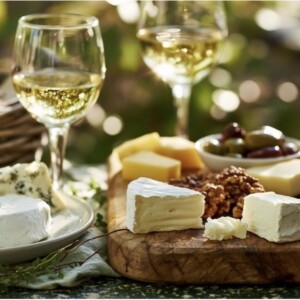
At Downton, the cheese came after the pudding, and the port went round the table to the left while the conversation grew a little warmer. We may not dress for dinner every night, but the pleasure of a good cheese and the right glass has not changed much in a hundred years.
The idea behind a good pairing is simple. Salt, fat and acidity in the cheese should meet something in the wine that either matches it or gives it a gentle contrast. Sweet wines calm salty blues, crisp whites cut through creamy cheeses, and nutty hard cheeses love wines with a little age. Here are ten combinations to try at your next supper party.
The British Board
1. Stilton and Vintage Port
This is the pairing Mr Carson would have approved of, and it has lasted for good reason. Stilton is rich, salty and sharp with blue veining, and a ruby or vintage port answers with dark fruit, sweetness and enough body to stand up to it. The sweetness softens the salt, and the cheese makes the port taste less heavy. If vintage port feels like a grand gesture, a late bottled vintage gives you much the same effect for a more ordinary evening.
2. Aged Farmhouse Cheddar and Rioja Reserva
A clothbound Cheddar aged for a year or more has a firm, crumbly texture, savoury depth and those little crunchy crystals that tell you it has been well matured. It needs a red with some structure, but not one so tannic that it turns the cheese bitter. A Rioja Reserva, with its time in oak, soft tannins and notes of dried cherry and vanilla, suits it beautifully. The wine’s gentle savoury edge echoes the cheese rather than fighting it. Cheddar is a forgiving cheese, and if you want more ideas on wine and cheese pairings, the team at Cork Fine Wines in Calgary has put together its own list that matches particular bottles with cheeses from local shops.
3. Wensleydale and Demi-Sec Vouvray
Wensleydale is the gentle one on the board. It is fresh, crumbly and slightly honeyed, and in Yorkshire it is still served with a slice of fruit cake. A big red would flatten it completely. An off-dry Chenin Blanc from Vouvray, labelled demi-sec, brings bright acidity, a hint of sweetness and flavours of apple and honey that sit very happily alongside the cheese. Try it with a few slices of pear and you have a lovely light finish to a Sunday lunch.
Continental Favourites
4. Comté and Savagnin from the Jura
Comté and the wines of the Jura come from the same corner of eastern France, and they have been eaten together there for generations. A Comté aged for a year or more tastes of toasted nuts, brown butter and sometimes a little caramel. The local Savagnin, especially in its oxidative style or as Vin Jaune, has a nutty, slightly savoury character that mirrors the cheese almost exactly.
5. Manchego and Amontillado Sherry
Aged Manchego, made from sheep’s milk in La Mancha, is firm, nutty and gently tangy. Spanish cooks often serve it with a glass of sherry, and a dry Amontillado is a particularly good choice. Its flavours of hazelnut and dried fruit pick up the nuttiness of the cheese, while its dryness keeps every mouthful fresh. Add a spoonful of quince paste and a few toasted almonds and the plate is complete.
6. Parmigiano Reggiano and Lambrusco
Parmigiano Reggiano is wonderful on its own, broken into rough chunks rather than grated. It is salty, savoury and full of those crunchy crystals that come with long ageing. In Emilia-Romagna, where the cheese is made, it is often served with a dry, sparkling Lambrusco. The bubbles and bright acidity lift the salt, and the wine’s fresh red fruit makes a cheerful contrast. Look for a dry (secco) bottle.
7. Roquefort and Sauternes
If Stilton has port, Roquefort has Sauternes. This sheep’s milk blue from southern France is creamier and saltier than its English cousin, and the honeyed, apricot richness of a Sauternes balances it in the same way. A little of each goes a long way, which makes it an elegant choice for a small dinner.
Soft, Fresh and Fragrant
8. Brie and Lightly Oaked Chardonnay
A ripe Brie is soft, buttery and mild, with a faint earthy note near the rind. A lightly oaked Chardonnay, such as a white Burgundy from the Mâconnais, matches its creamy texture while bringing enough acidity to keep things from feeling heavy. Take the cheese out of the larder well before serving. Brie served cold from the refrigerator tastes of very little, and an hour at room temperature makes all the difference.
9. Fresh Goat Cheese and Sauvignon Blanc
Young goat cheese is tangy, bright and a little chalky, and Sauvignon Blanc is the classic partner. The wine’s high acidity and citrus and herb flavours match the sharpness of the cheese, so neither seems too sour. A Touraine Sauvignon or a crisp bottle from New Zealand will both work well. This pairing is ideal for a summer garden party, perhaps with a salad of watercress and beetroot on the side.
10. Munster and Gewürztraminer
Munster from Alsace is a washed rind cheese with a powerful smell and a surprisingly mild, supple inside. It needs a wine with plenty of personality, and Gewürztraminer, from the same region, has exactly that. Its perfume of lychee, rose and spice stands up to the cheese, and a touch of richness softens its pungency. It is a bold way to end a meal, and the sort of thing that would have Lady Mary raising an eyebrow before asking for a second helping.
Setting Out the Board
When you put together a cheese board for guests, three or four cheeses are usually enough. Choose a mix of textures and milks, perhaps one blue, one hard, one soft and one goat, and arrange them from mildest to strongest so people can taste in a sensible order.
Simple accompaniments work best. Plain oatcakes or water biscuits, a few grapes or slices of apple, and a little chutney or honey are all most cheeses need. Leave the strongly flavoured crackers in the cupboard, as they tend to compete with both the cheese and the wine.
Keep cheese wrapped in waxed paper rather than cling film so it can breathe, and store it in the warmest part of the refrigerator. If you would like to read more about cheese and the many styles made from cow’s milk, the Dairy Farmers of Canada website has a section devoted to it, along with plenty of recipes.
Above all, don’t treat these pairings as rules. They are starting points, much like Mrs Patmore’s recipes, meant to be adjusted to your own taste. Pour modest glasses, try a few combinations side by side, and let your guests decide on their favourite.