
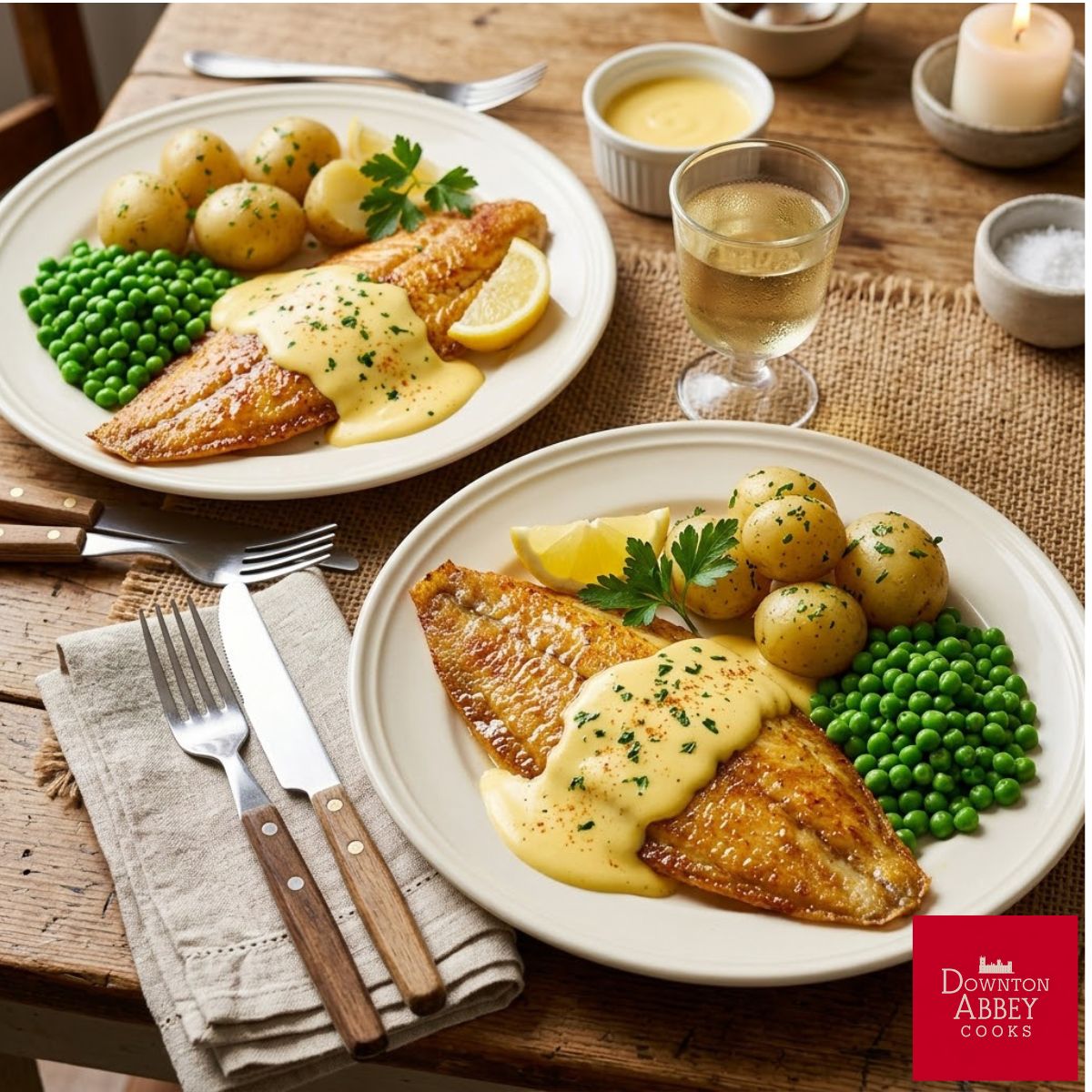
Long before salmon and sea bass took over the menu, one fish sat at the top of British dining. Dover sole was the mark of a serious kitchen. Here is its story, and a simple way to cook it at home.
Great food has a history, and few dishes carry as much of it as Dover sole. For the better part of a century it was the fish course at every grand luncheon and dinner worth the name. Knowing why tells you a good deal about how Britain ate, travelled, and entertained. The after here is simple: by the end you will understand why this plain-looking flatfish earned its crown, and you will know how to serve it yourself.
Quick answer: Dover sole is a mild, firm European flatfish that was the prized fish course of Victorian and Edwardian fine dining. It is named after the English port of Dover, which landed the freshest sole for the London market. At home, lemon sole, petrale sole, or flounder make good substitutes, cooked simply in butter with hollandaise or as sole meunière.
What is Dover sole?
Dover sole (Solea solea) is a flatfish from the cool waters of the Atlantic, the North Sea, and the Mediterranean. It is mild, firm, and faintly sweet, with a clean flavour that does not shout. That restraint was exactly the point. A fish this delicate let the kitchen show off its sauces without a fight.
A word of caution at the fish counter. In North America, the name “Dover sole” is sometimes used for a different Pacific fish. True Dover sole is the European one, and it is expensive. More on substitutes later.
Why is it called Dover sole?
The name comes from the port, not the fish. Dover, on England’s south coast, was the closest landing point to the rich sole grounds of the Channel. Its catch reached London faster and in better condition than fish from farther away. Over time, “Dover sole” came to mean the best sole on the market, the kind the capital’s finest restaurants wanted.
There is a practical reason it travelled so well. Unlike most fish, sole improves for a day or two after the catch. The flesh firms up and the flavour deepens. In an age before refrigeration, a fish that got better on the journey to London was worth its weight in silver.
The aristocrat of the fish course
By the Victorian and Edwardian years, Dover sole was the undisputed star of the fish course. The great chef Auguste Escoffier, who shaped fine dining on both sides of the Channel, recorded dozens of ways to prepare it. Sole meunière, sole Colbert, sole Véronique, sole bonne femme. Each one was a small performance, and each one depended on a fish good enough to carry it.
In the grand houses and the new luxury hotels, the fish course came after the soup and before the meat, a moment of lightness in a long meal. Dover sole with a buttery hollandaise was a safe and elegant choice, the sort of dish that told your guests you had spared no expense. The same plate appeared on the most exclusive sporting and social menus of the day, from the great London hotels to the member dining rooms of summer events.
The Downton Abbey connection
This was the world of the Crawleys. A household like Downton Abbey would have served sole at a formal dinner without a second thought, prepared by a kitchen of specialised staff and carried up by footmen. The fish course was a quiet marker of rank. It cost money, it required skill, and it signalled that the table belonged to people who understood how things were done.
The First World War began to change all of that. Staff shortages, rationing, and shifting tastes thinned the elaborate multi-course dinner down to something simpler. The fish course survived, but the army of cooks behind it did not. By the time the heavy Edwardian style gave way to the lighter cooking of the 1920s, Dover sole had loosened its grip on the menu, even if it never quite left.
Why do we eat less Dover sole now?
Dover sole faded from everyday tables for reasons that have little to do with taste. It became scarce and dear. Cheaper, easier fish moved into the middle of the menu. And modern cooks, used to thick fillets and bold flavours, often pass over a delicate fish that asks to be left mostly alone.
That is a shame, because the qualities that made it an aristocrat still hold. Cooked simply in butter, it is one of the most elegant things you can put on a plate. The good news is that you do not need the real thing, or a Downton kitchen, to enjoy the idea.
What can I use instead of Dover sole?
You have good substitutes. Lemon sole, petrale sole, or flounder are closest in spirit. A firm, white fillet, like tilapia, will also do. The technique matters more than the species, so do not let the price of true Dover sole keep you from the dish.
Dover sole: quick facts
- What it is: a European flatfish (Solea solea), mild and firm
- Named after: the port of Dover, which supplied the freshest sole to London
- Why it kept well: the flesh firms and the flavour deepens for a day or two after the catch
- Its heyday: Victorian and Edwardian fine dining, the era of Downton Abbey
- Classic dishes: sole meunière, sole Colbert, sole Véronique, sole bonne femme, sole with hollandaise
- Best substitutes: lemon sole, petrale sole, or flounder
Frequently asked questions
What does Dover sole taste like? Mild, faintly sweet, and clean, with a firm texture that holds together well. It is delicate, which is why it is usually cooked simply in butter rather than buried under strong flavours.
Why was Dover sole so popular in the Edwardian era? It was prized for its flavour, it travelled to London in excellent condition, and it carried rich sauces beautifully. Serving it signalled wealth and a skilled kitchen, which suited the formal dining of the period.
Is Dover sole expensive? Yes. True European Dover sole is one of the pricier fish at the counter, which is part of why it has faded from everyday menus. Lemon sole, petrale sole, or flounder give you the same style for less.
What is the difference between sole meunière and sole with hollandaise? Sole meunière is finished with a quick browned butter, lemon, and parsley. Sole with hollandaise is served with a richer, egg-based butter sauce. Both start with the same floured, pan-cooked fillet.
Can I use frozen fish? Yes. Thaw it fully and pat it very dry before flouring, so it browns rather than steams.
A final thought
Dover sole earned its place not through richness but through restraint, a fish so good it needed almost nothing done to it. That is a lesson worth keeping. Cook it simply, the way the Edwardians did, and you taste a piece of history that still holds up beautifully on a summer evening.
If you cook this, I would love to see it. Pass it to the friend who thinks fish is fussy. This will change their mind.
Dover Sole with Hollandaise
Ingredients
For the Fish
- 2 fresh Dover sole fillets or lemon sole, petrale sole, or flounder, about 6 oz (170 g) each
- 2 tbsp. flour
- 1 pinch Salt and white pepper
- 2 tbsp. butter
- 1 tbsp. oil
- Lemon wedges to serve
For the Quick Hollandaise
- 3 large egg yolks
- 1 tbsp. lemon juice
- 1/2 cup 115 g butter, melted and hot
- 1 Pinch of salt
- 1 Pinch of cayenne optional

Instructions
Make the hollandaise
- Melt the butter and keep it hot.
- Put the egg yolks and lemon juice in a tall, narrow cup or jar, just wide enough for your immersion blender head to reach the bottom.
- Pour the hot butter over the yolks and let it settle for a few seconds.
- Rest the immersion blender flat on the bottom of the cup and turn it on. Hold it still until the sauce starts to thicken around the head, then slowly lift it up through the mixture until everything is smooth and creamy.
- Season with salt and a pinch of cayenne. If it is too thick, blend in a teaspoon of warm water. Keep it somewhere warm, not hot, while you cook the fish.
- A note: hollandaise does not like to wait long, so make it just before the fish. If it splits, whisk a fresh yolk with a teaspoon of water in a clean bowl and slowly whisk the broken sauce back in.
Cook the fish
- Pat the fillets dry. Season with salt and white pepper, then dust lightly with flour and shake off the excess.
- Heat the butter and oil in a wide pan over medium-high heat until the butter foams.
- Lay the fillets in, skin-side down if they have skin. Cook for 2 to 3 minutes a side, until golden and just opaque through. Thin fillets need less time.
- Lift onto warm plates.
- Serve
- Spoon the warm hollandaise over or beside the fish. Add a lemon wedge and serve at once, while everything is hot.
Notes