
 Downton’s Orange Layer Cake is a two-layer citrus cake filled with orange marmalade, iced in a simple lemon icing, and finished with candied orange and lemon peel. It’s the recipe featured in the Official Downton Abbey Cookbook, and the original goes back to 1887. If you want a cake that actually tastes like the show looks, this is it.
Where This Cake Really Comes From
This recipe didn’t start with a TV show. It comes from Margaret Black’s Superior Cookery, published in 1887. Orange cakes like this one turn up again and again in Victorian and Edwardian cookbooks, and there’s a reason for that. Oranges weren’t an everyday grocery item back then. They were expensive, seasonal, and a little bit of a show-off ingredient. A cake built on orange and lemon juice, dressed up with hand-candied peel, told your guests something about your table.
The Official Downton Abbey Cookbook brought the recipe back and adapted it for a modern kitchen, and that’s the version below. The bones of the original are still there: real juice instead of extract, a light sponge, and candied peel you make yourself instead of buying in a jar.
What Makes This Cake Different from a Regular Orange Cake
Most orange cakes lean on zest and call it a day. This one uses the actual juice, both orange and lemon, folded into the batter in place of milk. That’s where the real citrus flavor comes from. The lemon keeps the orange from turning one-note sweet, so every bite has some bite back.
The candied peel isn’t just decoration either. It’s made from the same fruit you juiced for the batter, boiled three times to pull out the bitterness, then simmered in syrup and dried until crisp. It takes about an hour of mostly hands-off time, and it’s what turns this from “nice cake” into “where did you get this.”
The filling is plain orange marmalade, not buttercream. That’s a period-accurate choice, and it also means less sugar between the layers, which balances out the sweet icing on top.
Common Questions About Downton’s Orange Layer Cake
Can I skip making the candied peel?
You can, and the cake will still taste right. You’ll lose the crunch and the presentation. If you’re short on time, top the cake with a bit of fresh orange zest instead. It won’t be the same, but it’ll still look intentional.
Can I make this cake ahead of time?
Yes. Bake the layers a day ahead and keep them wrapped at room temperature. The candied peel keeps for several days in an airtight container, so you can make it early too. Assemble and ice the cake the day you plan to serve it, since the icing softens if it sits too long.
What can I use instead of orange marmalade for the filling?
Lemon curd works well if you want more tang and less sweetness. A thin layer of apricot jam is another option that was common in the same era. Stay away from anything too heavy, like buttercream, or you’ll lose the light texture the original recipe is going for.
Do I need a stand mixer to make this cake?
No, but it helps. The egg yolks and butter need to be beaten until pale and fluffy, about 10 minutes, and that’s a long time to do by hand. A hand mixer is fine. Just budget the extra time and don’t rush this step, since it’s what gives the cake its lift.
When would this cake have been served at Downton?
A cake like this belonged on the afternoon tea table, not at the end of dinner. It’s light, it’s not overly rich, and it holds up well sitting out on a tiered stand next to sandwiches and scones. It also works for a luncheon or a special occasion dessert if you’d rather serve it that way.
The Bottom Line
This is a 140-year-old recipe that still holds up because the technique is sound. Real juice, hand-candied peel, and a filling that doesn’t compete with the cake. Follow the recipe below, and don’t skip the candied peel unless you have to. It’s the part people will ask about.
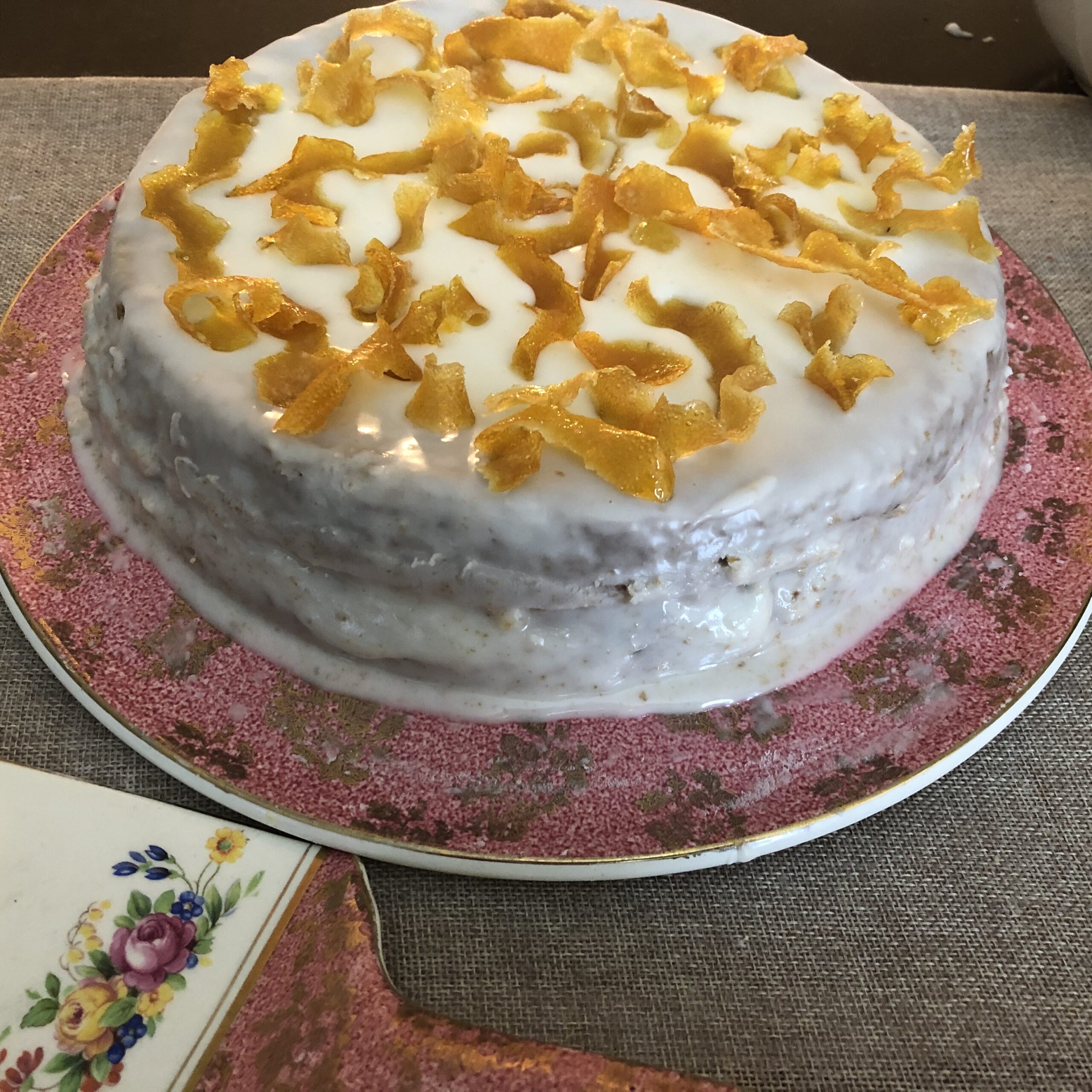
Downton's Orange Layer Cake
Ingredients
For the Cake
- 1 large orange
- 2 medium lemons,
- 1/2 cup unsalted butter room temperature
- 1 cup superfine sugar
- 1 3/4 cups Flour
- 1 3/4 tsp. baking soda
- 1 pinch salt
- 5 large egg yolks
For Candied Peel
- 1 cup water
- 1 cup Granulated sugar
For the Icing
- 2 cups icing sugar
- 1 pinch salt
For the Filling
- 4 tbsp. orange marmalade

Instructions
Make the Candied Peel
- Use a paring knife to remove the peel from the orange, ensuring you take the least amount of which pith that you can. Try to get long peels of at least 2 inches. Put the peel in a small bowl. Do the same for the lemons, and place them in a separate bowl.
- Juice the oranges and lemons, placing the juice with corresponding peels. Let the juice marinate in the peels for one hour, then strain the juices into separate bowls and reserve along with the peels.
- Put the orange and lemon peels into a small saucepan, add cold water to cover, and bring to a boil over high heat. Boil for a couple of minutes, then drain, discarding the water, and then return the peels to the pan. Repeat twice, discarding the water each time. Meanwhile, line a large sheet pan with parchment paper.
- When you have boiled the peels three times, return them to the pan, and add the 1 cup water and the granulated sugar, and bring to a boil, stirring to dissolve the sugar. Adjust the heat to maintain a simmer and simmer until the peels are tender and any pith has become translucent, 25-30 minutes. Drain well and use a fork to place on the cooking sheet in a single layer to let cool.
- Finally, dry the peels in a low oven 250F until they are crisp but not browned, about 30 minutes. Set aside.
Make the Cake
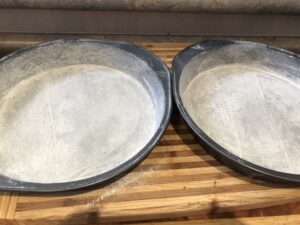
- Preheat the oven to 350F. Butter the bottom and sides of two 9 inch round cake pans. Line the bottom with parchment paper and butter the parchment. Dust the sides with a mixture of equal parts of superfine sugar and flour, tapping out the excess.

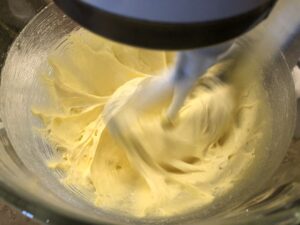
- In a bowl, combine the flour, baking soda and salt. Whisk gently to combine. In a stand mixer with a paddle attachment or a large bowl with a hand mixer, cream together the butter and the superfine sugar on medium speed until smooth and creamy.
- Add egg yolks one at a time, mixing well after every addition, then beat for 10 minutes. The mixture should be pale and fluffy.
- On low speed, beat in 2 tablespoons of the flour mixture to prevent curdling, then add the rest of the flour mixture in three batches, alternating with the reserved orange juice, beginning and ending with the flour mixture, mixing well after each addition.
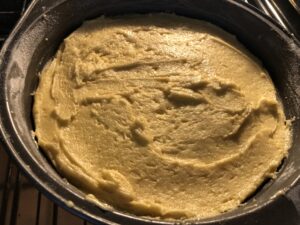
- Divide the batter evenly between the two prepared baking tins, spreading to the edges.
- Bake until a skewer inserted into the center of each cake layer comes out clean, 20-25 minutes. Let cool completely in the pans on wire racks. Using a blunt knife, loosen the edges of the cakes from the pan sides, then invert the pans onto the racks, lift off the pans, and gently peel off the parchment. Work carefully as the layers are very light and delicate.
Make the Icing
- To make the icing, put the confectioner's sugar, lemon juice and salt in a bowl and mix together.
Assemble the Cake
- Place a cake layer on a serving plate and spread the top with marmalade. Top with the second layer, then using a palette knife or offset spatula, frost the top and sides of the cake with the icing. Sprinkle the top with the candied peel. Let the cake stand for 15 minutes to set the icing before serving.