
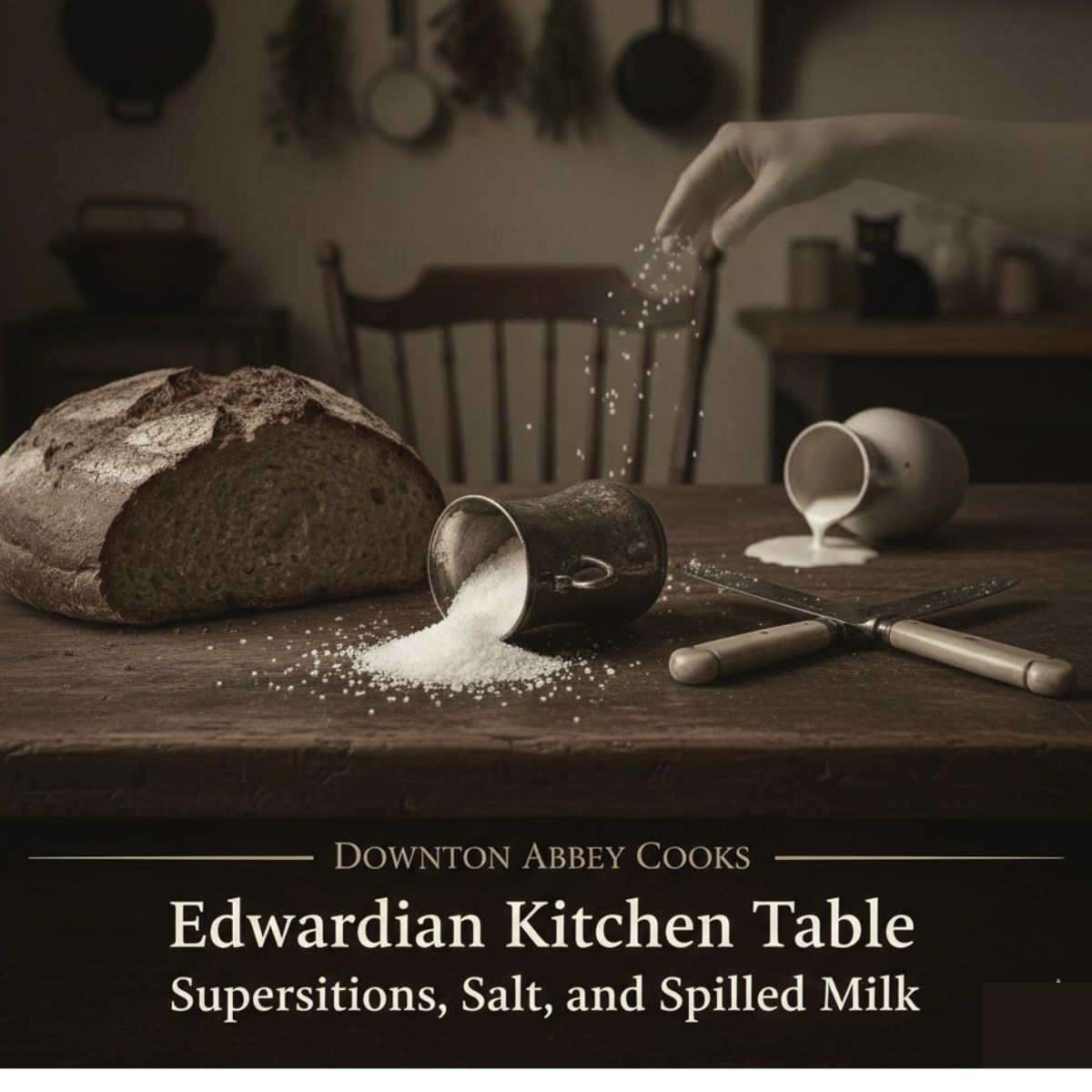
 Happy Friday the 13th! As a food historian specializing in British culinary traditions, I’m here to share a surprising truth: while we fear this date today, Edwardian kitchen staff like Downton Abbey’s Mrs. Patmore faced far more daily superstitions—and most centered around food.
The Surprising Truth About Friday the 13th
Friday the 13th is remarkably modern. The combined superstition only dates to 1907, when Thomas W. Lawson published the novel Friday, the Thirteenth. Before that? No documented historical references exist linking Friday and the number 13 as a combined unlucky force.
While Friday carried Christian associations (the Crucifixion) and 13 had scattered negative connotations (the Last Supper, Norse mythology), they didn’t merge until the 20th century. The 1980s slasher film franchise turned it into the global phenomenon we know today.
Modern research shows no statistical difference in accident rates, hospital admissions, or stock market performance on Friday the 13th versus other Fridays. It’s a cultural construct, not a historical constant.
Real Edwardian Kitchen Superstitions (1900s-1920s)
Salt: The Devil’s Invitation
Spilling salt was among the most feared kitchen mishaps in Edwardian Britain:
- Believed to invite the devil into your home
- Remedy: Throw a pinch over your left shoulder to blind him
- This ancient superstition (dating to Roman times) was practiced daily
- Still common today: Many people automatically throw spilled salt backward
Bread: Never Turn It Upside Down
Edwardian household staff followed strict bread superstitions:
- Turning a loaf upside down after cutting invited death or the devil to dinner
- Breaking bread by hand showed respect; improper cutting brought bad luck
- These beliefs were so strong that bakers marked loaf bottoms to prevent accidents
- Upper classes dismissed it as “peasant nonsense,” but staff absolutely followed these rules
Eggs and Dairy: Daily Kitchen Laws
Victorian and Edwardian egg and milk beliefs:
- Never bring eggs into the house after dark
- Always crush eggshells completely so witches couldn’t use them as boats
- Spilling milk angered household spirits
- Lending milk to neighbors on May Day could curse your cows
Knives and Cutlery: Crossed Means Conflict
Edwardian table superstitions:
- Crossed knives predicted a quarrel
- Giving a knife as a gift would “cut” the friendship unless the recipient gave a coin in return
- This practice continues today among many families
The Number 13 Actually Mattered at Edwardian Dinner Parties
While Friday the 13th didn’t exist, seating 13 guests at dinner was genuinely feared:
The superstition: The first person to rise from a table of 13 would die within the year.
How seriously was this taken?
- Wealthy Victorians and Edwardians hired professional “14th guests”
- The Savoy Hotel in London kept (and still keeps!) a black cat sculpture named Kaspar as the symbolic 14th guest
- King Edward VII and British aristocracy strictly observed this rule
- Based on the Last Supper (13 attendees before Christ’s death)
Why Food Superstitions Outlasted Calendar Ones
Daily repetition creates belief. Kitchen staff encountered salt, bread, eggs, and knives multiple times every day. Each interaction reinforced the superstitions through:
- Constant practice and vigilance
- Training passed through generations of domestic staff
- Immediate “consequences” when rules were broken (confirmation bias)
- Integration into professional kitchen knowledge
You might not notice the calendar date, but you couldn’t avoid food in a working kitchen.
What We Still Practice From the Edwardian Era
Modern superstitions with Edwardian roots:
- Throwing spilled salt over your left shoulder
- Giving a coin when receiving a knife as a gift
- Avoiding walking under ladders
- Knocking on wood
- Breaking wishbones for luck
We’ve simply traded daily kitchen fears for one acceptable modern superstition: Friday the 13th—vague enough to embrace ironically, recent enough to feel sophisticated rather than primitive.
The Bottom Line
Friday the 13th is barely 120 years old, invented by popular culture and amplified by media. The food superstitions that governed Edwardian kitchens have roots stretching back millennia and were woven into daily life at estates like Downton Abbey.
Mrs. Patmore wouldn’t have cared about today’s date. But she absolutely cared about that salt cellar, bread placement, and dinner party guest count.
And if you automatically throw spilled salt over your shoulder? She’d recognize that gesture immediately.
Further Reading on British Food History
Explore more Edwardian kitchen traditions and British culinary superstitions in my cookbook series where I’ve been researching British food history for over 15 years.
Share your family’s food superstitions in the comments below—I’m always collecting them for future research!