
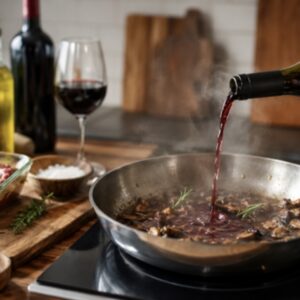
 Wine does more in the kitchen than fill a glass next to dinner. A splash of it can lift a pan sauce, tenderize a tough cut of meat, or turn a simple soup into something that tastes like it simmered all day. Yet plenty of home cooks reach for wine only when a recipe demands it, then wonder why the results taste flat or overly boozy. The truth is that cooking with wine is a skill, and once you understand a few core techniques, you can use it to build flavor in almost any savory dish.
This guide walks through why wine works the way it does in cooking, which bottle to reach for, and the techniques that professional kitchens rely on to get the most out of every pour.
Why Wine Belongs in Your Pantry, Not Just Your Wine Rack
Wine brings three things to a dish that are hard to replicate with any single other ingredient: acidity, aromatic depth, and a touch of natural sweetness or tannin. When wine hits a hot pan, its alcohol evaporates and leaves behind concentrated fruit, herb, and earth notes that plain water or broth simply cannot offer. The acidity also does real work, cutting through rich, fatty ingredients like butter, cream, and red meat so a dish tastes balanced instead of heavy.
This is why so many classic sauces, from a simple pan reduction to a slow-simmered coq au vin, start with wine. It is not there for flavor alone. It is there to do a specific job: build a base that other ingredients can layer on top of.
Skip the Bottle Labeled “Cooking Wine”
Grocery store shelves often carry bottles marketed specifically as “cooking wine,” usually sitting near the vinegar and salad dressings. It is worth avoiding these. Cooking wines are typically made from low-quality grapes, then loaded with salt and preservatives to extend shelf life. That added salt makes it difficult to control seasoning in a dish, and the flavor is usually harsh or one-dimensional once reduced.
A better rule of thumb: cook with a wine you would actually enjoy drinking. It does not need to be expensive. A mid-range bottle in the $12 to $20 range is usually more than enough, since delicate, expensive wines lose their nuance once exposed to heat anyway.
Choosing Red or White: It Depends on the Dish
The general guideline is simple. Reach for white wine when you are cooking something light, like chicken, fish, or a cream-based sauce, and reach for red wine when the dish is hearty, like braised beef, lamb, or a tomato-based ragu. That said, the lines blur often, and a light-bodied red like Pinot Noir can work beautifully with roasted duck or mushroom risotto, just as a red wine reduction can round out a rich steak sauce.
If you are new to the wine aisle, it helps to know the broad categories before you start substituting one bottle for another in a recipe.
This overview of the different types of wine breaks down the major styles, from light-bodied whites to full-bodied reds, which makes it easier to understand why a recipe calls for one category over another.
For a closer look at specific bottles, this breakdown of the best red wine for cooking is a useful reference for matching varietals, from Merlot to Cabernet Sauvignon, to the right technique and ingredient. It is a helpful starting point before you build out a pantry of go-to cooking wines.
Whichever bottle you choose, look for something dry rather than sweet unless a recipe specifically calls for a dessert wine or fortified wine like Marsala or Port. Dry wines reduce into concentrated, savory flavor, while sweet wines can turn syrupy or cloying when cooked down.
The Core Techniques Every Home Cook Should Know
Deglazing
After searing meat, vegetables, or aromatics in a hot pan, you are often left with browned bits stuck to the bottom, known as fond. This fond is packed with flavor, and deglazing is how you rescue it. Pour a splash of wine into the hot pan, then scrape the bottom with a wooden spoon as the liquid bubbles. The wine loosens the fond and pulls it into the sauce, instantly deepening the flavor of whatever you are cooking next.
Reducing
Reduction is simply simmering wine, often alongside stock or aromatics, until the liquid cooks down and concentrates. As water evaporates, the remaining sauce thickens naturally and the flavor intensifies. A basic red wine reduction, for example, can turn a handful of pan drippings into a glossy sauce worthy of a steakhouse. Patience matters here; reduce over medium heat rather than rushing it on high, or the sauce can turn bitter.
Marinating
Wine’s acidity makes it an effective marinade base, especially for tougher cuts of meat. The acid helps break down proteins, which tenderizes the meat while the wine’s other compounds add flavor from the inside out. A basic marinade might combine wine with olive oil, garlic, and fresh herbs, left to sit for a few hours or overnight in the refrigerator. Avoid marinating delicate proteins like fish or shrimp for too long, since the acid can start to “cook” the surface, similar to ceviche.
Braising
Braising is a slow, moist-heat cooking method that turns tough, inexpensive cuts of meat into something fall-apart tender. Wine is often part of the braising liquid alongside stock, since the acidity helps break down connective tissue over hours of low, steady heat. Classic dishes like beef bourguignon and coq au vin are built entirely around this technique.
Poaching
Poaching in wine works especially well for fruit and delicate proteins. Pears or figs simmered gently in a mixture of wine, sugar, and warm spices like cinnamon or star anise take on a deep color and a subtly spiced sweetness, making an elegant dessert with very little effort.
For lighter dishes, a good dry white wine for cooking does the same job that red wine does for heartier fare, adding brightness to a pan sauce for chicken piccata, deglazing a skillet after searing scallops, or building the base for a classic risotto.
Common Mistakes to Avoid
Even experienced home cooks run into a few recurring issues when cooking with wine. Adding wine right before serving, rather than early enough to cook off the raw alcohol taste, is one of the most common. Always give wine time to simmer and mellow, whether that means a few minutes in a quick pan sauce or a couple of hours in a braise.
Using too much wine is another frequent misstep. As a general guideline, most recipes need no more than a cup of wine, and adding significantly more can throw off the balance of a dish, making it taste sharp or overly acidic. It is also worth using non-reactive cookware, such as stainless steel or enameled cast iron, since wine’s acidity can react with aluminum or unseasoned cast iron and leave a metallic taste behind.
What to Do With Leftover Wine
An open bottle does not need to go to waste if a recipe only calls for a partial pour. Reseal the bottle with a proper stopper or cork, then store it upright in the refrigerator, where it will typically stay usable for cooking purposes for one to two weeks. For longer storage, pour leftover wine into an ice cube tray and freeze it. Each cube holds roughly two to three tablespoons, which makes it easy to drop a pre-measured portion into a pan sauce, soup, or stew whenever a recipe calls for it, without opening a fresh bottle.
Cooking Without Alcohol
If you prefer to avoid alcohol entirely, there are ways to capture some of what wine brings to a dish. A combination of grape juice and a splash of vinegar or lemon juice can mimic the fruitiness and acidity of wine in a pinch, though the flavor will read differently than a true reduction. Nonalcoholic wine has also improved significantly in recent years and can be substituted directly in most recipes, since the fermentation-derived flavor compounds remain even after the alcohol is removed.
Cooking With Wine vs. Pairing Wine With Your Meal
It is worth remembering that the wine you cook with and the wine you serve alongside the finished dish do not have to be the same bottle, though many cooks like to pour from the same one for the sake of simplicity. If a dish leans on a bold red reduction, a similarly bold pour at the table tends to echo those flavors rather than compete with them.
For guidance on matching a bottle to what is actually on the plate, this wine and food pairing guide covers how different wine styles interact with common dishes, which is a handy reference once you move past cooking with wine and start thinking about what to serve with dinner.
And While We’re on the Subject, Bourbon Works Too
Wine isn’t the only bottle worth keeping around for cooking. Bourbon shows up constantly in glazes, BBQ sauces, and desserts- think pecan pie, caramel sauce, the occasional pot of baked beans. A splash reduced with brown sugar makes a genuinely good glaze for grilled pork or salmon.
If you’re building out a bar for cooking as much as sipping, it’s worth knowing the difference between bourbon and whiskey before you buy, since plenty of people, myself included for longer than I’d like to admit, use the words interchangeably without realizing they’re not quite the same thing.
Bringing It All Together
Cooking with wine is less about following a strict formula and more about understanding what each technique is meant to accomplish. Deglazing rescues flavor left behind in the pan. Reducing concentrates that flavor into something bold. Marinating tenderizes and seasons from within. Once these fundamentals feel familiar, reaching for a bottle of wine while cooking stops being intimidating and starts being one of the easiest ways to add depth to a weeknight dinner or a special occasion meal alike.
The next time a recipe calls for a splash of wine, resist the urge to skip it or pour in whatever is open. A little intention behind the bottle you choose, paired with the right technique, makes a noticeable difference in the final dish.