
 Jump to Recipe
Before refrigeration, wasting milk wasn’t an option. Cottage cheese was the fix. Sometime around the 1300s, someone’s milk curdled in their cottage kitchen, and instead of throwing it out, they ate it. That single decision, made out of necessity, turned into a method that’s fed people for 700 years.
We don’t have their problem anymore. Milk doesn’t go bad overnight in most kitchens. But their solution still works, and it still saves money, just for a different reason now.
The Original Problem: Waste
Farmers with dairy cows had more milk than they could drink fresh. Milk left out soured fast. Instead of losing it, they let it curdle on purpose, drained the liquid, and ate what was left. No equipment. No recipe book. Just a way to stretch what they had.
By the 1700s and 1800s, this practical fix had moved up the social ladder. Edwardian households served it dressed with cream, herbs, or fruit at luncheon. Same cheese their grandparents made out of necessity, now served on good china.
The method never really changed. What changed was who was eating it and why.
The Modern Problem: Price
We don’t need to save milk from spoiling. We need to save money. A carton of cottage cheese at the store runs $5 to $7. Making it yourself, using the same basic method as 700 years ago, costs about $1.
If you eat cottage cheese twice a week, that’s $500 to $600 a year. Our ancestors weren’t thinking about a grocery budget. But the math works the same way: don’t pay for something you can make yourself with what’s already cheap and available.
And the ingredient list hasn’t grown. Milk, acid, salt. No gums, no stabilizers, nothing added to make it sit on a shelf for a month. That’s not a modern health trend. That’s just what happens when you make food instead of buying a processed version of it.
Their Method, Your Kitchen
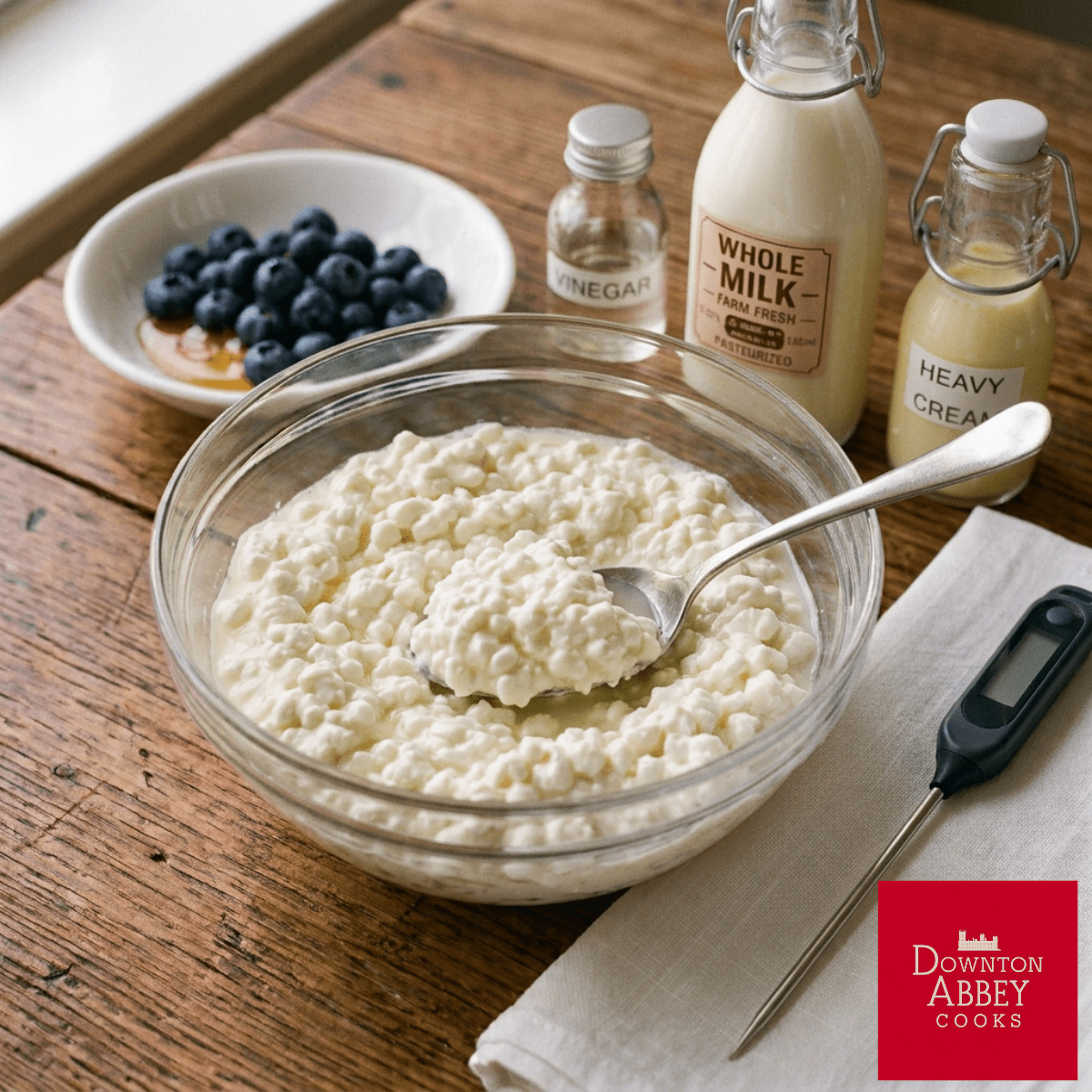
It takes 30 minutes, a kitchen thermometer, and three ingredients: milk, an acid, and salt. No special equipment, no dairy experience required.
Full recipe, with exact measurements and step-by-step instructions, is on the blog: https://bit.ly/3QTxu6R
What to Do With It
Warm with berries and honey for breakfast. Cold with diced cucumber, tomato, and fresh dill for lunch. Mixed with lemon zest and herbs on toast. Swapped in for ricotta in lasagna, tangier and lighter. On toast with everything bagel seasoning.
The Edwardians served theirs with jam and cream. Different table, same instinct: cottage cheese doesn’t need much next to it, just something acidic or something sweet.
The Thrift Hasn’t Gone Anywhere
Our ancestors made cottage cheese because throwing out milk wasn’t an option. We can make it because paying $6 for something that costs $1 doesn’t make sense either. Different reasons. Same method. Same result: less waste, more food, for less money.
Make a batch. See what a 700-year-old fix does for your grocery bill.
Make Your Own Cottage Cheese
Equipment
- 1 digitial thermometer
Ingredients
- 4 cups milk (homo, 2%, 1%, skim) regular pasteurized*
- 1 tbsp. white vinegar
- 1/4 cup water
- 1/2 tsp. of salt
- 2 tbsp. heavy cream optional

Instructions
- Heat milk to 86°F, stirring often (takes about 10 minutes). Dissolve vinegar in 2 tablespoons cold water, stir it into the milk slowly, wait 5 minutes. The milk separates into white curds and yellowish whey.
- Use a long knife to cut the curds into small pieces (about half an inch). Heat to 104°F over 5 minutes, stirring gently. Hold at 104°F for 5 minutes.
- Drain through cheesecloth. Pour the warm liquid (whey) back over the curds to rinse. Drain again. Transfer to a bowl, add salt and cream. Stir. Taste it. Add more salt if needed.
Notes