
Lobster was once so cheap it was fed to prisoners. A few decades later it was the showpiece of the richest tables in America. The lobster roll sits right in the middle of that story.
Here is a fact that surprises most people. The lobster roll you pay a small fortune for at a summer shack is the descendant of what was once considered garbage food. Understanding how lobster climbed from the bottom of the barrel to the top of the menu tells you a great deal about how America learned to eat. Stay with me and you will never look at that toasted bun the same way again.
When lobster was cheap
In colonial America, lobster was so plentiful along the New England coast that it washed up in piles after storms. It was fed to prisoners, servants, and the poor. It was ground into fertilizer and used as fish bait. Some indentured servants had clauses in their contracts limiting how often they could be made to eat it. Lobster was a food you ate because you had nothing better.
That is the starting point. Remember it, because the turn is dramatic.
The Gilded Age made it a luxury
Two things changed lobster’s fortunes in the second half of the 1800s: the railroad and the restaurant.
The railroad meant fresh seafood could travel inland to cities that had never tasted it. Scarcity in those markets made it precious. At the same time, the great restaurants of the Gilded Age put lobster in a dinner jacket. Delmonico’s in New York, under chef Charles Ranhofer, created Lobster à la Newburg in the 1870s, a rich dish of lobster in butter, cream, sherry, and egg yolk. The story goes that a sea captain named Ben Wenberg brought the idea to the kitchen. After the two men fell out, Ranhofer kept the dish and scrambled the name to Newburg.
By the end of the century, lobster was the seafood the wealthy showed off with. The same food once fed to prisoners now anchored the menus in Newport mansions. Nothing about the lobster had changed. What changed was who was allowed to want it.
The roll arrives, and the collar loosens
The lobster roll itself is younger than the mansions. It was born in 1929 at Perry’s, a restaurant in Milford, Connecticut. As the story goes, a traveling salesman asked owner Harry Perry for a hot lobster sandwich he could eat on the road. Perry warmed lobster meat in butter, piled it in a roll, and a classic was born. He found ordinary sliced bread too flimsy, so he had a local bakery make a sturdier bun to hold it.
This was the Gilded Age showpiece with its collar loosened. The same prized meat that Delmonico’s drowned in cream and sherry now came in a bun you ate with your hands, no staff required. Lobster had traveled the whole distance, from poverty food to luxury and back to something anyone could hold at a roadside stand.
Maine or Connecticut: the two honest answers
There is a friendly argument that has run for nearly a century, and both sides are right.
The Connecticut style is the original from Perry’s. Warm lobster, tossed in melted butter, piled in a toasted bun. Simple and rich.
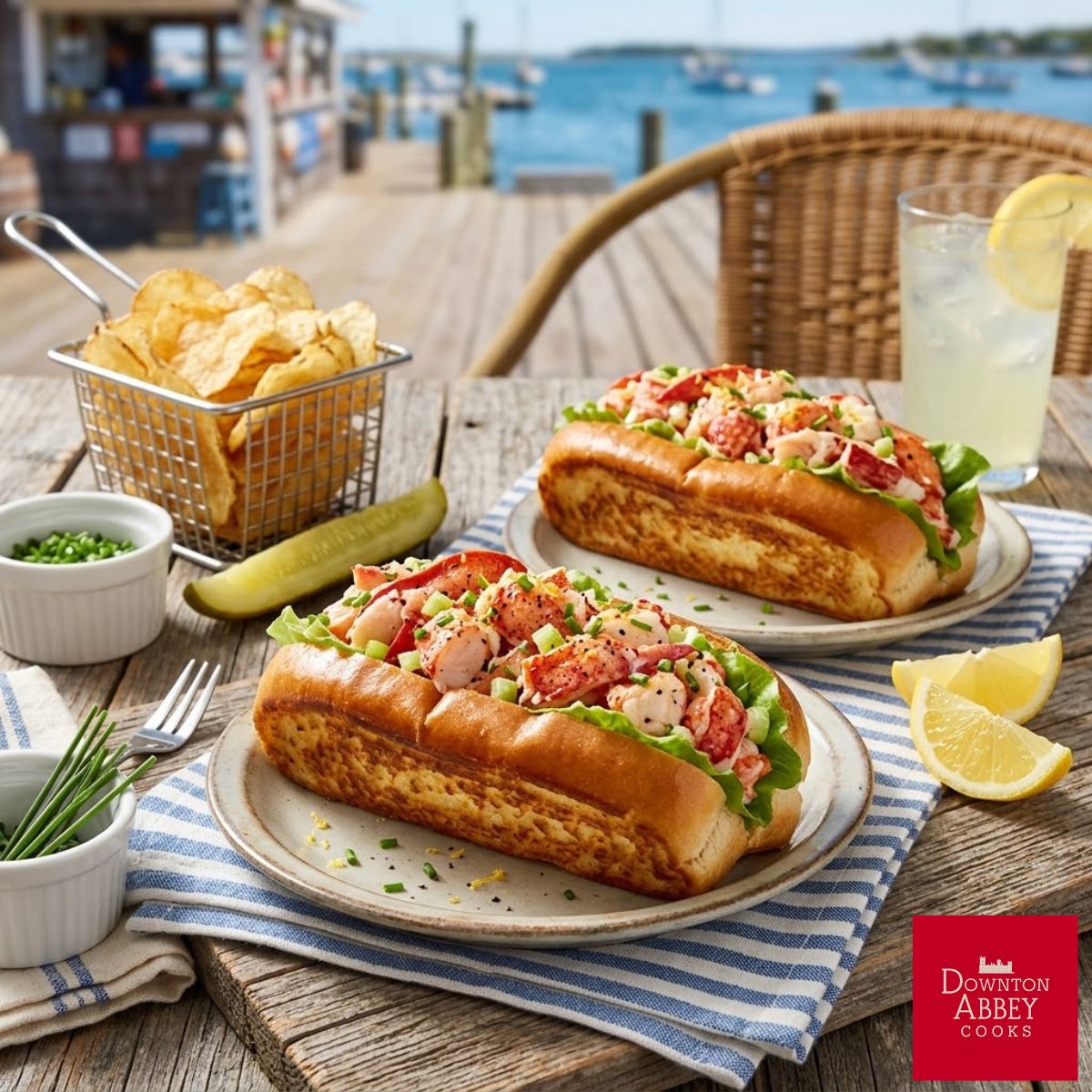
The Maine style came later and took over during the tourism boom of the 1950s. Cold lobster, dressed lightly with mayonnaise and a little lemon, often with celery for crunch. Cool and fresh.
Neither is wrong. The Maine style is the one most people picture today, and it is the one I make most often in summer. But if you have never had the warm buttered version, it is worth a try at least once.
Why this history is useful
Knowing where the lobster roll came from changes how you make it. Because lobster was once so cheap, the dish was never meant to be fussy. The lobster is the whole point. The best rolls, then and now, do as little as possible to the meat. A light hand with the mayonnaise or the butter, a good toasted bun, and you are done. When you understand that the roll was built to let humble, honest lobster shine, you stop overdressing it. That is the difference between a good lobster roll and a great one.
Lobster roll history: quick answers
Who invented the lobster roll? who invented the lobster roll, Maine vs Connecticut lobster roll, Lobster Newburg history, Delmonico’s lobster, Gilded Age seafood, lobster poor man’s food of Perry’s restaurant in Milford, Connecticut, is widely credited with creating the first lobster roll in 1929, a warm lobster sandwich served in a toasted bun.
What is the difference between a Maine and a Connecticut lobster roll? The Connecticut style is served warm with melted butter. The Maine style is served cold with mayonnaise and lemon. Connecticut came first; the Maine style grew popular in the 1950s.
Was lobster always a luxury food? No. In colonial America lobster was cheap and plentiful, fed to prisoners, servants, and the poor. It became a luxury in the late 1800s thanks to the railroad and Gilded Age restaurants like Delmonico’s.
What is Lobster Newburg? A rich Gilded Age dish of lobster in butter, cream, sherry, and egg yolk, created at Delmonico’s in New York in the 1870s.
A final thought
The lobster roll is a small sandwich carrying a big American story. It began as food no one wanted, became a symbol of wealth, and finally settled into something you can enjoy on a paper tray by the water. That journey is the real reason it tastes so good. You are not just eating lobster. You are eating a hundred and fifty years of a country changing its mind about what is worth wanting. Keep it simple, toast the bun, and let the lobster do the rest.
Maine Lobster Roll
Ingredients
- 1 lb 450g cooked lobster meat, chilled and cut into large chunks (about two 1 1/4 lb lobsters)
- 3 tbsp mayonnaise
- 1 tbsp fresh lemon juice
- 1 celery stalk finely diced
- 2 tbsp chives or green onion thinly sliced
- 1/4 tsp salt or to taste
- Pinch of freshly ground black pepper
- 4 New England split-top hot dog buns
- 2 tbsp butter softened
- Lettuce leaves optional
- Lemon wedges to serve

Instructions
Make the salad
- In a bowl, gently fold together the lobster, mayonnaise, lemon juice, celery, chives, salt, and pepper. Keep the lobster in big chunks. You want to taste the lobster, not the dressing. Cover and chill while you toast the buns.
Toast the buns
- Heat a skillet over medium heat. Butter the flat sides of each split-top bun. Toast them in the pan for 1 to 2 minutes per side, until golden and crisp. This step is not optional. The warm, buttery crunch is half the point.
Fill and serve
- Line each bun with a lettuce leaf if using, then pile in the lobster salad. Serve right away with lemon wedges on the side.
- Serve with chips, a pickle, and fresh lemonade for a proper summer plate.
Notes