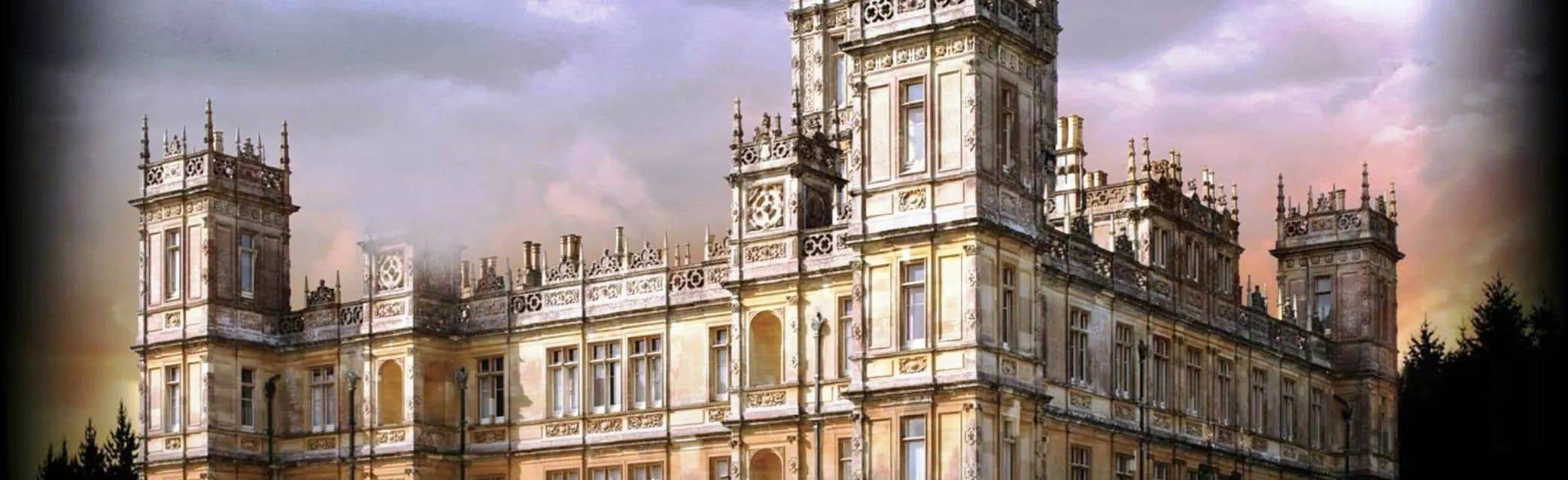
 I was settling into my cinema seat to watch Downton Abbey: The Grand Finale when an email came in. BBC Radio wanted me on air to talk about Downton Abbey.
My journey from casual Downton Abbey viewer to BBC Radio guest demonstrates how enthusiasm for period drama can evolve into genuine expertise. My “Downton Abbey Cooks” blog and cookbooks, “Abbey Cooks Entertain” and “Relaxing over Afternoon Tea,” started as a fan interest but became part of preserving historical culinary traditions through digital storytelling. Over the years, I’ve built an impressive portfolio of press interactions, making this BBC appearance part of a broader pattern of media recognition. The last-minute interview request validated years of research into Edwardian cuisine, even if it came with an awkward discussion about jugged hare.
When Historical Dishes Defy Modern Explanation
The jugged hare confusion that amused both me and Tony Livesey, my interviewer, highlights a challenge I face as a food historian in contemporary media. This traditional British dish represents everything modern audiences find mystifying about historical cuisine: archaic terminology, complex preparation methods, and shocking ingredients. A 2006 survey found only 1.6% of people under 25 recognized the dish by name, with 70% saying they’d refuse to eat it. So it was no surprise that I hadn’t heard of it either—the ongoing education of a food historian.
The dish embodies sophisticated Edwardian dining—the type featured in Downton Abbey‘s elaborate meal scenes—but its complexity defies quick radio explanation. My interview confusion became entertainment precisely because jugged hare represents the gap between aristocratic Edwardian dining and modern British food culture, in fact, one that I wasn’t aware of at the time.
My Downton Dynasty Journey
My expertise didn’t emerge overnight. My 15-year journey from casual Downton Abbey viewer to published cookbook author followed a predictable pattern: I became curious about food authenticity in the show, began researching and experimenting with historical recipes, built communities with other fans, developed genuine knowledge through consistent practice, and eventually gained recognition in this specialized niche. My husband’s encyclopedic knowledge of British aristocracy provided crucial research support—this really became a collaborative effort!
My “Downton Abbey Cooks” blog represents sophisticated research into post-Edwardian cuisine, connecting specific episodes to historical context while adapting elaborate aristocratic recipes for modern kitchens. My cookbook “Abbey Cooks Entertain” provides 220 recipes designed for modern “Downton” dinner parties, prioritizing entertainment value alongside educational content.
The Radio Renaissance of Food History
My interview experience demonstrates how food blogging has created new pathways between amateur enthusiasm and professional media recognition. I’ve been able to prove my expertise through consistent content creation, audience engagement, and depth of research rather than formal credentials.
BBC Radio producers actively monitor the food blogosphere for specialized expertise, particularly when historical dramas dominate cultural conversation. My blog provided exactly the specialized Edwardian knowledge they needed, delivered through accessible digital content that demonstrated my communication skills.
Food bloggers like me bring different perspectives than academic historians or professional chefs—we understand how historical cuisine resonates with contemporary audiences because we’ve navigated that journey ourselves.
Reflecting on My Unexpected Radio Moment
My cinematic interruption transformed into validation for the growing community of amateur historians preserving culinary traditions through digital platforms. The jugged hare confusion actually highlighted the essential value I and similar bloggers provide—we serve as cultural translators, making complex historical cuisine comprehensible to modern audiences while preserving traditions that might otherwise disappear.
My unexpected radio moment shows that expertise can emerge from the most unlikely places—cinema seats included. Sometimes the best preparation for a last-minute BBC Radio interview is 15 years of genuine curiosity about jugged hare and everything else that made Edwardian cuisine extraordinary.
Listen to my full BBC Radio interview here – jugged hare confusion and all!
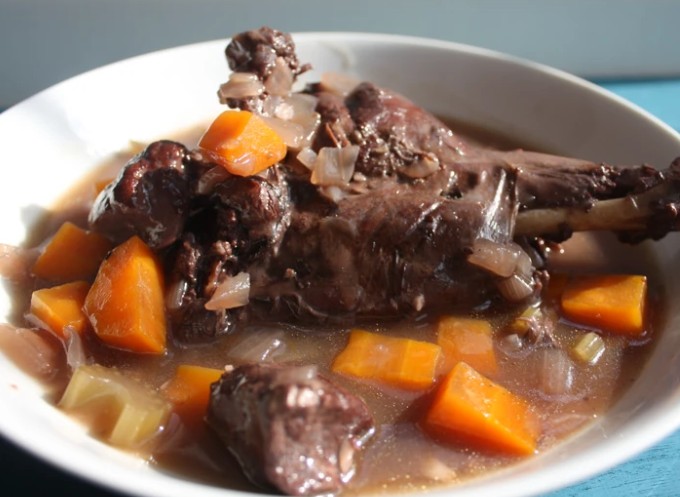
Jugged Hare
Equipment
Ingredients
- 1 hare skinned and gutted
- 1 2/3 pints red wine
- 3/4 pint beef stock
- 2 bay leaves
- 1 3/4 oz butter
- 1 large onion diced
- 2 stalks celery sliced
- 1 large carrot roughly diced
- 4 cloves garlic crushed
- 1 tsp salt
- 6 medium black peppercorns
- 6 large juniper berries dried
- 1 sprig sprig of thyme large
- 2 tsp cornstarch

Instructions
- First, joint the hare. I did this in a way that both diners would have one generous-sized thigh portion and a smaller leg bone each. I then cut each side of the saddle into three large chunks, so they wouldn’t shrink too small during cooking and get lost in the gravy
- Marinade the hare in the red wine, beef stock and bay leaves for anywhere between 5 and 36 hours. If the hare isn’t fully submerged, remember to turn it from time to time so that it colours evenly
- Heat the butter in a dutch oven or thick-based casserole dish (choose one which has a tightly fitting lid). Remove the hare from the marinade (reserving the marinade) and brown it in the butter, long enough to colour the outside of the hare but not so long that the meat starts to cook through. Remove the hare from the pan and set to one side
- If needed, add a little more butter to the casserole dish. Soften the onions, celery and carrots for 10 minutes. Add the garlic and cook for a couple more minutes
- Add most of the reserved marinade to the pan, keeping back 5 tablespoons for later. Bring it to a quick boil for 2 minutes
- Turn down the temperature and return the hare to the pan. While the hare is on a slow simmer on the hob, grind the black pepper and juniper berries in a pestle and mortar or a dry spice grinder. Add to the pan along with a teaspoon of salt, the thyme, and bay leaves from the marinade
- Preheat the oven to 140°C/gas mark 1
- Place the lid tightly on the casserole dish and cook in the oven for 3 1/2 hours
- Add the cornstarcchto the 5 tablespoons of reserved marinade and stir. Remove the hare from the oven and stir in the cornflour mixture to thicken the sauce a little and introduce a nice sheen