
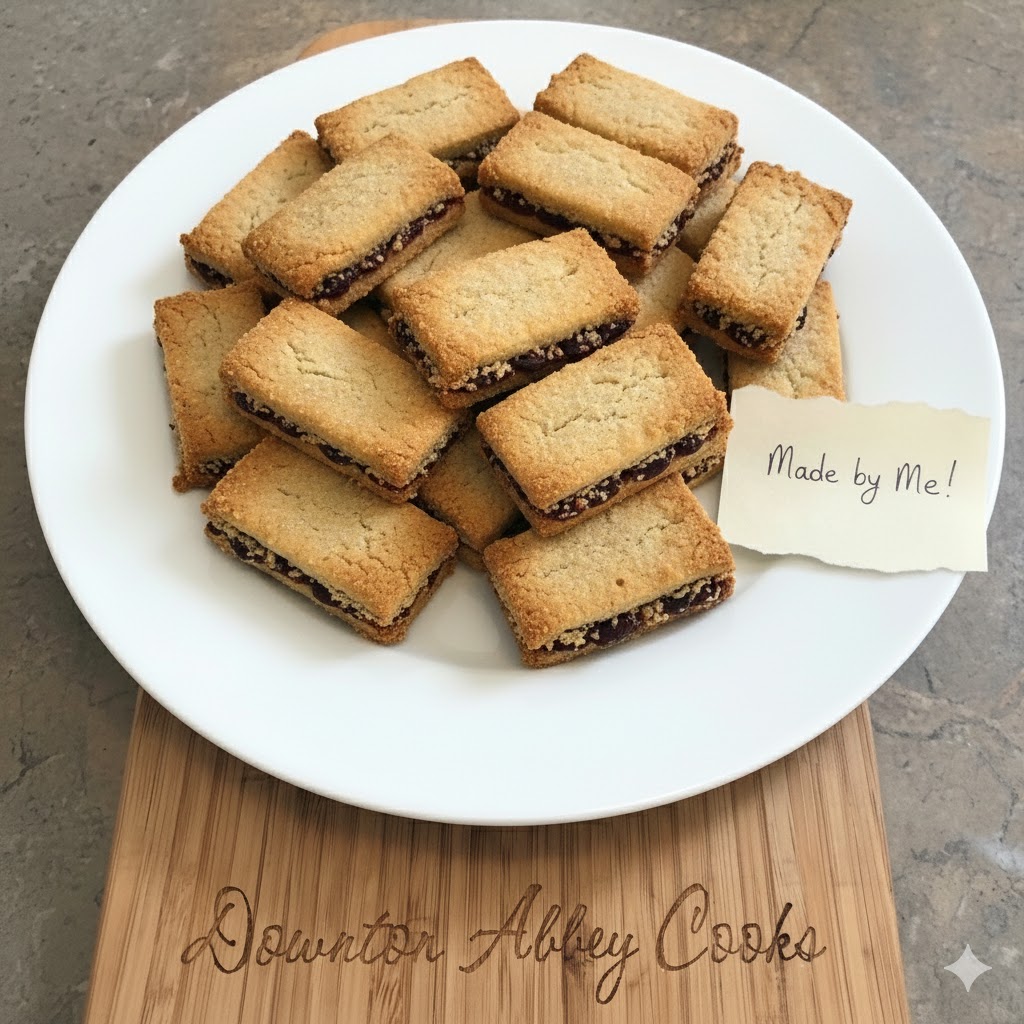
 Some biscuits earn their place through flash and decoration. Garibaldi biscuits earn theirs through quiet persistence. They have appeared on British tea tables since 1861, outlasting countless fads and remaining exactly what they always were: thin, crisp, studded with currants, and utterly satisfying with a cup of tea.
A Bit of History
Garibaldi biscuits were created in 1861 by Jonathan Dodgson Carr while working for Peek Freans, the Bermondsey biscuit company. Carr—of Carr’s Table Water Crackers fame—named his creation after Giuseppe Garibaldi, the Italian general and revolutionary who had visited England in 1854 and become something of a celebrity. By 1861, when Victor Emmanuel II was crowned king of a unified Italy thanks partly to Garibaldi’s efforts, the general’s name was on everyone’s lips. Carr seized the moment.
The biscuits haven’t changed much since. Two thin layers of golden dough, a generous filling of currants pressed between them, a light glaze of sugar on top. Simple, practical, and built to last in a tin—precisely the sort of biscuit Mrs Patmore would have kept on hand for the servants’ hall.
The less appealing nickname—”squashed fly biscuits”—comes from the currants peeking through the dough. Children found this hilarious in 1861 and still do today.
Why They Belong in Your Christmas Tin or Any Time of Year
Garibaldi biscuits share all the qualities of the best British Christmas baking. They keep beautifully, improve slightly after a day or two in a tin, and travel without crumbling. They are not too sweet, making them ideal companions for tea at any hour. And they require no decoration, no icing, no last-minute fuss.
At Downton Abbey, biscuits like these would have bridged the gap between upstairs and downstairs. Simple enough for the servants’ hall, respectable enough for an unexpected afternoon caller. They are, in every sense, working biscuits.
Girabaldi Biscuits
Equipment
Ingredients
- 1 3/4 cups all purpose flour 225 g
- 1 Pinch of fine sea salt
- 1/3 cup unsalted butter, cubed cold and cubed 75 g
- 1/4 cup caster sugar 50 g
- 4-5 tbsp whole milk
- 1 cup currants 150 g
- 1 large egg white lightly beaten
- Granulated sugar for sprinkling

Instructions
- Preheat your oven to 180°C (350°F). Line a large baking sheet with a silicon baking mat or parchment paper.
- Make the dough. Place the flour and salt in a mixing bowl. Add the cold butter and rub it into the flour with your fingertips until the mixture resembles fine breadcrumbs. Stir in the caster sugar. Add the milk gradually, mixing until the dough comes together and leaves the sides of the bowl clean. You may not need all the milk.
- Roll and fill. Turn the dough onto a lightly floured surface and roll it into a rectangle approximately 20cm by 30cm (8 by 12 inches). Scatter the currants evenly over one half of the dough. Fold the other half over the currants, pressing gently to seal. Roll again carefully until you have a rectangle roughly 18cm by 28cm (7 by 11 inches). The currants may press through the surface.
- Cut. Using a sharp knife, trim the edges to neaten them. Cut the dough into fingers approximately 3cm by 7cm (1¼ by 2¾ inches). You should get about 24 biscuits.
- Glaze. Transfer the biscuits to the prepared baking sheet, leaving a little space between each. Brush the tops lightly with beaten egg white and sprinkle with granulated sugar.
- Bake for 20–25 minutes until pale golden. The biscuits will crisp as they cool. Allow them to cool completely on a wire rack before storing.
Notes
Keep in an airtight tin for up to two weeks. Garibaldi biscuits are excellent travellers and make thoughtful homemade gifts. Cook's Notes
On currants: True currants—dried Zante grapes—are traditional and give the best flavour. Raisins or sultanas can substitute but will be sweeter and larger, changing the character of the biscuit.
On thickness: These should be thin biscuits. If your dough is thicker than 5mm after the final roll, the texture will be more cakey than crisp.
On keeping: Like many British biscuits, Garibaldi improve after resting in a tin for a day. The currants soften slightly and the flavours meld.