
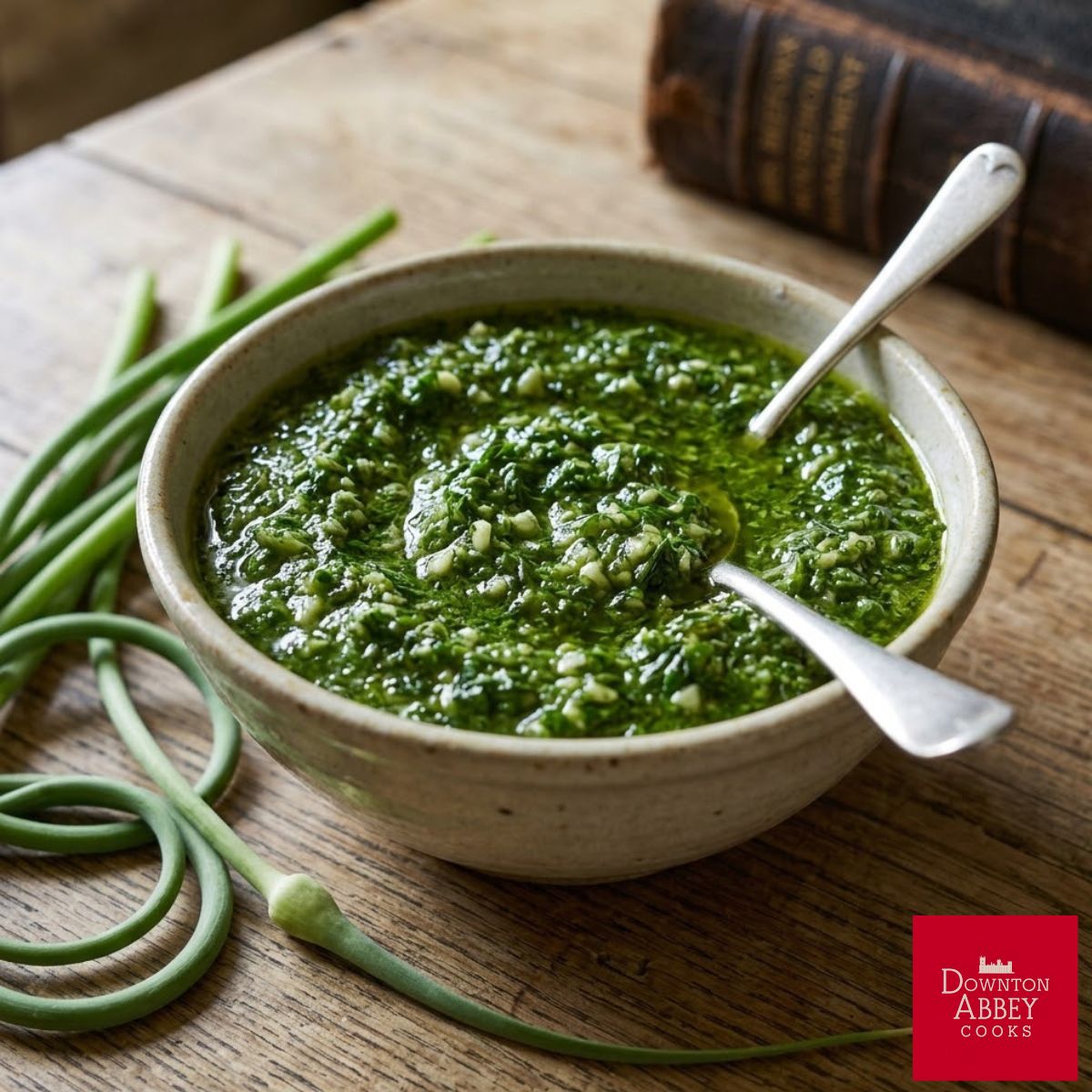
 Garlic scape green sauce is a blended raw condiment made from garlic scapes, flat-leaf parsley, white wine vinegar, olive oil, and seasoning. It takes five minutes to make, keeps three days in the fridge, and works alongside cold meats, grilled fish, eggs, and roasted vegetables.
Every good kitchen garden produces more than the dining room can use. In early summer, when garlic scapes are curling up from the beds and the herb patch is running ahead of the cooking, a green sauce is the most practical answer. You blend what’s ready, season it well, and put it on everything for the next three days.
This sauce is built on garlic scapes with flat-leaf parsley and a sharp hit of white wine vinegar. It has the structure of a British salsa verde — herb-forward, acidic, no nuts, no cheese — which puts it squarely in the tradition of the Edwardian kitchen garden. Five minutes, no heat required, and useful in ways that a jar of store-bought condiment rarely is.
The scapes give it something garlic-forward but not aggressive. Raw garlic cloves in a sauce like this can be harsh. Scapes are considerably milder, which means you can be generous with them and the result is bright rather than sharp.
Green Sauces in the Edwardian Kitchen
Green sauces have been part of English cooking for centuries. Mrs. Beeton’s Book of Household Management, which remained a reference in Edwardian kitchens well into the 1910s, included several versions: mint sauce, parsley sauce, a sharp herb sauce for lamb. The common thread was the same practical idea that drives this recipe — take what the garden offers, add acid and seasoning, and make something that improves the food it accompanies.
The Edwardian kitchen garden was expected to supply the household continuously through the growing season. Head gardeners at houses like the fictional Downton Abbey managed the timing of beds carefully so that something was always ready. A cook like Mrs. Patmore would have worked with whatever came in from the garden that day, and a sauce built on scapes and herbs would have been a natural use of an early summer surplus.
What distinguishes this sauce from pesto or chimichurri is the vinegar base rather than an oil base. That acidity makes it a better match for rich proteins — cold lamb, grilled salmon, a plate of soft-boiled eggs — where an oil-heavy sauce can feel like too much. It also keeps the colour brighter for longer, which matters if you’re making it ahead.
Technique note: the flower bud at the tip of each scape is worth removing before blending. It tends to be tougher and more fibrous than the stem, and it can give the sauce a slightly stringy texture if left in. A quick trim before you start is all it takes.
What to Serve It With
Think of this as a versatile finishing sauce rather than a specific pairing. It works on anything savoury that benefits from a sharp, herby note.
- Cold roast chicken or lamb
- Grilled salmon or white fish
- Hard-boiled or soft-boiled eggs
- Roasted or grilled vegetables — courgette, asparagus, new potatoes
- Spread on good bread with sliced cheese
- Stirred into grain salads or lentils
Storage
The sauce keeps for three days in the fridge in a sealed jar. The colour will darken slightly after the first day — this is oxidation from the cut herbs and is normal. It does not affect the flavour. Give it a stir before serving and taste for seasoning, as the acidity can mellow slightly overnight.
It does not freeze well. Make it fresh while scapes are in season and use it within the week.
Frequently Asked Questions
Can I use a different vinegar?
Yes. Cider vinegar works well and gives a slightly softer edge. Red wine vinegar is sharper and more assertive. Avoid balsamic — the sweetness and colour will overwhelm the scapes.
Can I add other herbs?
Yes. Tarragon, chives, or a small amount of mint all work well alongside the parsley. Keep the scapes as the dominant flavour and treat the extra herbs as accents. Too many competing herbs and you lose the scape character entirely.
Is this the same as garlic scape pesto?
No. Pesto is oil-based and typically includes nuts and Parmesan. This sauce is vinegar-based, lighter, and sharper. Both are good uses for scapes, but they serve different purposes. Pesto suits pasta and pizza; this sauce suits proteins and vegetables.
Can I make this without a blender?
Yes. Finely chop the scapes and parsley by hand — the finer the better — then whisk together with the remaining ingredients. The texture will be more rustic but the flavour is the same. A mezzaluna or a sharp chef’s knife both work well.
More Garlic Scape Recipes
Garlic scapes are worth knowing better than most cooks do. For the full story on what they are, when to find them, and how the Edwardian kitchen put them to work, see the garlic scape guide on Downton Abbey Cooks at downtonabbeycooks.com/garlic-scape-recipes-edwardian/. It includes three more recipes: grilled scapes with lemon and Parmesan, a compound butter that keeps in the freezer long after scape season ends, and a cream soup that is milder than you expect.
Downton Abbey Cooks has been publishing Edwardian food history and recipes for 15 years. Creator Pamela Foster has been featured by the Washington Post, BBC Radio, CBS, and CBC. Browse the full garlic scape collection and the Edwardian kitchen garden series on the site.
Garlic Scape Green Sauce
Equipment
Ingredients
- 8 to 10 garlic scapes roughly chopped
- 1/2 cup flat-leaf parsley packed
- 3 tbsp. white wine vinegar
- 4 tbsp. olive oil
- 1/2 tsp. fine sea salt
- 1/2 tsp. sugar
- 2 tsp. cold water

Instructions
- Blend all ingredients until smooth. Taste and adjust -- more oil if too sharp, more vinegar if too flat. Serve at room temperature.