
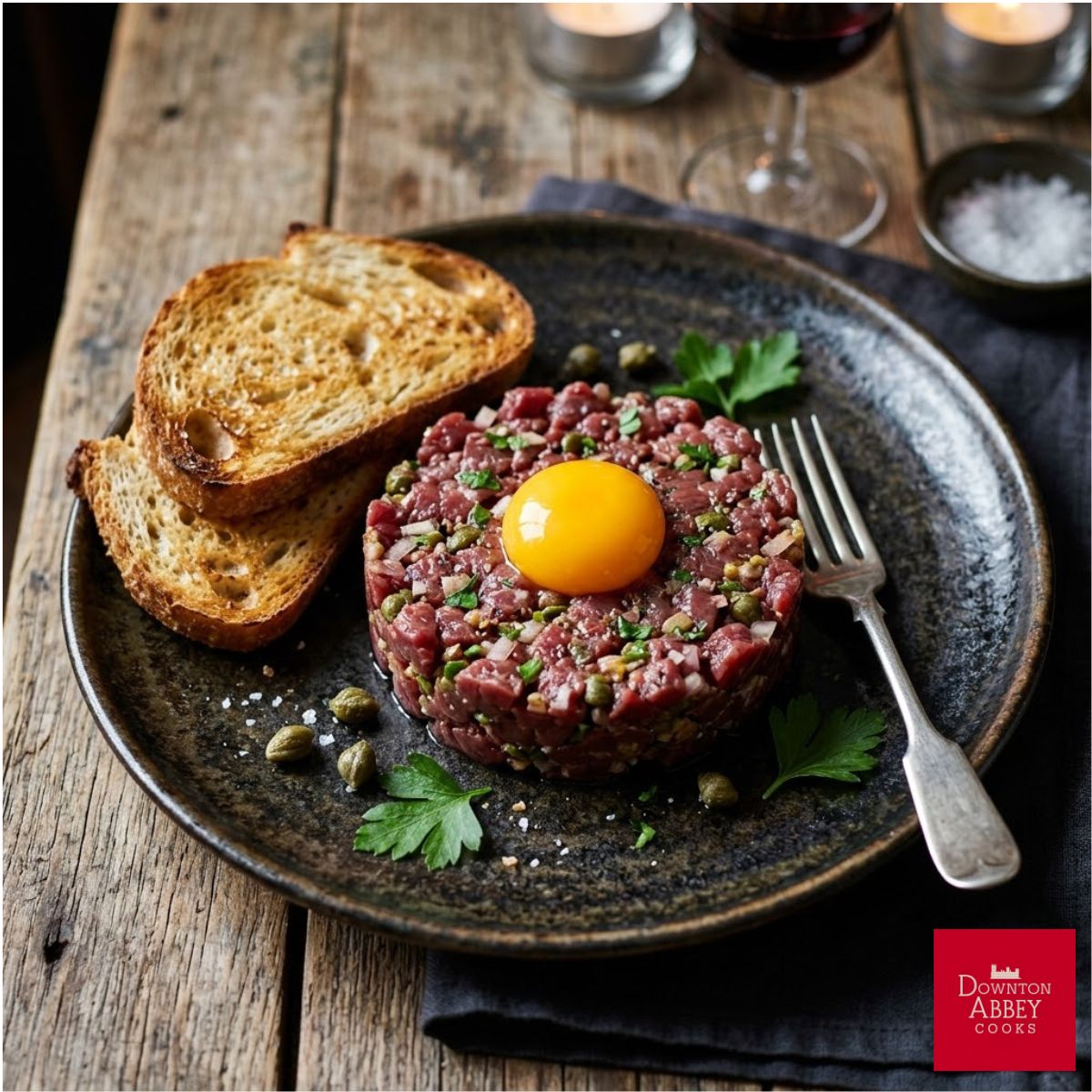
 Tartare is one of the oldest ways to serve meat and one of the most striking starters you can make. It also needs respect. Here is the history, the safety, and a recipe with a worry-free option.
Great food has a history, and tartare is among the oldest chapters. Raw, seasoned meat has been eaten for centuries, and today it signals a special occasion. Venison tartare, sharp and savoury, is a genuine showpiece. It also asks for care, because raw meat at home carries real risk. The after you want here is a refined, special-occasion starter you can serve with confidence, thanks to a safer method built in.
Quick answer: Venison tartare is finely diced raw venison, seasoned with mustard, capers, shallot, and Worcestershire. Because raw meat carries risk, buy a fresh whole cut from a trusted butcher, keep it very cold, and serve it the same day. A quick-seared version gives the same flavour with less worry. It takes about 15 minutes.
A short history of tartare
Raw seasoned meat has a long past. The name “tartare” is often linked, through legend, to the Tatar horsemen of Central Asia, though the story is more myth than fact. What is certain is that steak tartare became a fixture of French restaurant dining by the early twentieth century, served with the classic garnishes of capers, onion, and egg yolk. Venison tartare is the game version, richer and a little more rustic, and it has become a favourite on modern menus that prize wild, local ingredients.
It appeared on the 2026 Wimbledon menu as wild venison tartare, the meat sourced from the Royal Parks under a sustainability arrangement. Serving venison raw and local is very much of the moment.
Is it safe to eat raw venison at home?
This is the part to take seriously. Raw meat carries a risk of harmful bacteria and, in the case of wild game, parasites. I want to be straight with you: only make raw tartare if you completely trust your source.
If you want to try it, buy a fresh whole cut from a butcher you know, tell them it is for tartare, keep it very cold at every step, and serve it the same day. If any of that gives you pause, use the quick-seared method below. Searing the outside of the cut removes most of the surface risk while keeping the inside rare, and it delivers nearly the same flavour and texture. When in doubt, sear.
Venison tartare: quick facts
- What it is: finely diced raw (or seared) venison, seasoned and served cold
- Classic garnishes: mustard, capers, shallot, Worcestershire, egg yolk
- Safety first: use a trusted source, keep it very cold, or sear the outside
- Time: about 15 minutes
- Substitute: good beef tenderloin works in place of venison
- Wimbledon link: wild venison tartare featured on the 2026 menu
Frequently asked questions
Is venison tartare safe to eat? It can be, with care. Use a fresh whole cut from a trusted butcher, keep it very cold, and serve it the same day. If you are unsure, use the quick-seared method, which reduces the risk of surface burns. Those who are pregnant, elderly, very young, or immune-compromised should avoid raw meat.
Can I use beef instead of venison? Yes. A good beef tenderloin makes an excellent tartare and is often easier to source than venison.
Why cut the meat by hand? A sharp knife gives clean, distinct pieces and the right texture. A food processor crushes the meat into a paste and warms it, which you do not want.
What do I serve with venison tartare? Toasted bread or crostini, a few dressed greens, and cornichons or extra capers on the side.
A final thought
Tartare is a dish that rewards good ingredients and careful hands. Treat the meat with respect, keep it cold, and you have a starter that feels genuinely special. Or take the seared route and enjoy the same flavour with peace of mind. Great food has a history, and this one is best served with a little wisdom alongside.
If you make it, I would love to see it. Pass this along to the friend who loves to mark an occasion with something special.
This recipe involves raw meat. Please follow the safety notes, and when in doubt, choose the seared method.
Venison (or Beef) Tartare, Done Safely
Ingredients
- 6 oz 170 g venison loin or good beef tenderloin, well chilled
- 1 tsp. Dijon mustard
- 1 tsp. capers chopped
- 1 small shallot finely chopped
- 1 tsp. Worcestershire sauce
- 1 tsp. olive oil
- 1 pinch Salt and pepper
- Toasted bread to serve
- 1 egg optimal

Instructions
- For the safer version, sear the chilled cut hard in a hot pan for about 30 seconds a side, just to colour the outside, then chill again before cutting.
- Cut the meat into very small, even dice with a sharp knife. Do not use a food processor.
- Gently fold in the mustard, capers, shallot, Worcestershire, and oil. Season to taste.
- Shape into a neat mound and serve at once with toasted bread.
Notes