
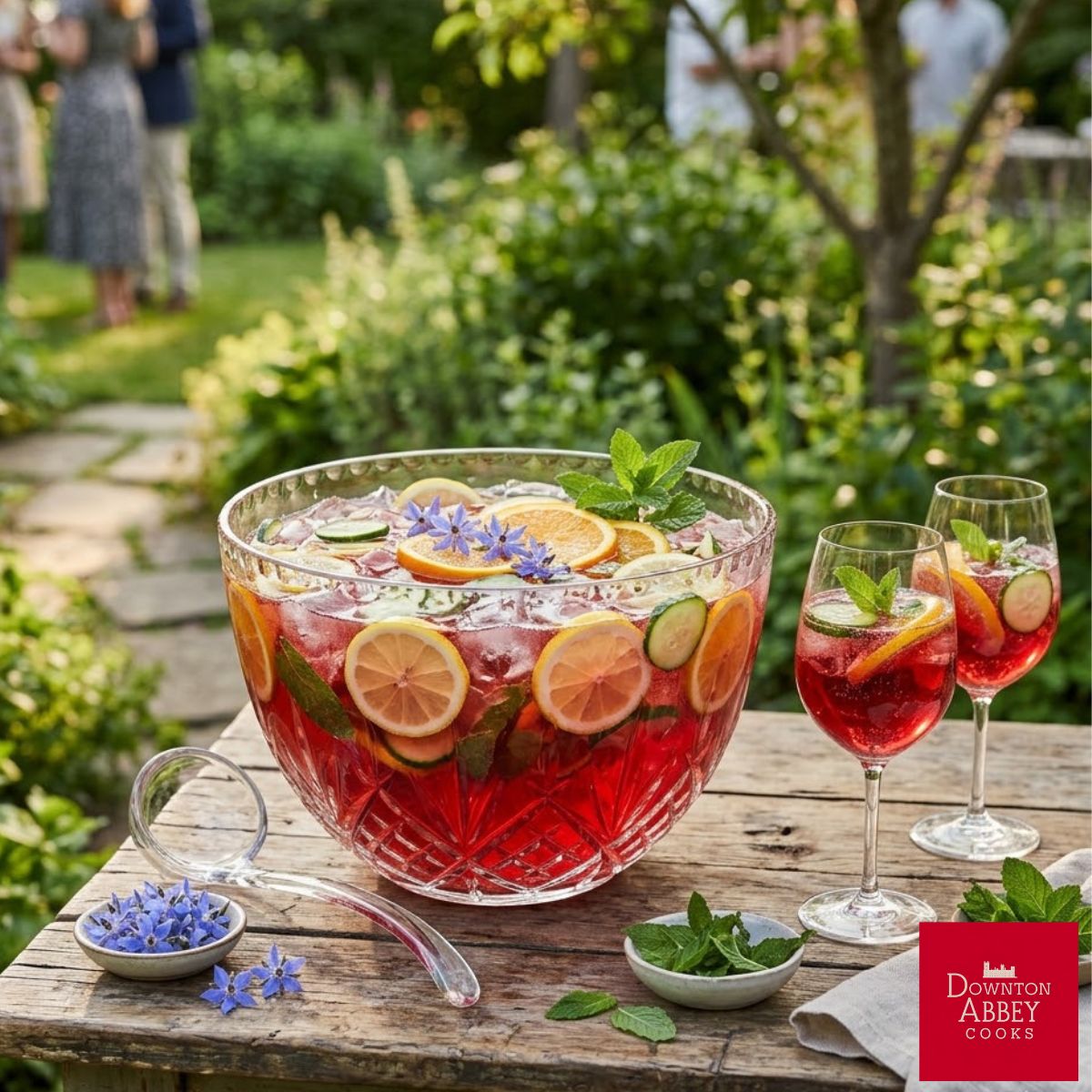
 Champagne cup was a gesture. Claret cup was a commitment. It was the drink of long summer afternoons, served cold and refilled without ceremony.
If a champagne cup was what you served when you wanted to impress, a claret cup was what you served when you wanted your guests to stay awhile. It appeared at the same occasions: race days, garden parties, picnics, regattas. But it was the more restrained choice, built on red wine rather than champagne, and it carried a certain confidence with it. The host who served a claret cup was not trying to dazzle anyone. The food and company would do that.
It also happened to be considerably more affordable than a champagne cup, which did not hurt.
What It Is
Claret cup is a chilled wine punch made from red Bordeaux (claret being the old British name for the wines of that region), stretched with soda water, sharpened with a liqueur and citrus, and loaded with cucumber, mint, and borage. Mrs. Beeton‘s 1861 recipe, No. 1831 in the Book of Household Management, adds a small amount of nutmeg, which gives the cup a faint warmth underneath the cold fruit. It is worth including.
Her serving instruction is one of the better period details in the book: the cup should be passed with a clean napkin looped through one of the handles, so that the rim may be wiped between guests. This was considered proper. It also suggests that claret cup was served communally from a single large vessel, passed around the table or the lawn rather than poured into individual glasses. The silver cup it was served in was part of the presentation.
The Social Context
In Victorian and Edwardian Britain and America, “cups” occupied a distinct category in the hierarchy of drinks. They were not cocktails, which were considered too strong for afternoon occasions and mixed company. They were not straight wine, which was too plain. They were not lemonade, which was for children and temperance advocates.
Cups were civilized. They were diluted enough to last an afternoon without incident, flavoured enough to be interesting, and presented with enough ceremony to feel festive. For race days, where guests might be standing in the heat for several hours, they were practical as well as elegant.
Claret cup appears in virtually every Victorian and Edwardian entertaining guide alongside the champagne cup, cider cup, and various other preparations. It was the workhorse of the category. Reliable, crowd-pleasing, and easy to batch in quantity.
The Derby Connection
At Gilded Age Derby parties, a claret cup would have appeared alongside mint juleps and a champagne cup as a drink for guests who preferred wine to spirits. The cucumber and citrus flavours complement cold fried chicken, beaten biscuits, and devilled eggs without competing with them. It is a drink built for food.
For a modern Derby party, claret cup fills the same role it always did: something cold, wine-based, and easy to keep going all afternoon.
A Note on the Wine
Claret cup does not require an expensive bottle. The soda water, fruit, and liqueur carry the drink. A straightforward Merlot-based Bordeaux or a Beaujolais works well. Avoid heavy, tannic reds. The cup should be light enough to drink on a warm afternoon, which is the whole point.
The nutmeg in Mrs. Beeton’s original is easy to overlook and worth including. A small amount grated fresh into the base adds a background warmth that distinguishes a properly made claret cup from a glass of cold wine with fruit floating in it.
Claret Cup
Equipment
Ingredients
- 1 750ml bottle claret or light Bordeaux-style red wine
- 1 cup 250ml soda water, chilled
- 2 oz 60ml brandy
- 2 tbsp sugar or 1 oz simple syrup
- 1 large lemon thinly sliced into rounds
- 1 large orange thinly sliced into rounds
- 1/2 large English cucumber thinly sliced
- 2 medium Fresh mint sprigs
- Borage flowers if available (traditional garnish)
- Ice

Instructions
Dissolve the sugar
- Stir the sugar into the brandy until dissolved. If using simple syrup, skip this step.
Build the base
- Combine the brandy mixture, wine, lemon rounds, orange rounds, and cucumber slices in a large glass jug or punch bowl. Stir gently. Cover and refrigerate for at least 30 minutes.
Finish and serve
- Just before serving, add the soda water and stir once. Add ice and tuck in the mint and borage flowers if using.Serve from a large silver cup, glass jug, or punch bowl. Traditionally, the cup was passed with a clean napkin looped through the handle so guests could wipe the rim between turns. For a modern party, ladle or pour into wine glasses at the table.
- Serve in wine glasses.
Notes
- Choose a light, fruity red wine. A heavy tannic Bordeaux will overpower the fruit. A Beaujolais or lighter Merlot-based wine also works well.
- Like champagne cup, add the soda water only when ready to serve.
- Claret cup is slightly more forgiving than champagne cup at room temperature, but it is best served well chilled.
- For a larger batch, the base (wine, brandy, sugar, fruit) keeps well in the refrigerator for up to 24 hours before adding soda water.