
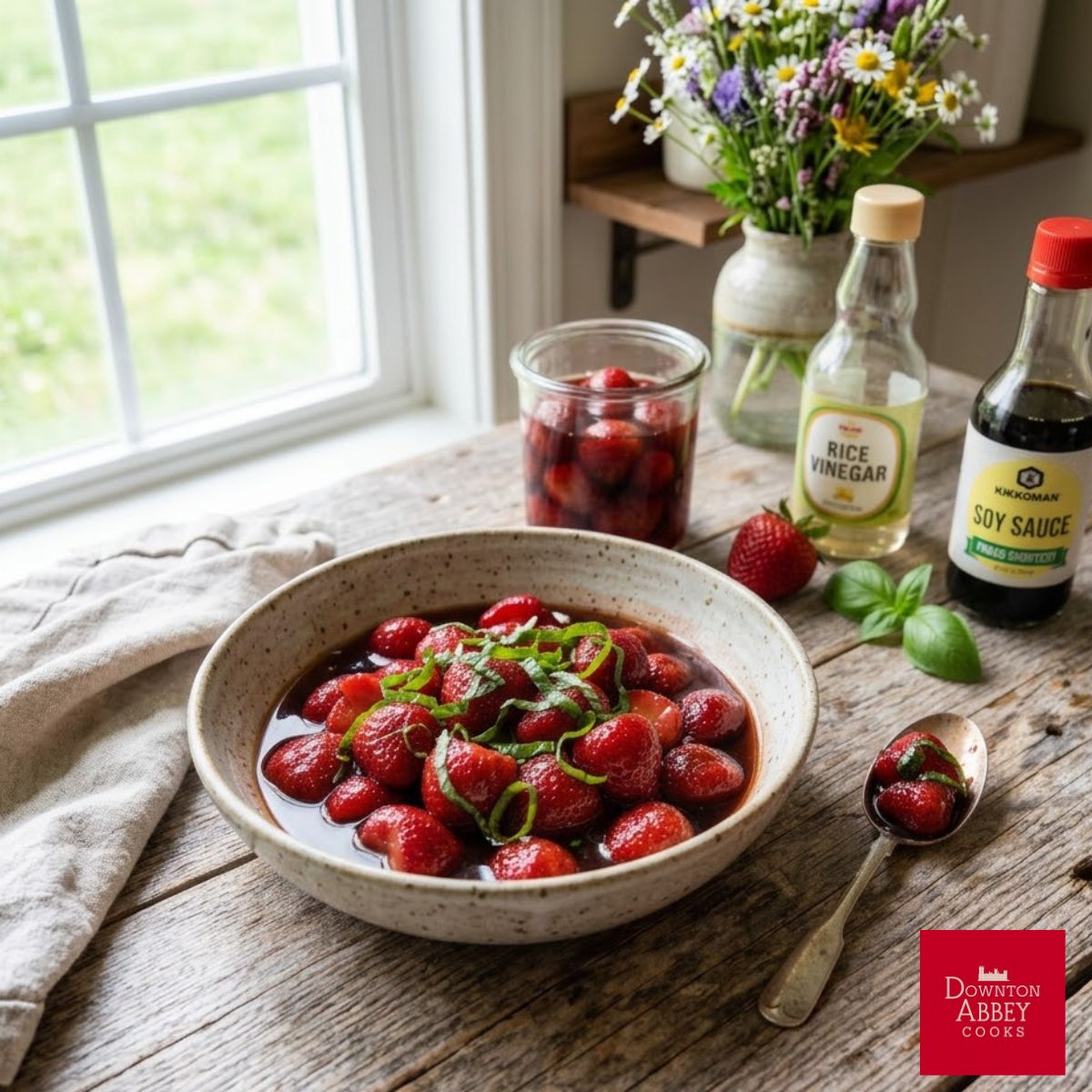
 Long before strawberries meant cream and sugar, cooks treated fruit with vinegar to make it last and to wake up a heavy plate. Pickled strawberries are that old idea, made fresh. Here is the history, and an easy way to make them at home.
Great food has a history, and the strawberry has a longer one than the dessert trolley suggests. For centuries, cooks preserved and sharpened fruit with vinegar, not sugar. Pickled and spiced fruits sat in every well-run larder, ready to cut through cold meats and rich roasts. Pickled strawberries belong to that tradition. The after you want here is a bright, tangy spoonful that lifts grilled chicken, soft cheese, or a summer salad, made in half an hour with almost no skill required.
Quick answer: Pickled strawberries are fresh strawberries steeped in a warm vinegar brine so they turn tangy and savoury rather than sweet. The technique comes from the old practice of preserving fruit in vinegar. At home you can make a simple version in about 30 minutes with strawberries, vinegar, a little sugar, and a splash of soy sauce.
What are pickled strawberries?
Pickled strawberries are ripe strawberries soaked in a lightly sweetened vinegar brine. The vinegar tames the sugar and brings out the fruit’s natural acidity, so the berries taste bright and savoury instead of like dessert. They stay soft and juicy, but they gain a sharp edge that works beautifully with rich and salty foods.
A spoon of soy sauce in the brine deepens that savoury note. It nods to ponzu, the tart Japanese citrus and soy sauce, and gives the berries a fuller, rounder flavour.
A short history of pickling fruit
Pickling is one of the oldest ways to keep food. Long before refrigeration, soaking food in vinegar or brine was how a short harvest was stretched through the winter. The method goes back thousands of years and shows up in nearly every cuisine on earth.
Fruit was no exception. European larders kept pickled and spiced fruits to serve alongside meat and game, the sharpness balancing the fat. Italy has its mostarda, fruit in a mustardy syrup. Germany has rumtopf, fruit layered with sugar and spirit. Across South Asia, fruit pickles, or achar, are a daily staple. The sweet-and-sour fruit preserve is a global habit, not a modern fad.
Strawberries had their own version of this. Because the berries are delicate and the season was once painfully short, cooks more often turned them into jam or into strawberry vinegar, a tangy syrup that flavoured drinks and dressings well into the Victorian era. Pickling the whole berry is the natural next step, and it is exactly the old larder logic applied to fresh fruit.
Why pickle a strawberry today?
The old reason was survival. The new reason is flavour.
A sweet berry beside roast chicken can feel out of place. A pickled one belongs there. The acidity cuts through fat and salt, which is why modern cooks have brought the technique back as a savoury garnish. It is the rare trick that is both very old and freshly fashionable.
How do you use pickled strawberries?
This is where the dish earns its keep. Spoon them over grilled or roast chicken to cut the richness. Pile them onto crackers with goat cheese or brie. Scatter them through a green salad with a little of their brine as the dressing. Lay them over flaked white fish. They also make a striking partner for charcuterie or a cheese board.
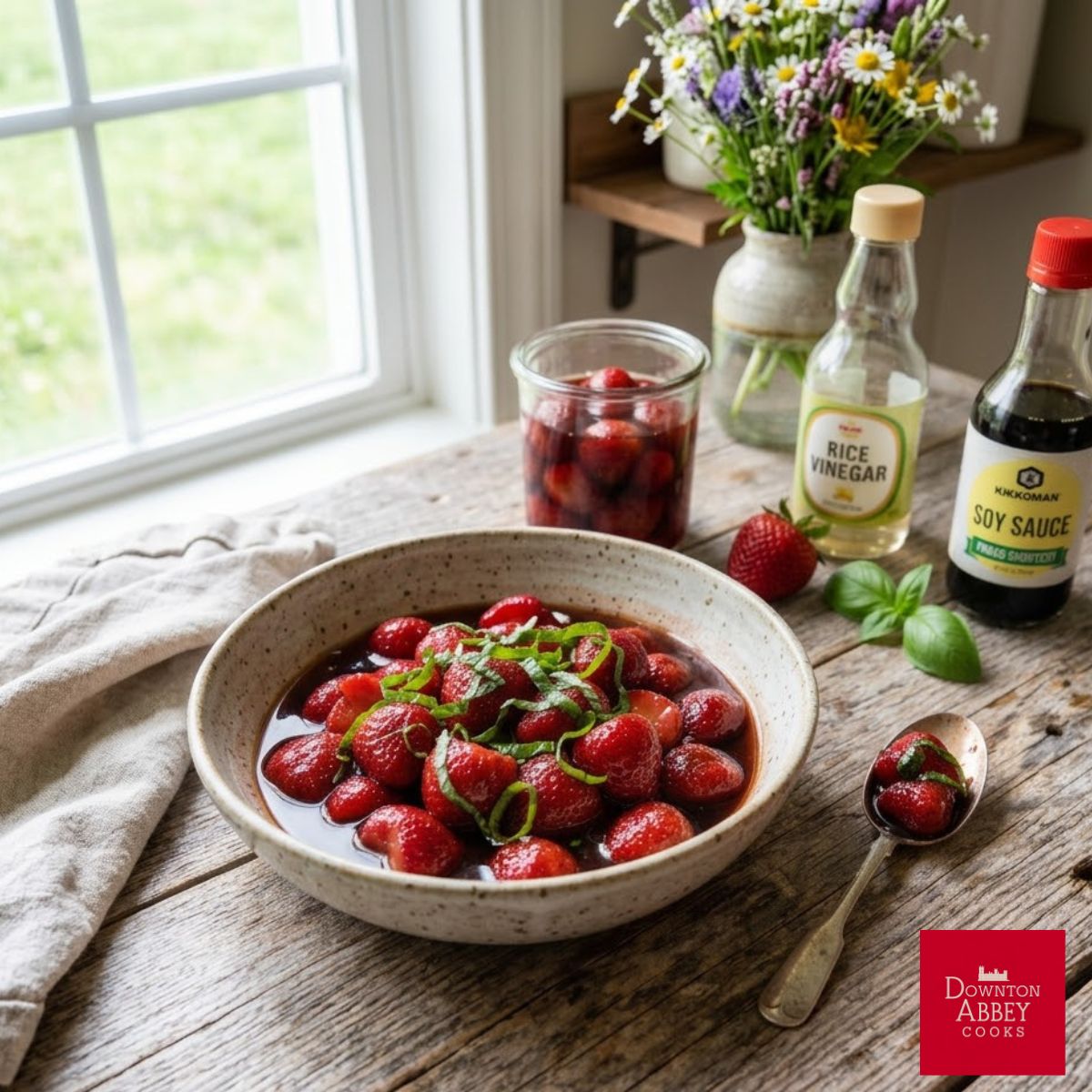
Pickled Strawberries with Strawberry Ponzu
Ingredients
- 1 cup 150 g strawberries, hulled and halved
- 3 tbsp. rice vinegar white wine vinegar also works
- 1 tbsp. soy sauce this is the "ponzu" shortcut
- 1 tsp. sugar
- 1 tsp. lemon or lime juice
- Pinch of salt
- 4 fresh basil leaves thinly sliced

Instructions
- Warm the vinegar, soy sauce, sugar, and salt in a small pan just until the sugar dissolves. Do not boil.
- Take it off the heat and stir in the lemon juice.
- Pour the warm liquid over the strawberries in a bowl. Let them sit for 30 minutes.
- Lift the berries out with a slotted spoon. Scatter the basil over top just before serving.
Notes