
 Halloween is next week, and Thanksgiving is five weeks away. In a lot of kitchens, that means one thing: half a can of pumpkin sitting in the fridge, slowly turning into a science project.
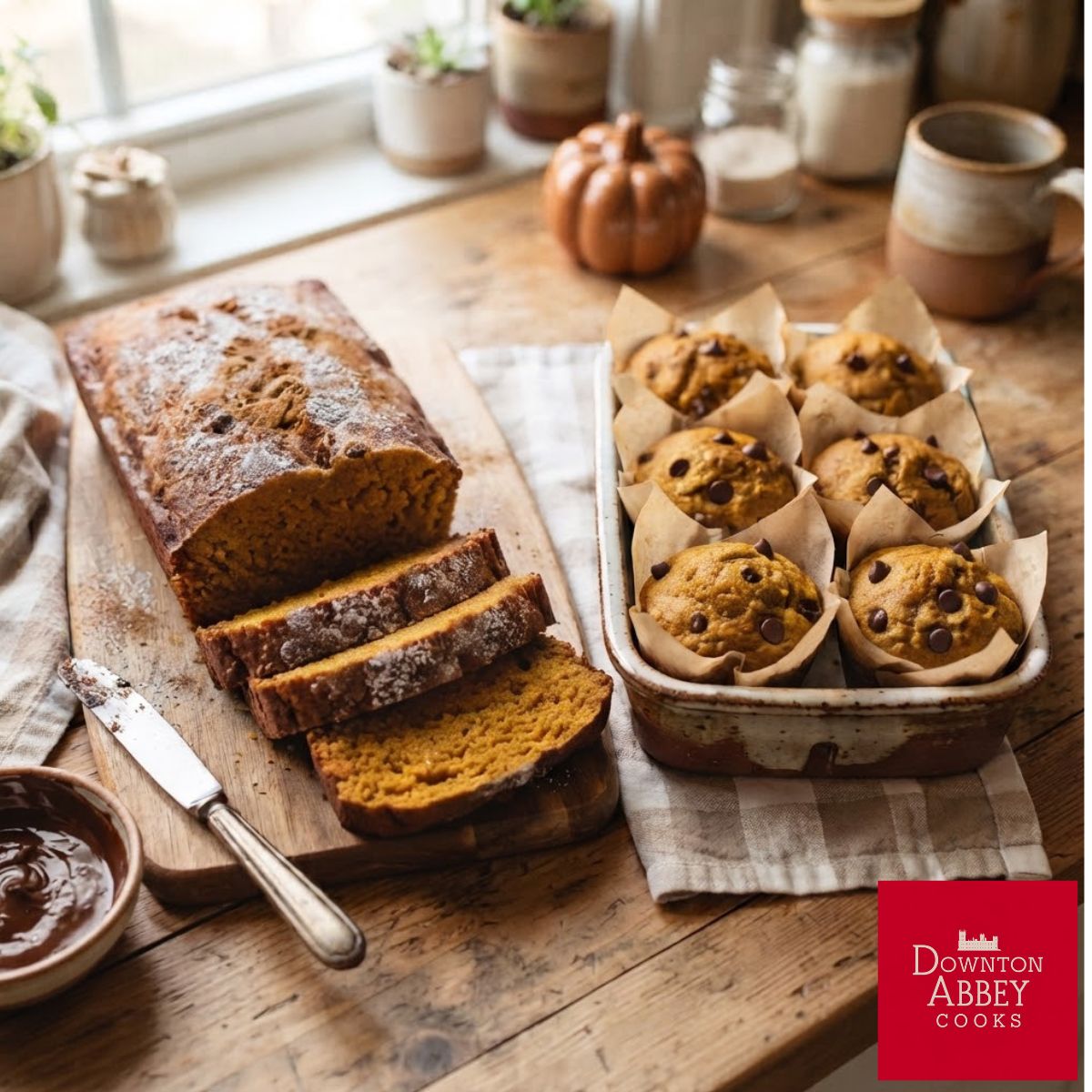
This pumpkin chocolate chip batter ends that problem. It uses the whole can. Bake it as a loaf or as muffins, and you get the same reward: a moist, tender crumb that tastes like real pumpkin, not just cinnamon, with enough chocolate to win over the people who say they don’t like pumpkin. Your family will ask for another batch before the first one is gone.
The loaf comes from King Arthur Baking. I also bake this batter as muffins, which are easier to pack for lunch and to grab from the freezer. Either way, the clever part is not new. American cooks used this trick more than 160 years ago. Here is what it is, why it works, and how pumpkin made its way from colonial pie plates to your kitchen.
The quick answer
The secret to richer pumpkin chocolate chip bread or muffins is to cook the canned pumpkin on the stove with sugar and spices for 12 to 15 minutes before adding it to the batter. That drives off water, deepens the flavour, and lets you use the whole 15-ounce can without a soggy result. American cooks were drying their pumpkin the same way in the 1850s.
Why This Batter Tastes More Like Pumpkin
Canned pumpkin is mostly water. That is why most quick bread recipes stop at one cup. Add more, and you get a heavy, gummy loaf or muffins that sink in the middle.
Sarah Jampel’s recipe addresses this. Simmer the full can in a wide skillet with some of the sugar, cinnamon, and ginger. Keep stirring until the pumpkin turns darker and starts to stick to the pan. That takes 12 to 15 minutes. You end up with about 1¼ cups of thick, concentrated pumpkin.
Less water means the batter bakes evenly. More pumpkin means more flavour. And cooking the spices with the pumpkin wakes them up, the same way toasting spices does for a curry. The loaf slices cleanly. The muffins come out tender, not damp. Both taste like pumpkin pie decided to become breakfast.
The Trick Is Older Than You Think
Cooks have been wringing water out of pumpkin for as long as Americans have been baking with it.
Amelia Simmons wrote American Cookery in 1796, the first cookbook by an American author. Her “pompkin” pudding, an early pumpkin pie, starts with a quart of pumpkin “stewed and strained.” Straining was step one in removing the water.
By 1858, Mrs. L.G. Abell went further in The Skillful Housewife’s Book. Her spiced pumpkin pie tells you to stew the pumpkin soft, then leave it on the fire, “stirring it often until quite dry.” That is the King Arthur method, almost word for word, written before the Civil War.
The habit carried into the Gilded Age. The White House Cook Book of 1887 included a separate recipe just for stewing pumpkin before it went into a pie. The cooks running kitchens in the world of The Gilded Age knew that wet pumpkin made a weak pie. The same logic works just as well for a loaf or a tray of muffins.
Would Mrs. Patmore Have Baked This?
Short answer: no. There are three good reasons.
1. The English never warmed to pumpkin
Pumpkin reached England in Tudor times, and Hannah Woolley printed pumpkin recipes as early as 1672. But it never became fashionable. In 1770, Martha Bradley’s The British Housewife dismissed it as “principally the food of the poor.” An English kitchen garden was far more likely to grow vegetable marrow. (Translation: a large summer squash. Think of a zucchini you forgot to pick for two weeks.) Pumpkin pie stayed a North American habit.
2. Chocolate chips did not exist yet
Ruth Wakefield of the Toll House Inn in Whitman, Massachusetts, chopped up a Nestlé chocolate bar for her cookies. The recipe first appeared in the 1938 edition of her cookbook. Nestlé began selling ready-made chocolate morsels soon after. The Downton story had wrapped up before any of this happened. Mrs. Patmore would have had to chop a chocolate bar herself, and Daisy would have eaten half of it.
3. The baking powder, at least, was British
Here Mrs. Patmore would have been right at home. Alfred Bird, the English chemist behind Bird’s Custard, launched a commercial baking powder in 1843. Harvard’s Eben Horsford patented his improved version in 1856. So the downstairs kitchen had the leavening for a quick bread or a batch of muffins. It just lacked the pumpkin and the chips.
Cora Crawley was American, of course. Whether she ever missed pumpkin pie at Thanksgiving, the show never said. If she did, she would have had a hard time finding a pumpkin in Yorkshire.
Where Pumpkin Bread Really Comes From
Pumpkin bread is an American story. Early colonists used pumpkin to stretch scarce flour, mixing it into heavy, practical loaves. In 1839, Lettice Bryan’s The Kentucky Housewife included pumpkin cakes made with cornmeal. They were closer to cornbread than to anything you would serve with tea.
The sweet, cake-like loaves and muffins we know today needed three inventions:
Put those together and pumpkin chocolate chip bread is a 20th-century creation built on a 19th-century cooking trick. Great food has a history, whether it comes in a loaf pan or a muffin tin.
Tips for a Better Loaf or Batch of Muffins
Here is how to get the most out of this batter:
How to Serve It
Treat the loaf the way an English cook would treat a tea loaf. (Translation: a sweet quick bread served sliced at afternoon tea.) Cut thin slices, spread them with soft butter, and serve with strong black tea. The muffins are made for busy mornings, lunch boxes and the coffee table at a fall open house. A wrapped loaf or a box of muffins also makes a welcome hostess gift during the holidays.
Frequently Asked Questions
Why is my pumpkin bread soggy?
Too much water. Canned pumpkin holds a lot of moisture. Cook it on the stove for 12 to 15 minutes until it darkens and sticks to the pan, then let it cool before adding it to the batter. Also make sure the center of a loaf reaches about 200°F before you take it out.
Can I make pumpkin chocolate chip bread into muffins?
Yes. The same batter bakes well in a muffin tin. Muffins need much less time in the oven than a loaf, so start checking them early.
Can I use the whole can of pumpkin in pumpkin bread?
Yes, if you cook it down first. Reducing a 15-ounce can leaves about 1¼ cups of thick pumpkin, which a single loaf can handle without turning gummy.
Is canned pumpkin real pumpkin?
Yes. Most American canned pumpkin comes from the Dickinson variety, a tan, often elongated pumpkin that looks nothing like a jack-o’-lantern. It has been grown for canning in Illinois for more than a century.
Did people in Edwardian England eat pumpkin?
Rarely. English cooks had known pumpkin since the 1600s but treated it as plain, cheap food. Vegetable marrow was far more common in English gardens and kitchens.
When were chocolate chips invented?
Ruth Wakefield’s chocolate chip cookie recipe first appeared in her 1938 cookbook. Nestlé began selling ready-made chocolate morsels shortly after.
How long does pumpkin chocolate chip bread keep?
The loaf keeps up to four days in an airtight container at room temperature. For longer storage, wrap the loaf or the muffins well and freeze them.
A Final Thought
Good kitchen tricks rarely disappear. They just wait in old cookbooks for someone to notice them again. A cook in 1858, stirring pumpkin over the fire until it was dry, was solving the same problem you have today: too much water and not enough flavour.
So use the whole can. Stir until it sticks, then bake it as a loaf or as muffins, and fill your kitchen with the smell of fall.
The Most Pumpkin Pumpkin Chocolate Chip Bread or Muffins
Equipment
- 1 loaf pan
Ingredients
- 15 oz Pumpkin purée (425g) (1 can)
- 1 cup granulated sugar, divided (198g)
- 1 1/4 tsp. ground cinnamon
- 1 1/4 tsp. ground ginger
- 1 pinch of ground turmeric optional, for color
- 1 3/4 cups Unbleached All-Purpose Flour (210g)
- 1 1/4 tsp. baking powder
- 1/2 tsp. baking soda
- 1/2 tsp. table salt
- 3 large eggs at room temperature
- 1/2 cup vegetable oil (99g)
- 3/4 cup chocolate chips (128g)
- 1 tbsp. coarse sparkling sugar or turbinado sugar (12g)

Instructions
- Preheat the oven to 350°F.
- In a wide skillet or saucepan, combine the pumpkin, 1/4 cup (49g) of the sugar, cinnamon, ginger, and turmeric. Set over medium-high heat and cook, stirring frequently, until the pumpkin is darker in color and dry enough that it starts to stick to the pan, 12 to 15 minutes. Stir with more frequency towards the end of the cooking time and lower the heat as needed to prevent scorching. Transfer to a bowl or liquid measuring cup to cool slightly; you should have about 1 1/4 cups (375g) of the pumpkin mixture.
- Lightly grease an 8 1/2" x 4 1/2" or 9" x 5" loaf pan and line with a parchment sling or prepare 6 or 12 cup muffin tins.
- In a medium bowl, whisk the flour, baking powder, baking soda, and salt to combine.
- In a large bowl, vigorously whisk the eggs with the remaining 3/4 cup (149g) sugar until the mixture is thick, pale, and voluminous, 1 to 2 minutes.
- Gradually whisk in the oil and keep stirring until it’s shiny and emulsified, then add the pumpkin mixture and whisk to incorporate. Add the flour mixture and whisk until combined. Add the chocolate chips and stir to combine.
For Loaf
- Transfer the batter to the prepared loaf pan and smooth the top into an even layer. Sprinkle evenly with sparkling or raw sugar.
- Bake the pumpkin chocolate chip bread for 50 to 60 minutes, until a toothpick or paring knife inserted into the center of the bread comes out clean and a digital thermometer reads at least 200°F.
- Remove the bread from the oven and transfer the pan to a wire rack to cool slightly. When cool enough to handle, use the parchment to lift the bread out of the pan and let it cool completely on the rack.
- Storage information: Store leftover pumpkin chocolate chip bread in an airtight container at room temperature for up to 4 days. Freeze for longer storage.
For Muffins
- Transfer the batter to the prepared 6 or 12 muffin tins. Sprinkle evenly with sparkling or raw sugar.
- Bake the pumpkin chocolate chip muffins for 30 minutes (6 muffins) or 20 minutes (12 muffins) until a toothpick or paring knife inserted into the center of the bread comes out clean and a digital thermometer reads at least 200°F.