
 Apple sponge cake is a butter-based sponge with diced apple folded through the batter, baked in one pan, and served warm with custard sauce poured over. It comes from the Victorian tea table, where cooks folded whatever fruit was on hand into a basic creamed batter. No layers. No filling. No fuss.
Where This Cake Comes From
Afternoon tea did not exist before the 1840s. Credit usually goes to Anna, the Duchess of Bedford, a lady-in-waiting to Queen Victoria. She got hungry around four in the afternoon, long before the evening meal, and started asking for tea and something to eat sent up to her rooms. Queen Victoria liked the idea. So did everyone else with money and time to spare.
Sponge cake existed long before Victoria came to the throne. What changed during her reign was the crumb. Baking powder came into wide use in the mid-1800s, and cooks no longer had to beat air into eggs by hand for twenty minutes to get a cake to rise. The result was a lighter, more reliable sponge, and it became the base for nearly every tea cake that followed, including this one.
By the Edwardian years, that base cake had settled into a routine. Cream the butter and sugar, beat in the eggs, fold in whatever fruit needed using up. Apples showed up more than most. England grows a lot of them, and a soft eating apple folds into batter without turning the cake to mush. This recipe keeps that habit alive.
Custard Sauce, Not Custard Pudding
If you grew up in North America, custard probably means something thick, set in a dish, and eaten with a spoon on its own. British custard sauce is different. It is thin enough to pour, closer to what French cooks call crème anglaise, and it goes over the cake instead of showing up as its own course.
Part of the reason custard sauce is so common on English tea tables comes down to one chemist. Alfred Bird’s wife could not eat eggs, so in 1837 he invented an egg-free custard powder made mostly from cornstarch. It was cheaper and easier than the real thing, and by the Edwardian period it had become the everyday version in most kitchens. If your custard sauce comes from a box rather than raw eggs and cream, you are keeping the tradition, not cutting a corner.
Getting the Apple Right
The recipe calls for a soft eating apple, and that word choice matters. In American terms, you want a dessert apple like Honeycrisp, Gala, or Fuji, not a firm baking apple like Granny Smith. A Granny Smith holds its shape too well. It stays in hard little cubes instead of softening into the crumb the way this cake wants.
Dice the apple small, no bigger than a pea, and toss it with the cinnamon before folding it in. That coating does two things. It keeps the pieces from clumping together, and it means every bite gets a little spice instead of a few lucky forkfuls.
Common Questions
Is apple sponge cake the same as a Victoria sponge?
No. A Victoria sponge is two plain layers sandwiched with jam and cream, with no fruit in the batter itself. Apple sponge cake is a single layer with the fruit folded straight into the batter, closer to a coffee cake than a layer cake.
Can I use Granny Smith apples instead?
You can, but the texture will be different. Granny Smiths stay firm and hold their shape, so you get distinct chunks of apple rather than the soft, almost melted apple this recipe is built around. A softer eating apple gives a better result.
What is the difference between custard sauce and custard powder?
Custard sauce is the finished, pourable liquid. Custard powder is the shortcut mix, usually cornstarch-based, that most British and Canadian cooks use to make it. Both end up the same way on the cake: warm, thin enough to pour, and not overly sweet.
Can I make apple sponge cake ahead of time?
Yes. It keeps well at room temperature, covered, for a day or two. Warm individual slices before serving and make the custard sauce fresh, since it does not reheat as cleanly as the cake does.
What size pan does apple sponge cake need?
This recipe fills an 8-inch round cake pan. Go smaller, and the middle may not cook through in the given time. Go larger and the cake will bake flatter and finish faster, so start checking it a few minutes early.
The Point of the Whole Thing
Cakes like this one were never meant to be fancy. They were built to use up what was sitting in the larder and get something warm on the table by four o’clock. That is still the whole point. Keep the apples soft, keep the custard thin, and you have got the same fix the Victorians did.
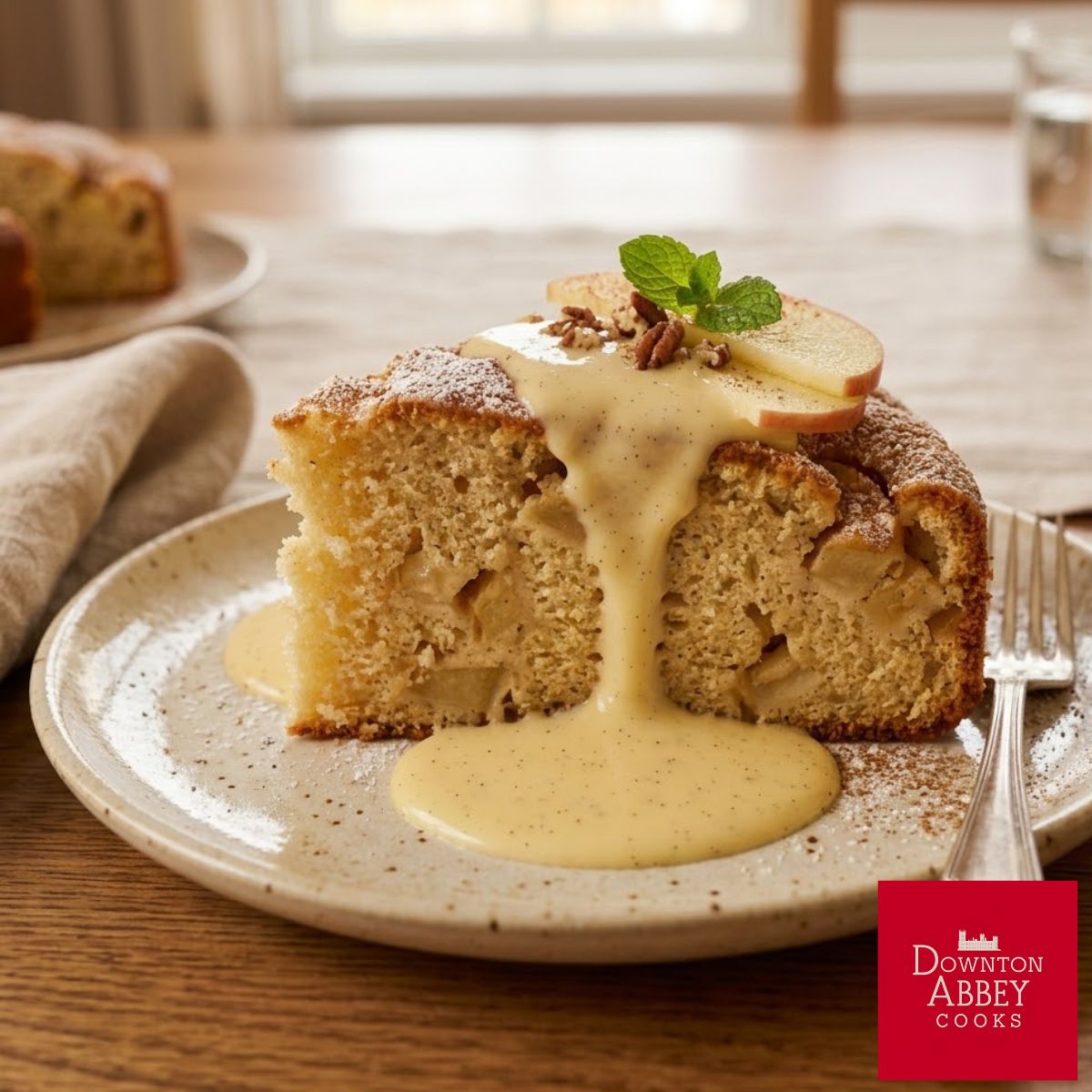
Apple Sponge Cake with Custard Sauce
Equipment
Ingredients
- 115 g ½ cup 1 stick unsalted butter, softened
- 115 g ½ cup + 2 tbsp granulated sugar
- 2 large eggs
- 150 g 1¼ cups all-purpose flour
- 2 tsp baking powder
- Pinch of salt
- 2 tbsp 30 ml whole milk
- 1 tsp vanilla extract
- 2 medium eating apples peeled, cored, finely diced
- ½ tsp ground cinnamon
- 500 ml 2 cups + 2 tbsp custard warmed, for serving

Instructions
- Preheat oven to 350F (180C). Grease and line an 8-inch round cake tin.
- Cream the butter and sugar until pale and fluffy, about 3 minutes.
- Beat in the eggs one at a time, adding a spoonful of the flour with the second egg to stop curdling.
- Whisk the flour, baking powder, and salt together separately, then fold into the batter along with the milk and vanilla. Mix just until smooth.
- Toss the diced apple with the cinnamon, then fold gently through the batter.
- Spoon into the tin, smooth the top, and bake about 35 minutes, until risen, golden, and springy to the touch.
- Cool 10 minutes in the tin, then turn out. Slice and serve warm with the custard poured over or alongside.