
 Two ingredients, five minutes, one very useful recipe.
What You Are Actually Making
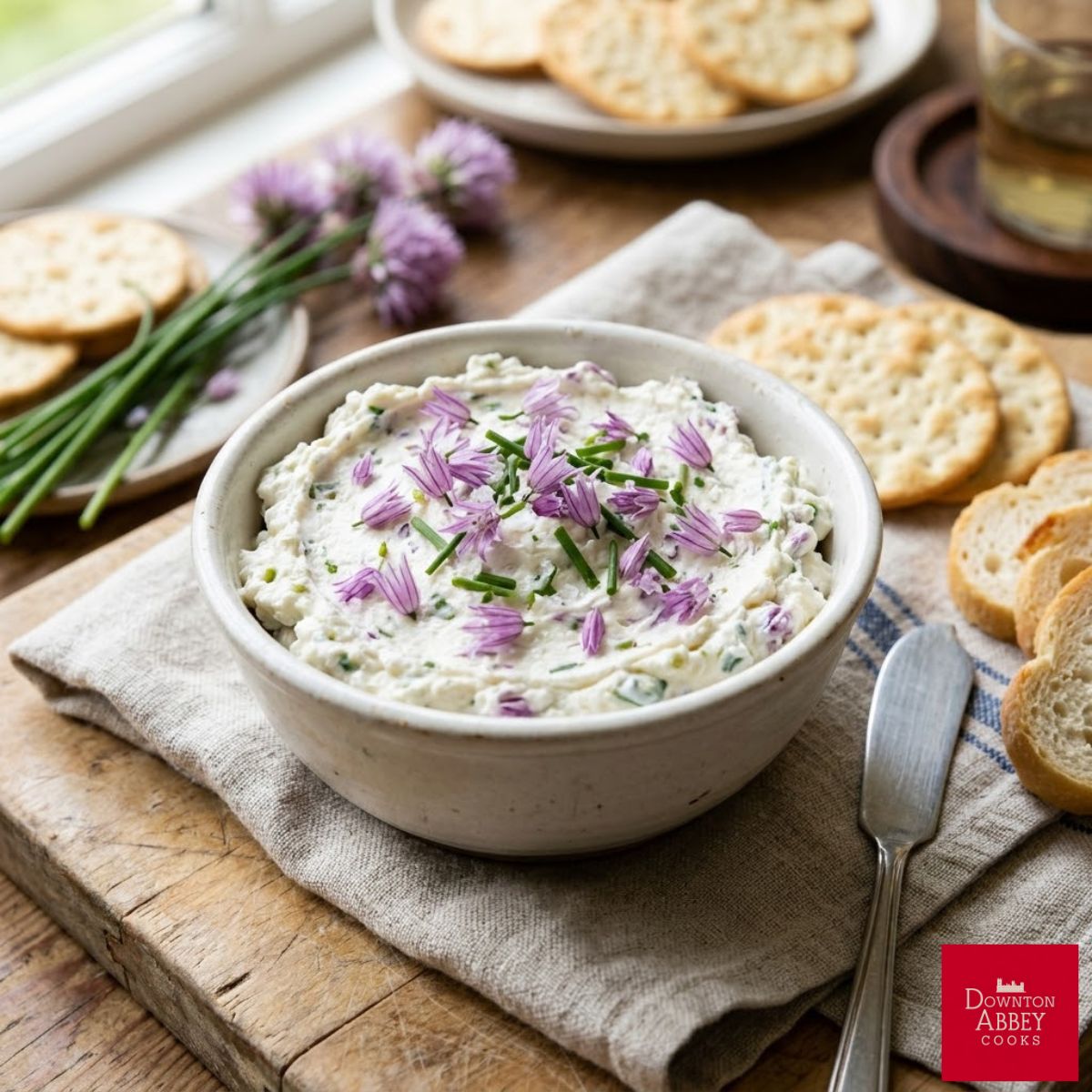
This is a fresh cheese spread with chive blossoms folded in. The blossoms add their mild, allium flavour and a scatter of purple colour that makes the whole thing look more composed than the effort warrants.
Goat cheese (chèvre, if you are buying it at a good cheese counter) is the right base for this. It is soft, slightly tangy, and spreadable at room temperature. That faint tang is what makes it interesting. A plain cream cheese will work, and ricotta will be milder and lighter, but the goat cheese version has the most character.
The blossom florets are pulled apart from the stem and gently folded in. You do not process or blend them. You want visible flecks of purple in the finished spread, not a uniform tint.
A Longer History Than You Might Expect
Herb-and-cheese spreads are not a modern invention. The French have been making variations of this for centuries. Cervelle de Canut, a Lyonnaise herbed fresh cheese spread with chives, parsley, tarragon, and vinegar, dates back to the 19th century and was eaten by the city’s silk weavers as a working lunch. The name translates, charmingly, as “silk worker’s brain.” It was practical food: cheap, sustaining, and made from what the kitchen garden offered.
Closer to the Downton Abbey table, the Edwardian savoury course served a similar purpose in a considerably more formal setting. The savoury was a small, salty, creamy dish served toward the end of a long dinner, intended to aid digestion and please the palate before the gentlemen retired for whiskey. Potted cheese, devilled kidneys on toast, angels on horseback: these were the kinds of things Mrs. Patmore would have produced. A soft herbed cheese on a small biscuit would have been entirely at home in that company.
Afternoon tea at Downton operated on similar logic. The finger foods served in the drawing room were small, elegant, and designed to be eaten standing up, without a plate if necessary. A soft cheese spread on a water cracker or thin slice of bread fits that format exactly.
Why the Blossoms Rather Than the Stems
Chive stems are sharper. They have a more aggressive onion bite that can overpower a delicate base like fresh goat cheese.
The blossoms are milder. The florets give you the savoury, allium quality of the chive without the sharpness. The flavour is gentler, the presentation more interesting, and the whole thing feels seasonal in a way that chopped stems from a supermarket pot simply do not.
This is also a fleeting ingredient. Chive blossoms are available for a few weeks in late spring and early summer. If you are going to use them, this spread is one of the best uses you can make of them.
How to Serve It
The spread works in several contexts without changing the recipe at all.
On a cheese board. Put it in a small bowl in the centre with a spreader and let people come to it. It provides a soft, fresh counterpoint to any harder aged cheeses on the board.
As a canapé base. Spread it on water crackers, thin slices of baguette, or cucumber rounds for a quick passed appetiser. Scatter a few extra florets over the top for garnish.
Stuffed into vegetables. It works well piped or spooned into celery sticks or halved cherry tomatoes. Both are Edwardian-era canapé formats that have held up rather well.
As part of an afternoon tea spread. Served on small rounds of bread with the crusts trimmed, this would not look out of place on a proper tiered stand alongside finger sandwiches and scones.
As a light lunch. Served alongside a green salad and some good bread, it is a complete and satisfying meal.
A Few Things Worth Knowing
Bring the cheese to room temperature before you start. Cold goat cheese is grainy and resistant. At room temperature it becomes smooth and spreadable in seconds.
Fold, do not stir aggressively. The goal is visible florets throughout the spread. Overmixing breaks them down and you lose the colour.
Season it properly. Goat cheese needs salt. Taste after you fold in the blossoms and adjust. A small amount of lemon juice brightens the whole thing without tasting lemony.
Reserve a few florets for the top. It takes ten seconds and makes the finished dish look considerably more considered.
Make it ahead. The spread holds well in the refrigerator for two to three days. The flavour actually improves slightly after a few hours as the blossoms infuse into the cheese. Take it out 20 minutes before serving so it softens back up.
One Last Thing
Chive blossoms have a short season and most people walk past them without a second thought. This spread is the fastest argument for changing that habit. Five minutes, two ingredients, and something that looks like you tried considerably harder.
If you are making the chive blossom vinegar as well, you now have two ways to extend the season past the blossoms. Both are worth doing.
Chive Blossom Goat Cheese Spread
Ingredients
- 8 oz soft goat cheese chèvre, at room temperature
- 1/3 cup chive blossom florets plus extra to garnish
- .5 tsp. flaky sea salt
- 1 tsp. lemon juice

Instructions
- Soften the cheese: Place 8 oz soft goat cheese (chèvre), at room temperature in a bowl. Add 1/2 teaspoon flaky sea salt and 1 teaspoon lemon juice. Stir until smooth.
- Fold in blossoms: Fold in 0.3 cups chive blossom florets, plus extra to garnish gently. Reserve a few florets for the top.
- Plate and serve: Transfer to a serving dish. Scatter the reserved florets over the top. Serve at room temperature.
Notes