 This Victoria Day long weekend, most Canadians are firing up the grill and cracking open a two-four. Americans south of the border are gearing up for Memorial Day the following weekend. But if you want to understand what this holiday is really about, start with a simple fact that surprises most people: Queen Victoria was not a dainty eater.
She ate fast. She ate a lot. And the food she loved shaped a century of British entertaining, including everything that landed on the Downton Abbey table.
What Is Victoria Day, and Who Celebrates It?
For American readers, a quick primer. Victoria Day falls on the Monday before May 25 each year, marking the birthday of Queen Victoria, born May 24, 1819. It is a statutory public holiday in Canada, and the only country where it is a national holiday. Canadians have observed it since 1845, making it one of the oldest holidays in North America.
Scotland has its own version of the holiday. Victoria Day is an official local public holiday in Edinburgh and Dundee, observed on the same date as Canada’s, which falls on the last Monday before May 25. In Scottish Gaelic it is called Latha Victoria. Schools close, though it is not a bank holiday, so banks and government offices stay open. Glasgow does not observe it, and the holiday has been fading elsewhere in Scotland for decades. Many Edinburgh residents today are unaware it exists. But the City of Edinburgh still lists it as an official public holiday in 2026, and the school children still get the day off.
Victoria’s deep love of Scotland almost certainly explains why the holiday held on there long after it disappeared from the rest of the UK. She embraced Highland culture with genuine enthusiasm, spent summers at Balmoral, and was genuinely beloved by Scots in return. Edinburgh and Dundee kept the holiday. The rest of Britain let it go.
Parts of Australia and New Zealand have historically observed it as well, though it has faded in those countries over time.
In Canada, it is as close to a summer kickoff as the calendar offers. Fireworks, parades, the first long weekend for planting the garden, and the optimistic assumption that the frost is finally behind us. It also goes by “the May Two-Four,” Canadian slang for a 24-case of beer, which tells you everything you need to know about how seriously the solemnity is taken.
One small note: many of us have wondered for some time whether Canada might someday establish a holiday in honour of Queen Elizabeth II, who reigned for 70 years and held a deep affection for this country. She visited Canada more than any other Commonwealth nation. It seems only fitting. Perhaps someday the calendar will catch up.
The Queen at Table
Victoria reigned for 63 years, from 1837 to 1901. In that time, she left her mark on fashion, mourning customs, and the empire. She also left her mark on food.
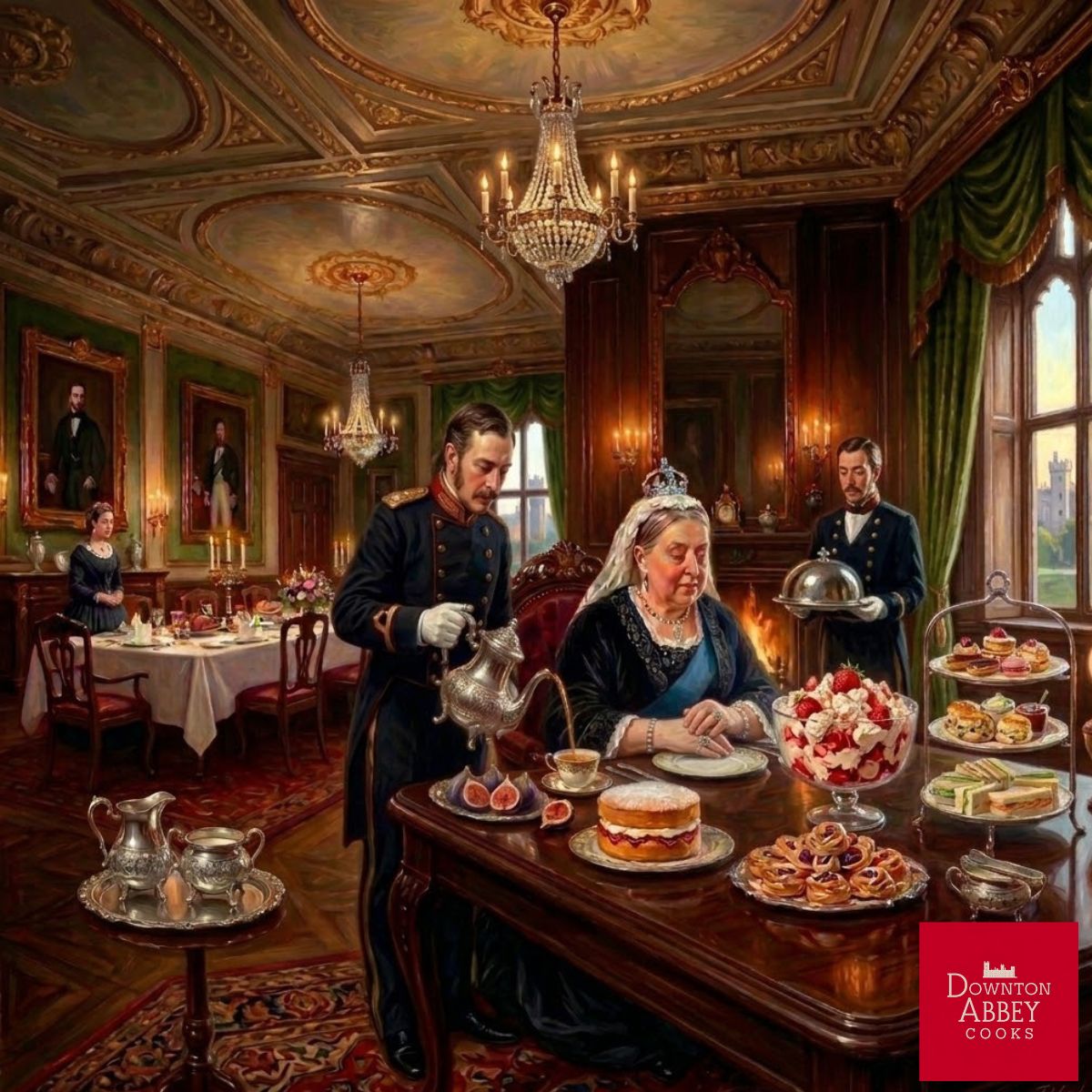
By all accounts, she ate at speed. Royal protocol required that when the Queen set down her fork, everyone stopped eating. Since she moved quickly through her courses, guests at the royal table often went hungry. This was not an uncommon complaint.
What she ate tells a different story. Victoria was not a food snob. She loved plain English roasting: beef, game birds, mutton. She was devoted to potatoes in almost any form. She drank a mixture of claret and Scotch whisky at dinner, a habit she picked up after falling in love with Balmoral. She reportedly enjoyed Brown Windsor Soup, a hearty, unfussy beef broth that bore no resemblance to the elaborate French cuisine that dominated aristocratic tables elsewhere in Europe.
She loved turtle soup, which was considered a great delicacy in the Victorian era. And, yes, she loved the cake that bears her name: a simple jam-filled sponge served at afternoon tea.
The picture you get is of a woman who genuinely liked food but preferred honest, satisfying dishes to theatrical ones.
What Changed When Edward Took the Throne
Queen Victoria died in January 1901. Her son, Edward VII, was a different character entirely.
Edward loved French cuisine, elaborate multi-course meals, and the pleasures of the table on a grand scale. He is the king who gave the world Edwardian dining, the era that forms the backdrop of Downton Abbey. Under Edward, the aristocratic dinner became longer, richer, and more overtly French in its influences. Consommé replaced Brown Windsor Soup at fashionable tables. Elaborate fish courses, game courses, and ices became the standard.
This is the table that Mrs. Patmore inherited at Downton Abbey. When we watch her rushing between the kitchen and the service stairs, she is managing a menu shaped by Edward VII’s tastes, built on foundations laid by Victoria.
The Victorian simplicity never entirely disappeared. Afternoon tea, which Victoria helped popularize through her own habits and her fondness for the Victoria Sponge, remained a constant. Plain roasted meats still anchored the dinner menu. But the Edwardian era layered French technique and Continental ambition atop a fundamentally English tradition.
The Holiday That Outlived the Monarch
Victoria Day was declared a Canadian holiday in 1845, during Victoria’s own lifetime. After her death, Canada’s parliament kept it. It has been celebrated every year since, on the Monday before May 25.
For Canadians, it is the unofficial start of summer. Fireworks, garden planting, and the first long weekend of the season. It is not, generally speaking, a day for turtle soup.
But here is what the holiday carries forward that most people do not think about: the outdoor celebration traditions that took hold in the 1890s, picnics, lawn games, food eaten outside in company, those are Victorian traditions. The idea that a public holiday should be marked with communal food and outdoor pleasure was very much a product of Victoria’s era.
For US readers, this is the thing worth understanding. Memorial Day and Victoria Day fall within a week of each other, and both mark the same cultural transition: winter is over, summer is starting, and the occasion calls for food shared outdoors with people you like. The form differs. The impulse is the same.
What to Make This Weekend
If you want to eat in the spirit of the day, skip the Victoria Sponge for once. (You can find that recipe right here if you want it.)
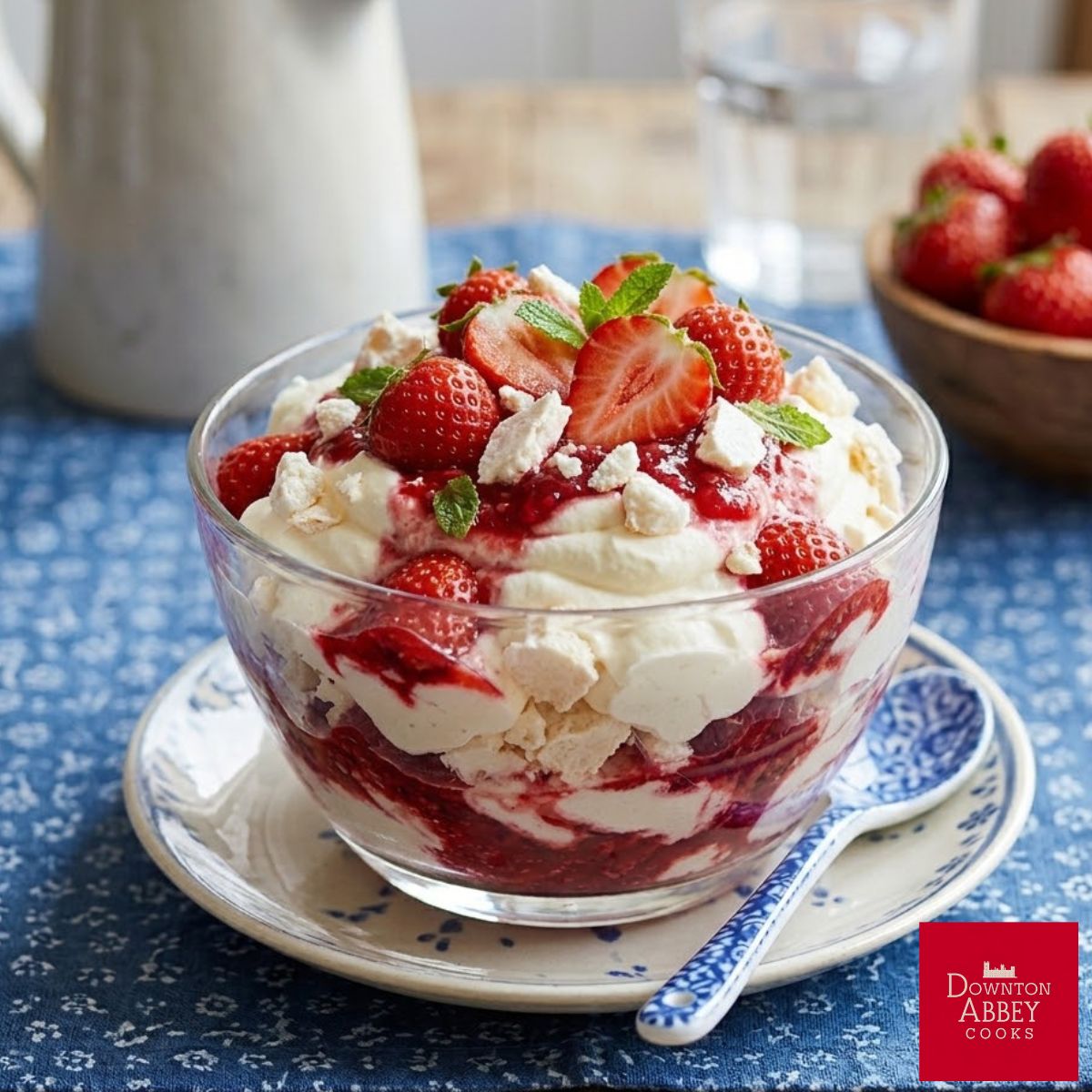
Instead, try Eton Mess. It is exactly what the name implies: a happy, generous mess of crushed meringue, whipped cream, and fresh strawberries. It was served at the annual cricket match between Eton College and Harrow School, a fixture of the Edwardian social calendar and very much the kind of event the Crawley family would have attended without a second thought.
It requires no baking skill. It comes together in minutes. It uses strawberries that are just coming into season. And it tastes like a British summer, which is exactly what Victoria Day is meant to celebrate.
The Short Version
Queen Victoria was not the delicate figure of legend. She liked her food plain, plentiful, and eaten fast. The Edwardian era that followed her reign, the one you see at Downton Abbey, added French polish to her fundamentally English table. Victoria Day celebrates her birthday, but it also carries forward something more durable: the idea that good food, good company, and time outdoors are worth marking on the calendar.
Eton Mess does all of that in about 20 minutes. Your guests will be glad you made it.
Frequently Asked Questions
What is Victoria Day, and why is it celebrated? Victoria Day is a Canadian public holiday celebrated on the Monday before May 25 each year. It marks the birthday of Queen Victoria, born May 24, 1819, who reigned over Britain and the Commonwealth for 63 years. Canada has observed the holiday since 1845, making it one of the oldest public holidays in North America.
Which countries celebrate Victoria Day? Canada is the only country where Victoria Day is a national statutory holiday. Scotland has traditionally observed the day informally, given Queen Victoria’s strong connection to Balmoral. Australia and New Zealand observed it historically but no longer celebrate it as a public holiday.
What did Queen Victoria actually eat? Queen Victoria preferred plain, honest English food over elaborate French cuisine. She was known to enjoy roast beef, game birds, mutton, potatoes in many forms, Brown Windsor Soup, and turtle soup, which was considered a great delicacy in her era. She loved the Victoria Sponge cake served at afternoon tea, and drank a mix of claret and Scotch whisky at dinner. She was also famously fast at the table, which meant guests often left the royal dining room still hungry.
What is Eton Mess? Eton Mess is a classic British dessert made from crushed meringue, whipped cream, and fresh strawberries folded together. It takes its name from Eton College, where it was traditionally served at the annual cricket match against Harrow School. It requires no baking and comes together in minutes. It is a staple of British summer entertaining and has Edwardian roots.
What is the connection between Victoria Day and Downton Abbey? Downton Abbey is set in the Edwardian era, the period immediately following Queen Victoria’s death in 1901. The food at Downton reflects the tastes of Edward VII, her son, who favoured elaborate French-influenced menus. Victoria’s simpler English food traditions, particularly afternoon tea and the Victoria Sponge, remained part of the Edwardian table throughout the show’s run.
What foods are traditionally served on Victoria Day? Modern Victoria Day celebrations in Canada typically feature outdoor and picnic food: grilled meats, hamburgers, and cold beer (the “May Two-Four”). Anglophiles and food historians often mark the occasion with afternoon tea traditions, including scones, tea sandwiches, and the Victoria Sponge. The outdoor picnic tradition itself dates back to Victorian-era public celebrations of the Queen’s birthday.
Will there ever be a Queen Elizabeth Day in Canada? No official holiday has been established yet, though the question has been raised. Queen Elizabeth II reigned for 70 years and visited Canada more than any other Commonwealth nation. Many Canadians feel a holiday in her honour would be fitting. For now, it remains a well-deserved wish on the calendar.
Traditional Eton Mess
Equipment
Ingredients
- 4 cups strawberries, hulled 500 g
- 2 tbsp. caster sugar superfine sugar*
- 2 cups heavy whipping cream 500 m
- 2 tbsp. icing sugar
- 1 tsp. vanilla extract
- 6 meringue nests or homemade**

Instructions
- Macerate the strawberries: Slice about two-thirds of the fresh strawberries, hulled and toss with 2 tablespoons caster sugar (superfine sugar). Set aside for at least 30 minutes. They will release juice and soften slightly. This is what gives the dessert its colour and sauce
- Prepare the remaining strawberries: Halve or quarter the remaining strawberries and set aside. These go in at the end for texture and freshness.
- Whip the cream: Pour the whipping cream into a large chilled bowl. Add the icing sugar and vanilla extract. Whip to soft peaks only. Stop before it gets stiff. You want it to fold and drape, not stand in peaks. Over-whipped cream will make the mess too dense.
- Break the meringue: Roughly crumble in three meringue nests — you will need different-sized chunks for texture, as well as a little fine dust. Leave one cookie to garnish.
- Assemble: Fold the macerated strawberries and their juice through the whipped cream in two or three turns. Add the crushed meringue and the reserved fresh strawberries. Fold again, no more than three or four times. You want visible streaks of strawberry, cream, and meringue. Do not overmix.
- Serve immediately: Spoon into glasses or a large bowl. Serve within 20 minutes. The meringue will begin to soften after that, which is acceptable, but you lose the crunch contrast. Garnish with a fresh strawberry and meringue cookie if you like.