
Underdressing and under-seasoning are the single most common reasons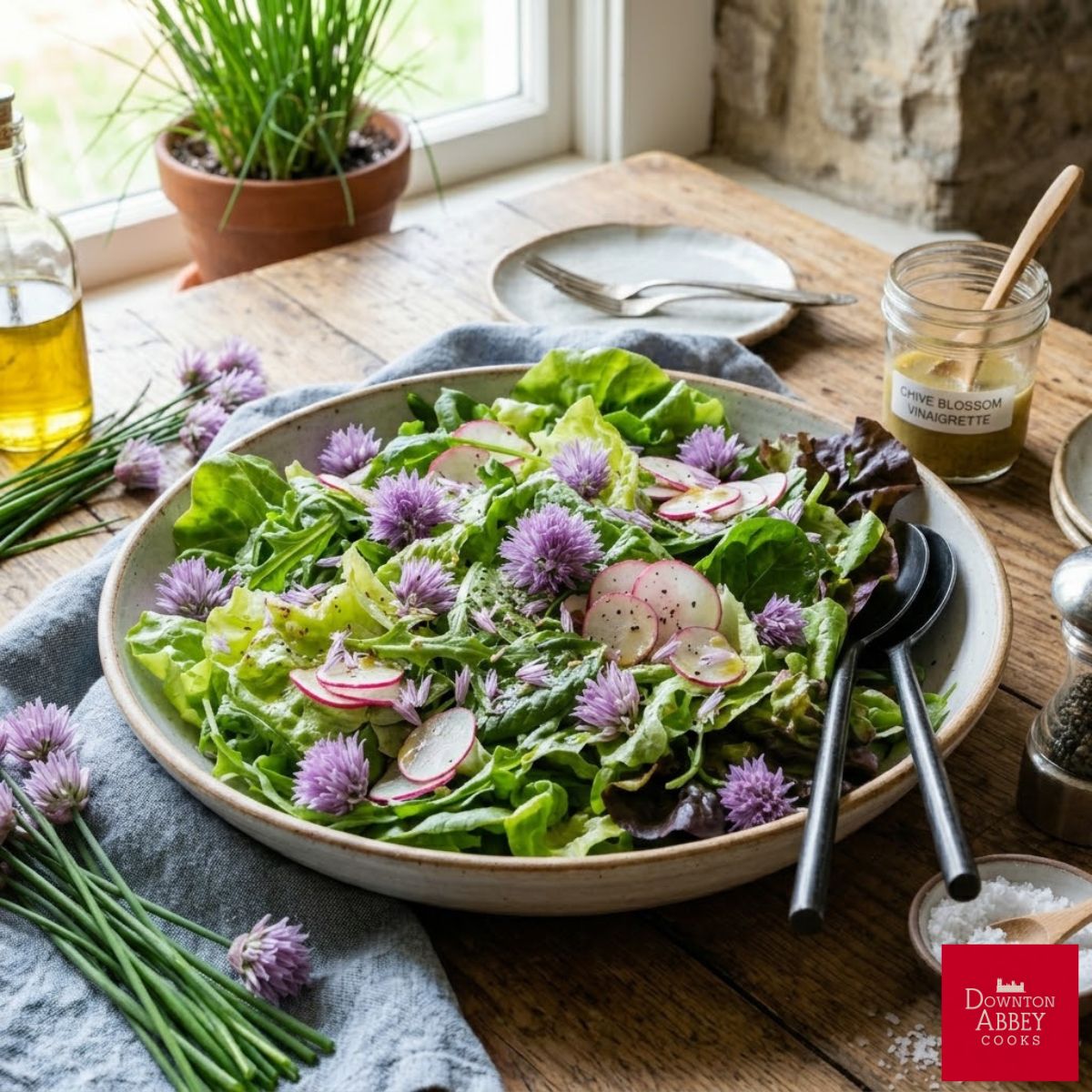 Greens, a simple vinaigrette, and a handful of chive blossoms scattered over the top. That’s it. What you get back is something that looks considered, tastes fresh and savoury, and comes together in the time it takes to wash the lettuce.
The Green Salad Has an Old Pedigree
Salads have been on the table in Britain and France for centuries. By the Tudor period, what they called a “sallet” was a serious dish: greens, herbs, alliums, and edible flowers, dressed with oil and vinegar. Chives were a standard ingredient.
The Edwardians simplified the concept considerably, but kept the essential logic. In a formal ten-course Edwardian dinner, the salad course came toward the end of the meal, between the roast and the dessert. It was deliberately plain: a simple bed of greens with a light dressing, intended to cleanse the palate and help digestion. No heavy toppings, no elaborate garnishes.
What the Edwardian table understood is that a good salad does not need much. It needs good greens, a well-made dressing, and something interesting on top. The chive blossom fills that last role beautifully.
Why the Dressing Matters More Than You Think
A green salad is only as good as its vinaigrette. There is nowhere to hide.
The classic ratio is one part vinegar to three parts oil, with a small amount of mustard to help the emulsion hold. Beyond that, the variables are few: what vinegar you use, what oil, and whether you season it properly.
For this salad, chive blossom vinegar is the obvious choice if you have it. The savoury, oniony note in the vinegar echoes the blossoms on top and pulls the whole thing together. If you do not have chive blossom vinegar, a good white wine vinegar works well. What you want to avoid is anything too sharp or too sweet.
The mustard is not optional. It holds the dressing together and adds a faint background warmth that greens need.
Season the dressing, not just the salad. Underdressed and under-seasoned is the single most common reason a green salad disappoints.
A Few Notes on the Greens
Butter lettuce is the most Edwardian choice and still an excellent one. It is soft, mild, and holds a light dressing well without wilting immediately. Mixed greens work well too. What you want to avoid is anything too robust or bitter, like kale or radicchio, which will fight with the delicate flavour of the blossoms.
Dress the greens lightly and at the last minute. A dressed salad sitting on the table for ten minutes is already past its best.
What to Add If You Want to Make It More Substantial
The base recipe is a side dish. It pairs well with grilled chicken, cold poached salmon, a spring frittata, or a cheese board.
If you want to serve it as a light lunch, a few additions work well:
- Shaved radish adds crunch and a peppery note
- Soft-boiled egg adds richness and makes it a meal
- Crumbled feta adds salt and creaminess without overwhelming the blossoms
- Thinly sliced cucumber keeps it cool and fresh
Add one, not all four.
The Edwardian Connection
The kitchen garden at a house like Downton Abbey would have supplied the dining room with fresh greens and herbs from early spring through autumn. Chives were a reliable staple, and their blossoms would have been available in late May and June. Whether Mrs. Patmore scattered them over a salad or reserved them strictly for garnishing eggs and soups is hard to say. But a cook who knew her kitchen garden would not have ignored them.
Using seasonal ingredients without fuss or fanfare is not a modern food trend. It is simply good cooking. The Edwardians, whatever their excesses elsewhere, understood that.
One More Thing
Make the chive blossom vinegar first. The salad is good without it. It is better with it. And if you have already made a jar, this is exactly the kind of dish that justifies the wait.
Spring Green Salad with Chive Blossoms
Ingredients
- 5 oz mixed greens or butter lettuce
- 0.3 cups cup chive blossoms whole or florets separated
- 2 tbsp. chive blossom vinegar or white wine vinegar
- 4 tbsp. good olive oil
- 1 tsp. Dijon mustard
- 1/3 tsp. tsp flaky sea salt
- 1 pinch pinch cracked black pepper

Instructions
Make the Dressing
- Combine 2 tablespoons tbsp chive blossom vinegar (or white wine vinegar), 4 tablespoons tbsp good olive oil, 1 teaspoons tsp Dijon mustard, 1/3 teaspoons tsp flaky sea salt, and 1 pinch pinch cracked black pepper in a small jar. Shake well to emulsify. Taste and adjust seasoning.
Dress the Greens
- Place 5 oz mixed greens or butter lettuce in a large bowl. Drizzle with just enough dressing to lightly coat. Toss gently.
Add the blossoms and serve
- Transfer to a serving platter or individual plates. Scatter 0.3 cups cup chive blossoms, whole or florets separated over the top. Serve immediately.