
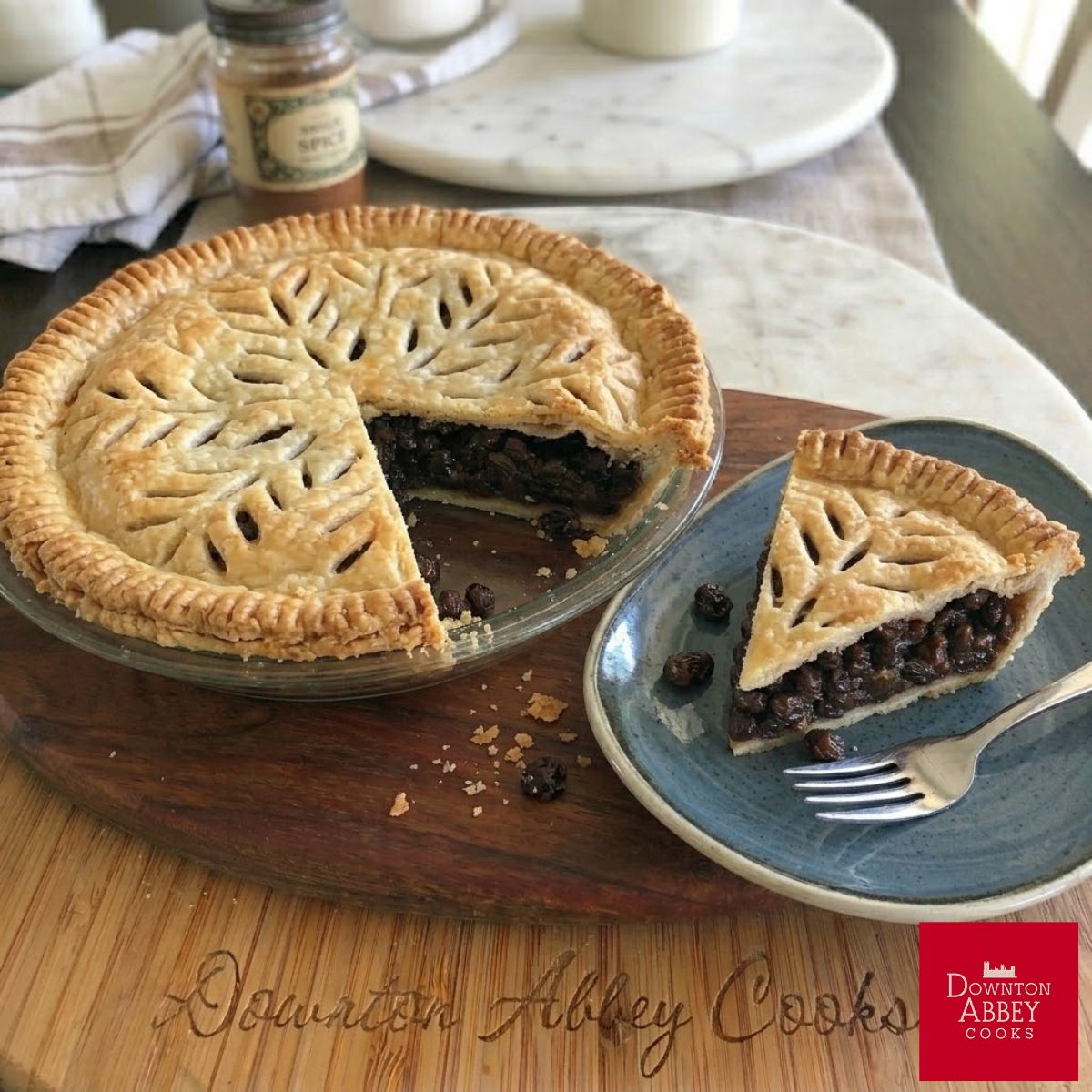
Raisin pie doesn’t get the credit it deserves. It has no glamorous origin story, no famous patron who made it fashionable. What it has is staying power. This pie shows up in medieval English kitchens, in the servants’ hall at grand Edwardian country houses, and in the farmhouses of the Canadian prairies and American Midwest, where it went by a name that says everything about its purpose: funeral pie.
The story of raisin pie is really the story of what people baked when fresh fruit was a luxury, a memory, or still months away.
Raisin Pie Starts in Medieval Britain
Long before sugar was affordable for most people, cooks relied on dried fruit to sweeten their food. Raisins, imported from the Mediterranean, were a kitchen staple in medieval England, used in everything from meat stews to pastry fillings. They were expensive enough to be a status symbol, but practical enough to be worth the cost: they kept for months without spoiling.
The earliest English cookbooks, including manuscripts from the 14th and 15th centuries, are full of dried fruit pies. These were not the neat crimped pastries we picture today. The pastry shell, called a “coffin,” was thick and sturdy, more of a container than a crust. The filling was often spiced with cinnamon, nutmeg, and cloves, sweetened with raisins or currants, and sometimes enriched with suet or eggs.
By the Tudor period (1485-1603), raisin-based pies and tarts were fixtures in both aristocratic and middling households. Thomas Dawson’s 1596 cookbook, The Good Huswife’s Jewell, includes dried fruit preparations that would be recognizable to any raisin pie baker today.
The Victorian and Edwardian Kitchen
By the 1800s, raisins had become far more affordable. The British Empire’s reach into the Mediterranean and, eventually, into California raisin production made dried grapes a working-class staple rather than a luxury. Raisin puddings, tarts, and pies appear throughout Victorian cookbooks, including Isabella Beeton’s enormously influential Book of Household Management (1861).
In the Downton Abbey era, 1912 to 1930, raisin pie would have been right at home below stairs. Mrs. Patmore’s kitchen relied on pantry staples that could be turned into something satisfying for the household staff. Raisins fit that brief perfectly: inexpensive, shelf-stable, and sweet enough to make a proper pudding or pie without fresh fruit.
Upstairs was a different story. By the Edwardian period, elaborate pastries and French-influenced desserts dominated the formal dinner table. But a good raisin tart, served at luncheon or as a family pudding on quieter evenings, would not have been out of place.
The foundation was always the same: plump raisins simmered with water, sweetened, spiced, and thickened, then poured into a double-crust pastry shell. Simple by design. Reliable by necessity.
Crossing the Atlantic: The Prairie and the Funeral Pie
When British and European settlers came to North America, they brought their kitchen traditions, including a reliance on dried fruit during long winters. In the American Midwest and the Canadian prairies, raisin pie became a genuine staple.
The reason was practical. Fresh fruit was seasonal at best, unavailable at worst. But raisins, shipped by rail, could be stored through months of harsh weather and turned into something comforting whenever the situation called for it.
That situation was often a death in the community.
The Pennsylvania Dutch and Amish communities of central Pennsylvania gave raisin pie its most memorable name: funeral pie. When a neighbour died, a pie needed to be brought quickly, often before anyone had time to shop. Every household kept raisins on hand. The pie could be made in under an hour, carried easily, and fed a crowd. It became the thing you brought, year after year, generation after generation, until the association was simply understood.
“Rosina pie” (from the German rosine, meaning raisin) is still baked in Amish and Mennonite communities today. The flavour is deeper than you might expect: a concentrated sweetness from the raisins, brightened with a splash of vinegar or lemon juice, and grounded by warm spice. It is not a sad pie. It is a generous one.
On the Canadian prairies, the same logic applied, minus the specific funeral tradition. Raisin pie was a harvest pie, a winter pie, a “we’ve run out of fresh fruit, but there’s a bag of raisins in the pantry” pie. It crossed ethnic communities because the ingredient was universal and the method required nothing special.
Why Raisins? The Short Answer
Raisins kept. That is the whole story in two words.
Before refrigeration, before reliable supply chains, before grocery stores on every corner, cooks built their repertoire around ingredients that did not spoil. Raisins could sit in a cool pantry for months. They needed no canning, no salt, no ice. They were sweet when sweetness was scarce, and they made any baked good feel substantial and special.
The 1912 founding of Sun-Maid Growers of California, which eventually became the world’s largest raisin cooperative, accelerated raisin pie’s popularity across North America. Affordable, consistent, and widely distributed, California raisins made what was once a thrifty improvisation into a beloved standard.
Frequently Asked Questions About Raisin Pie
What is raisin pie? Raisin pie is a double-crust pastry filled with a sweetened, spiced raisin mixture. The filling is typically made by simmering raisins with water, sugar, and spices (often cinnamon and nutmeg), then thickening with cornstarch or flour. It is a traditional North American and British dessert with roots dating back to medieval England.
Why is raisin pie called funeral pie? The name “funeral pie” comes from Pennsylvania Dutch and Amish communities in the United States, where raisin pie was traditionally made to bring to the home of the bereaved. Because raisins were shelf-stable and kept year-round in most pantries, the pie could be assembled and baked quickly without a trip to the store. It was a practical expression of care.
What is the history of raisin pie? Raisin pie traces its origins to medieval British baking, where dried fruit was used to sweeten pastry fillings before refined sugar was widely affordable. It remained a staple through the Victorian and Edwardian eras, and was carried to North America by British and European settlers. It became particularly embedded in prairie cooking and Pennsylvania Dutch communities throughout the 19th and early 20th centuries.
Is raisin pie a British or American dessert? Both. Raisin pie evolved from British dried-fruit baking traditions dating back to the medieval period. When settlers brought those traditions to North America, the pie adapted to local circumstances, especially the reliance on shelf-stable ingredients during long winters on the prairies. Today it is most commonly associated with North American heritage cooking, particularly Amish, Mennonite, and prairie communities.
What does raisin pie taste like? Raisin pie tastes deeply sweet, with the rich, jammy flavour of cooked raisins balanced by warm spice and a hint of tartness, often from vinegar or lemon juice. The filling is soft but not runny, and the double crust provides a satisfying contrast between flaky pastry and dense fruit.
What spices go in raisin pie? Classic raisin pie uses cinnamon and nutmeg. Some recipes add cloves, allspice, or a small amount of vanilla. The Pennsylvania Dutch version sometimes includes a splash of cider vinegar to cut the sweetness. Lemon juice and zest are also common for brightness.
A Pie Worth Reviving
Raisin pie never fully disappeared. It just got quieter, overshadowed by the fresh fruit pies and elaborate desserts that became possible with refrigeration and year-round produce. But the people who still make it, often from a recipe passed down without much fuss, know what they have.
It is a pie with depth. Not just in flavour, but in history. Every time someone pulls a raisin pie from the oven, they are connected to a very long line of practical, resourceful cooks who made something genuinely good from what they had on hand.
That is worth knowing before you take your first bite.
Old-Fashioned Raisin Pie
Equipment
Ingredients
- 3 cups seedless raisins
- 3 cups water
- 3/4 cups packed brown sugar
- 3 tbsp. cornstarch
- 1 tsp. ground cinnamon
- 1/2 tsp. salt
- 1 1/2 tbsp. fresh lemon juice
- 1 tbsp. lemon zest
- 1.5 tbsp. unsalted butter
- 1 double pie crust 9-inch (see notes)
- 2 tbsp. milk
- 1 tbsp. coarse sugar for sprinkling

Instructions
Simmer the raisins
- Combine the raisins and water in a saucepan. Bring to a boil and cook for 5 minutes to plump the raisins and build a flavourful liquid.
Thicken the filling
- In a small bowl, whisk together the brown sugar, cornstarch, ground cinnamon, and salt. Stir into the hot raisin mixture. Cook over medium heat, stirring constantly, until the mixture thickens and the liquid turns clear -- about 7 to 8 minutes
Finish and Cool
- Remove from heat. Stir in lemon juice, lemon zest, and unsalted butter. Let cool to room temperature before filling the crust. Do not skip this -- warm filling softens the pastry.
Assemble
- Preheat oven to 220°C (425°F). Line a 9-inch pie plate with the bottom crust. Pour in the cooled filling. Cover with the top crust, seal and crimp the edges, and cut a few steam vents in the top. Brush the top crust with milk l sprinkle with sugar.
Bake
- Place on the lower rack of the oven. Bake at 220°C (425°F) for 15 minutes, then reduce heat to 180°C (350°F) and bake for another 20 to 25 minutes until the crust is golden. Check at 15 minutes -- if the crust is already well browned, take it out rather than risk burning.