
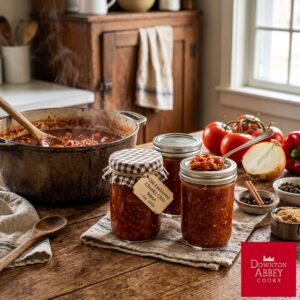
 Chili sauce is a spiced, tomato-based condiment that originated in the United States in the 1870s. It contains no chili peppers. The name refers to the old “chilli” spelling used by its earliest makers, not to heat.
What Is Chili Sauce?
Chili sauce is a thick, tomato-based condiment made with vinegar, sugar, onion, and warm spices like cinnamon, cloves, and allspice. It looks like ketchup and pours like ketchup, but it has more texture and a sharper, spicier profile. Despite the name, there is no chili pepper in the classic recipe. The heat, what little there is, comes from onion and spice, not pepper.
Who Actually Invented Chili Sauce?
Heinz gets the credit today, but Heinz was not first. In the 1870s and 1880s, two other companies were already bottling their own version. Eugene Durkee sold his out of New York. William Railton sold his out of Chicago. Both called it “chilli” sauce, and both packaged it in distinctive hexagonal and cathedral-square bottles.
Heinz saw a good product with a growing following and made his own. His version outlasted the competition and became the one people remember. That is the real story: chili sauce was a crowded field before Heinz ever bottled a drop.
The Real Origin: A Way to Not Waste Food
Before it was a brand, chili sauce was a solution to a problem every household had: too many tomatoes at the end of summer and no way to keep them from going to waste. Home cooks chopped up the last of the tomato, onion, and pepper harvest, added vinegar and sugar to preserve it, and simmered it down into something that would keep through winter.
This was not a luxury item. It was frugal, practical cooking. Nothing from the garden went in the compost pile if it could go in a jar instead. A big batch of chili sauce turned a glut of cheap, overripe produce into a condiment that made plain meals, cod cakes, roast beef, eggs, taste like something worth eating. One afternoon of simmering bought a family months of flavor for the cost of what was already growing in the yard.
That thinking still holds up. A homemade batch made the traditional way, whole tomatoes, onion, and pepper simmered down slow, costs a fraction of what a bottle costs at the store, and it uses up produce that is about to turn. If you have ever let tomatoes go soft on the counter because you did not know what to do with them, chili sauce was invented for exactly that moment.
The Modern Shortcut Version
Most bottled chili sauce today, Heinz included, is not made from whole tomatoes. It is built from tomato paste, water, vinegar, and sugar, simmered together and thickened fast. That is a convenience formula, not a frugal one. It trades the garden-glut logic of the original for a shelf-stable ingredient you buy at the store.
There is nothing wrong with that version. It is quick, it is close to what people expect from the bottle, and it is worth knowing how to make. Just do not confuse it with the original. The chunky, fresh-tomato version is the one with the frugal, no-waste pedigree. The smooth version is a modern shortcut wearing the same name.
Chili Sauce vs. Ketchup: What’s the Difference?
Ketchup is smooth, sweet, and mild. Chili sauce is chunkier, sharper, and spiced with cinnamon, clove, and allspice, flavors you would expect in a dessert before you would expect them in a condiment. Ketchup won out because it was simpler to make at industrial scale and had broader appeal. Chili sauce stuck around as the specialty item, the one people reach for in cocktail sauce, meatloaf glaze, and Bloody Marys.
Why Chili Sauce Fell Out of Fashion
By the mid-1900s, ketchup had taken over as the default table sauce. It was smoother, milder, and easier to sell to a wide audience. Chili sauce did not disappear. It just moved to the back of the pantry, pulled out for specific dishes instead of every meal. It never lost its usefulness. It lost its marketing.
Frequently Asked Questions
Is chili sauce spicy?
No. Classic chili sauce, including the Heinz version, contains no chili peppers and very little heat. The name is historical, not a description of spice level.
Did Heinz invent chili sauce?
No. Eugene Durkee and William Railton were both selling their own versions in the 1870s and 1880s before Heinz entered the market.
Is chili sauce American or British?
American. It has no British origin. It became popular in the United States in the late 1800s and early 1900s, the same period covered by Downton Abbey, but the dish itself is not English.
Why was chili sauce originally made at home?
It was a way to preserve the end-of-season tomato, onion, and pepper harvest before it spoiled. Making it at home from whole tomatoes cost far less than buying a prepared condiment, and it kept nothing from going to waste.
Is bottled chili sauce made from fresh tomatoes?
Not usually. Most modern versions, including store-bought bottles, start from tomato paste for speed and consistency. The original, homemade version used whole fresh tomatoes.
The Final Word
Chili sauce was never a luxury. It was a frugal, no-waste answer to a full garden and a tight budget, long before either of those was a hashtag. That is worth remembering the next time a batch of tomatoes is about to go bad on your counter.
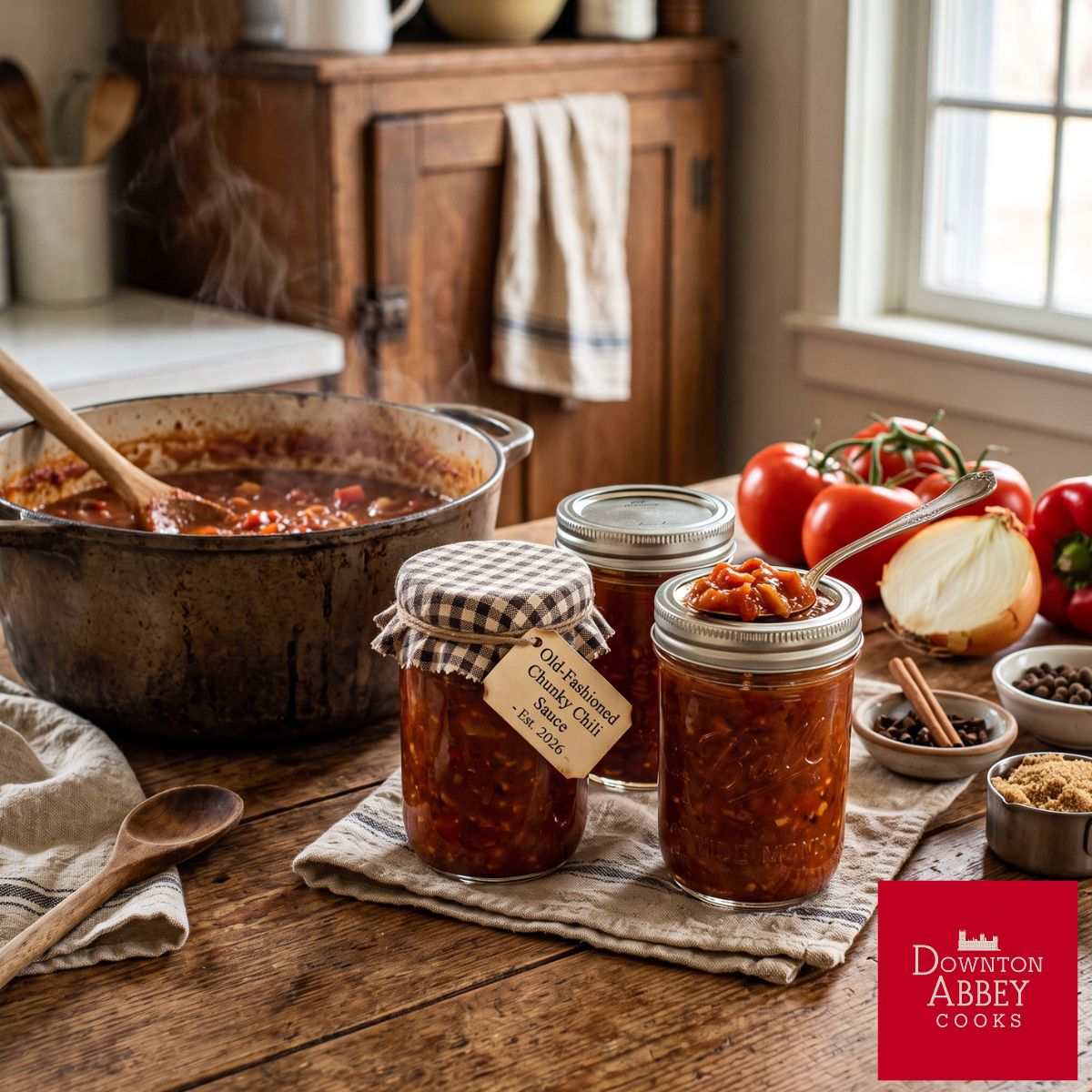
Old-Fashioned Chunky Chili Sauce
Equipment
- 1 heavy pot
Ingredients
- 3 lbs ripe tomatoes peeled and chopped
- 1 large large onion finely chopped
- 1 medium red bell pepper finely chopped
- 3/4 cup white or cider vinegar
- 1/2 cup brown sugar
- 1 tsp salt
- 1/2 tsp ground cinnamon
- 1/4 tsp ground cloves
- 1/4 tsp allspice
- 1/4 tsp cayenne optional, for real heat

Instructions
- Combine everything in a large, heavy pot. Simmer uncovered for 60 to 90 minutes, stirring often so it does not catch on the bottom.
- It is ready when a spoonful holds its shape on a plate instead of running.
- Ladle hot into clean jars.
Nutrition
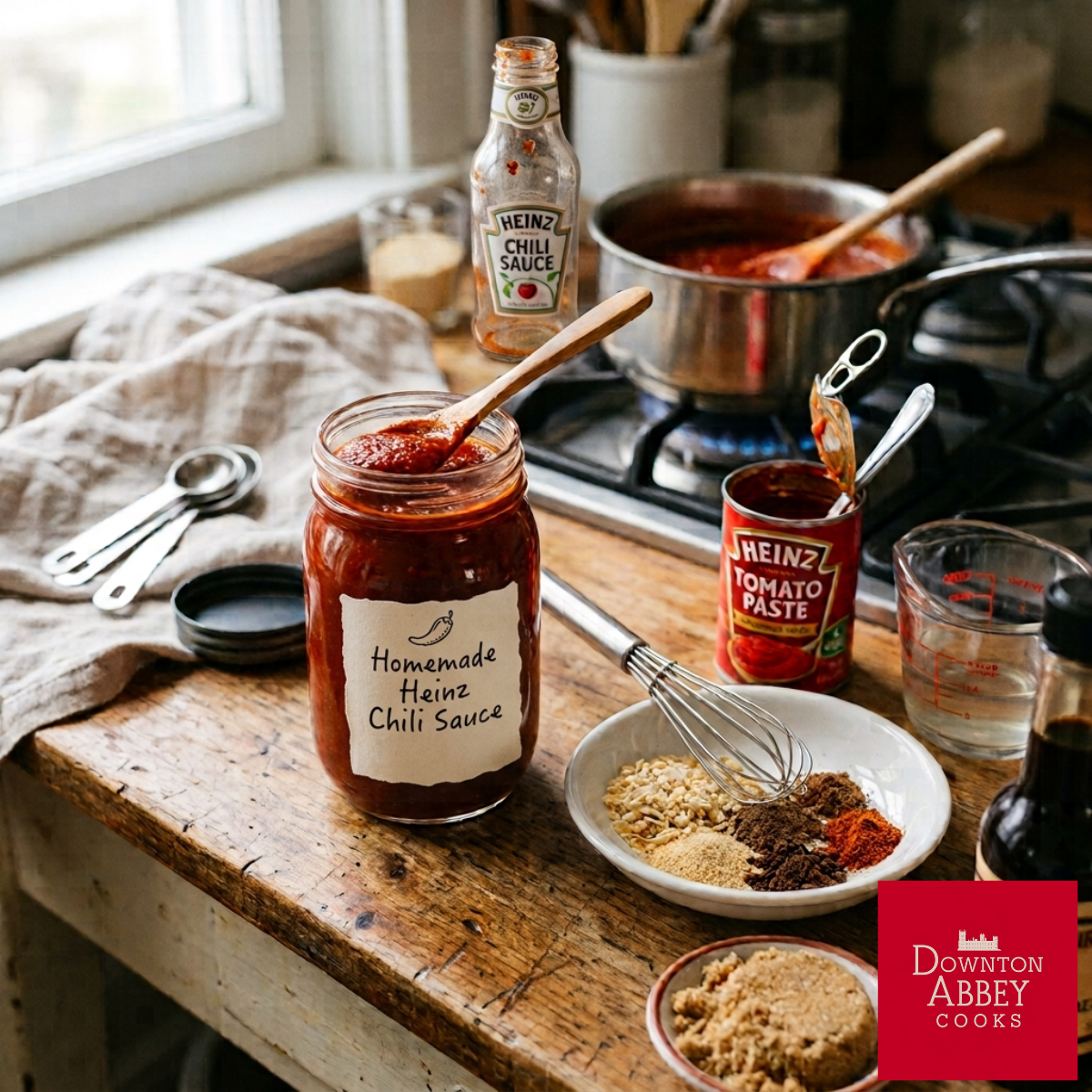
Modern Smooth Chili Sauce (Heinz-Style)
Equipment
Ingredients
- 1 can tomato paste 6 ounce
- 1/2 cup water
- 1/3 cup brown sugar
- 1/2 cup white vinegar
- 1 tbsp dried minced onion
- 1/2 tsp garlic powder
- 1/2 tsp Worcestershire sauce
- 1/4 tsp allspice
- 1/8 tsp ground cloves
- 1 Pinch of chili powder or cayenne salt to taste
Instructions
- Whisk all ingredients together cold in a small saucepan.
- Set over medium-low heat and simmer 10 to 15 minutes, stirring, until it coats the back of a spoon.
- Cool completely before bottling. Keeps in the fridge for several weeks.
Notes
- Brush it on meatloaf in the last 15 minutes of baking for a glaze that caramelizes without burning.
- Stir a spoonful into ketchup for a sharper dip with fries.
- Mix with horseradish and lemon for a shrimp cocktail sauce that puts the jarred stuff to shame.
- Add a splash to a Bloody Mary.
Nutrition