
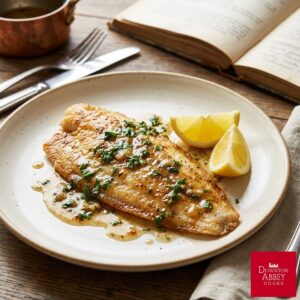
 It sounds like a dish you need a chef for. It is really just fish, flour, butter, and lemon. Here is the story of sole meunière and how to make the Gilded Age’s favourite fish course at home tonight.
Here is the secret hiding inside one of the most elegant fish dishes in the world: it is easy. Sole meunière carries a French name and a fine-dining reputation, yet it comes together in about 20 minutes with four humble ingredients. That gap between how grand it sounds and how simple it is, is exactly why Gilded Age New York loved it. Stay with me and you will be able to put a restaurant fish course on a weeknight table.
What “meunière” actually means
The name does the showing off, which is the whole point. “Meunière” means “in the style of the miller’s wife,” a nod to the light dusting of flour that gives the fish its golden crust. Flour was the miller’s trade, so the miller’s wife would have had it close to hand.
That is the entire technique in a phrase. Dust a delicate fillet in flour, cook it in butter until golden, and finish it with a nutty browned butter brightened by lemon and parsley. No stock, no sauce to build, no oven. The flour does two jobs: it gives the fish a clean, golden surface and it lightly thickens the butter into a glossy pan sauce.
Why the Gilded Age reached for it
Cross into the New York of the 1880s and everything on an elite menu was written in French. Delmonico’s, the restaurant that defined high-society dining under chef Charles Ranhofer, served sole many ways, and meunière was the accessible star.
It let a kitchen, or a hostess copying one, project French sophistication without a brigade of cooks. A dish with a French name and a golden finish looked like real money and real skill. In truth it asked for neither. That is the quiet joke of sole meunière. It performs luxury while being one of the simplest things a cook can make.
You can read more about the chef who set that French standard in America in my profile, Charles Ranhofer: The Chef Who Invented American Fine Dining.
The one rule that matters
If you take away a single thing, make it this: watch the butter.
The dish lives or dies on the browned butter, the beurre noisette. You melt fresh butter in the pan after the fish comes out and let it keep cooking until it foams, smells like toasted nuts, and turns golden brown. One moment past that and it burns. Pull it off the heat the second it smells nutty, add your lemon and parsley, and pour it over the fish. Master that thirty-second window and you have mastered the dish.
What fish to use
True Dover sole is European and expensive and hard to find in North America, so do not chase it. Lemon sole, petrale sole, or flounder all work beautifully. Even in the Gilded Age, American kitchens often used a local flatfish and called it sole. The technique matters far more than the species. Ask for thin, mild white fillets.
Sole meunière: quick answers
What is sole meunière? A classic French dish of sole fillets dusted in flour, pan-fried in butter, and finished with browned butter, lemon, and parsley. It takes about 20 minutes.
What does meunière mean? It means “in the style of the miller’s wife,” a reference to the light coating of flour used on the fish.
What is the difference between sole meunière and poached sole à la Delmonico? Meunière is floured and fried, then dressed with lemon butter, quick and everyday. The poached version is simmered in wine and cloaked in a cream and mushroom sauce, a slower, grander dinner-party dish.
What sole should I use? True Dover sole is European and hard to find in North America. Lemon sole, petrale sole, or flounder all work well.
A final thought
Sole meunière proves that elegance and effort are not the same thing. A little flour, good butter, and a squeeze of lemon turn a plain fillet into a dish worthy of Delmonico’s, in the time it takes to boil potatoes on the side. Watch the butter, work quickly, and serve it hot. You will taste why this simple fish course has stayed on the finest menus for more than a century.
For the full head-to-head of how Downton-era Britain and Gilded Age New York each served sole, see One Fish, Two Gilded Worlds. For the grand, sauced version, see Poached Fillets of Sole à la Delmonico.
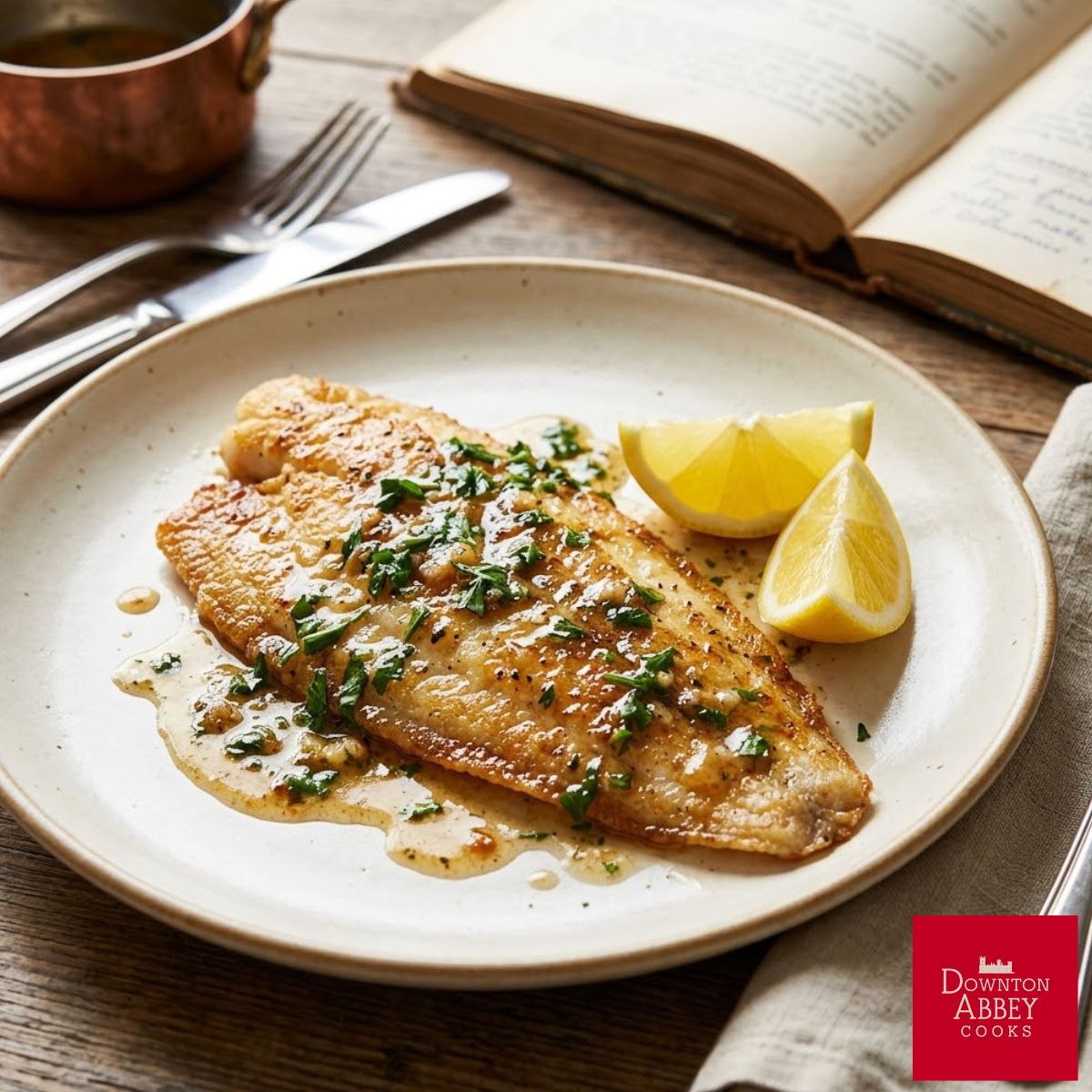
Sole Meunière, Delmonico Style
Ingredients
- 2 sole fillets lemon sole, petrale sole, or flounder, about 6 oz (170g) each
- 3 tbsp flour
- 1 pinch salt and white pepper
- 2 tbsp butter
- 1 tbsp oil
For the browned butter
- 3 tbsp butter
- 1/2 medium lemon juiced
- 1 tbsp fresh parsley chopped
- Lemon wedges to serve

Instructions
Cook the fish
- Pat the fillets very dry. Season with salt and white pepper, then dust lightly with flour and shake off the excess. Dry fish and a light coating are what give you a clean, golden crust.
- Heat the 2 tbsp butter with the oil in a wide pan over medium-high heat until the butter foams. The oil keeps the butter from burning.
- Lay the fillets in, presentation side down first. Cook for 2 to 3 minutes a side, until golden and just opaque through. Thin fillets need less time.
- Lift the fish onto warm plates and keep it somewhere warm.
Make the browned butter
- Wipe the pan if it looks dark, then add the 3 tbsp fresh butter. Let it melt and keep cooking until it foams, smells nutty, and turns golden brown. Watch it closely, as it goes from brown to burnt quickly.
- Take the pan off the heat and stir in the lemon juice and parsley. It will sizzle.
- Pour the browned butter over the fish. Add a lemon wedge and serve at once, while everything is hot.
Notes
Sole Meunière, Delmonico Style
Ingredients
- 2 sole fillets lemon sole, petrale sole, or flounder, about 6 oz (170g) each
- 3 tbsp flour
- 1 pinch salt and white pepper
- 2 tbsp butter
- 1 tbsp oil
For the browned butter
- 3 tbsp butter
- 1/2 medium lemon juiced
- 1 tbsp fresh parsley chopped
- Lemon wedges to serve
Instructions
Cook the fish
- Pat the fillets very dry. Season with salt and white pepper, then dust lightly with flour and shake off the excess. Dry fish and a light coating are what give you a clean, golden crust.
- Heat the 2 tbsp butter with the oil in a wide pan over medium-high heat until the butter foams. The oil keeps the butter from burning.
- Lay the fillets in, presentation side down first. Cook for 2 to 3 minutes a side, until golden and just opaque through. Thin fillets need less time.
- Lift the fish onto warm plates and keep it somewhere warm.
Make the browned butter
- Wipe the pan if it looks dark, then add the 3 tbsp fresh butter. Let it melt and keep cooking until it foams, smells nutty, and turns golden brown. Watch it closely, as it goes from brown to burnt quickly.
- Take the pan off the heat and stir in the lemon juice and parsley. It will sizzle.
- Pour the browned butter over the fish. Add a lemon wedge and serve at once, while everything is hot.