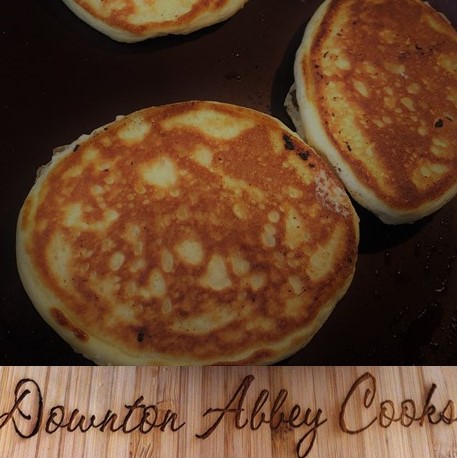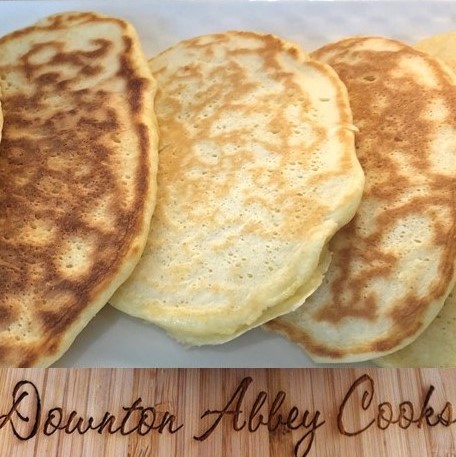
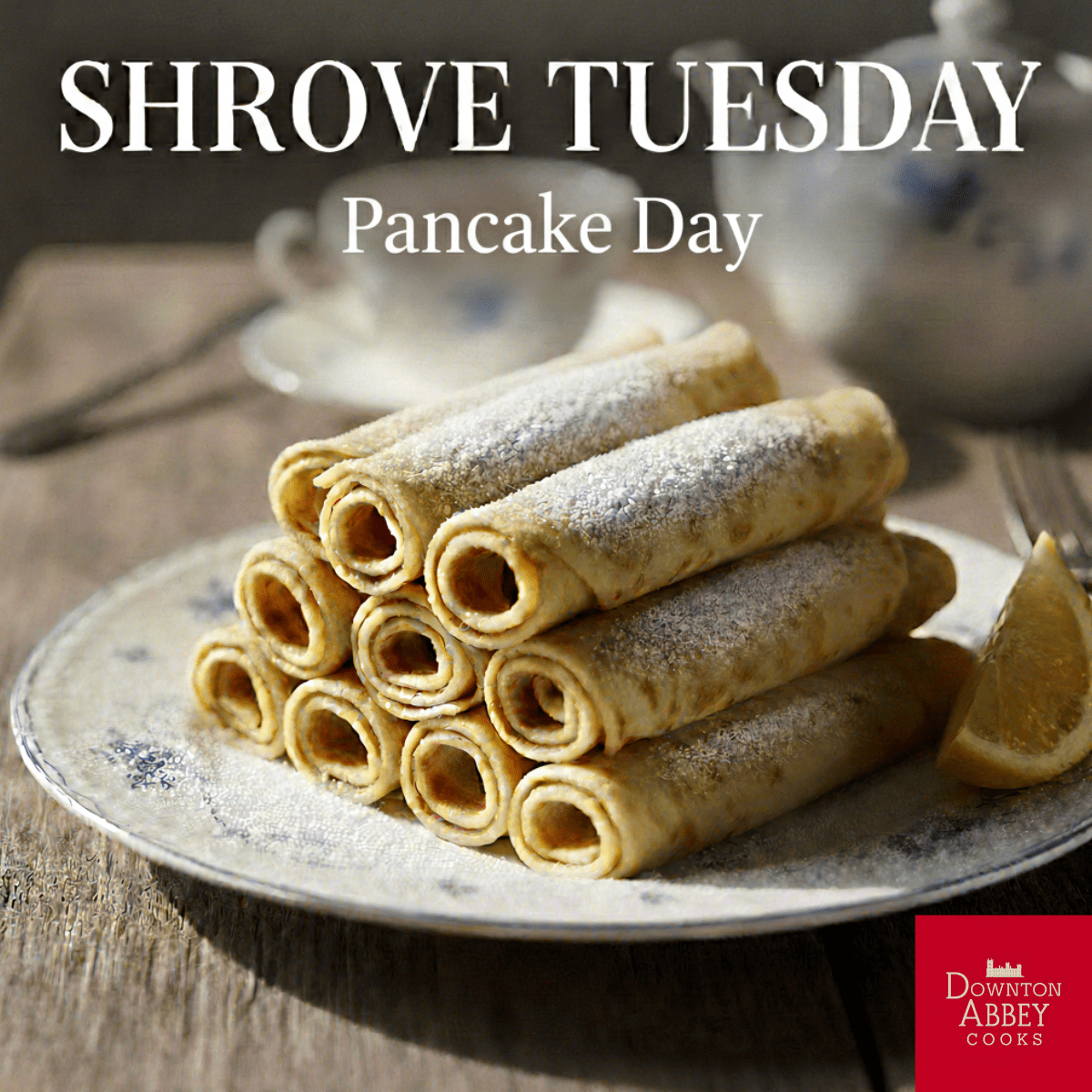
 Shrove Tuesday falls on February 17th in 2026, and across Britain, kitchens will fill with the smell of hot butter and the sound of sizzling batter. But this isn’t merely about breakfast food—Pancake Day carries centuries of tradition, religious observance, and domestic ritual that would have been as familiar to Mrs. Patmore in Downton Abbey’s kitchens as it is to modern home cooks.
As a food historian who has spent over fifteen years researching Edwardian culinary traditions, I find Shrove Tuesday particularly fascinating. It’s one of those rare occasions where upstairs and downstairs, rich and poor, all participated in the same food tradition—though, as we’ll see, in rather different ways.
What Is Shrove Tuesday? The History Behind Pancake Day
Shrove is the past tense of shrive, meaning to confess one’s sins and receive absolution. In medieval England, Shrove Tuesday was the final day before Lent—forty days of fasting, prayer, and penance leading to Easter. Christians would visit their parish priest to confess their sins, receive penance, and enter the Lenten season with a clean conscience.
But confession wasn’t the only business of the day. Pragmatic concerns demanded attention: what to do with all those eggs, butter, and milk that couldn’t be consumed during the Lenten fast?
The answer was elegantly simple. Combine them into pancakes.
The pancake has an ancient pedigree in British cookery, appearing in cookery manuscripts as early as 1439. By the Tudor period, Pancake Day had become a raucous celebration. The tradition of flipping pancakes was already well-established by 1619, when a popular verse captured the festive chaos:
“And every man and maide doe take their turne,
And tosse their Pancakes up for feare they burne.”
— Pasquil’s Palin, 1619
Shrove Tuesday vs. Mardi Gras vs. Fat Tuesday: What’s the Difference?
These terms all refer to the same day on the calendar—the Tuesday before Ash Wednesday—but reflect different cultural traditions.
Shrove Tuesday is the English term, emphasizing the religious practice of shriving (confession). The focus is on spiritual preparation for Lent.
Mardi Gras (French for “Fat Tuesday”) originated in Catholic France and spread to French colonies, most famously New Orleans. The emphasis is on indulgence and celebration before the fasting begins.
Fat Tuesday is simply the English translation of Mardi Gras, which is more commonly used in America.
Pancake Day is the informal British name, reflecting what has become the day’s most enduring tradition—far outlasting widespread Lenten fasting in modern secular Britain.
In Edwardian England, the household at Downton Abbey would have called it Shrove Tuesday, though the servants might well have referred to it as Pancake Day among themselves.
The Symbolism of Pancake Ingredients
The four essential pancake ingredients carry symbolic meaning that would have resonated with Edwardian Christians:
- Eggs represent creation and new life—fitting for a day of spiritual renewal before Lent, and pointing toward Easter’s promise of resurrection.
- Flour is the staff of life, the most fundamental food sustenance, reminding us of our dependence on God’s provision.
- Salt symbolizes wholesomeness and preservation. In biblical tradition, salt also represents covenant and incorruptibility.
- Milk signifies purity and innocence—the state Christians sought through confession before entering Lent.
These weren’t merely ingredients to Mrs. Patmore or her real-life counterparts. They were laden with meaning, connecting the mundane act of cooking to the sacred rhythms of the church year.
Shrove Tuesday at Downton Abbey: Upstairs and Downstairs
How would Pancake Day have been observed in a great Edwardian house like Downton Abbey? The answer depends entirely on whether you were above or below stairs.
In the Servants’ Hall
For the kitchen staff, Shrove Tuesday meant extra work but also rare treats. Mrs. Patmore would have been up before dawn, preparing batter and organizing the day’s meals. Daisy and the kitchen maids would have taken turns at the range, flipping pancakes for the servants’ breakfast and later for the nursery.
Servants typically enjoyed pancakes at their morning meal—a welcome change from the usual porridge or bread and dripping. The pancakes would have been simple: thin, lacy crêpes served with a squeeze of lemon and a sprinkling of sugar, rolled and eaten hot from the pan.
There might also have been a bit of fun. In many servants’ halls, the staff held their own pancake-flipping competitions, with forfeits for anyone who dropped their pancake on the floor. These small celebrations mattered enormously to people whose lives offered few holidays and little leisure.
In the Dining Room
The Crawley family would not have eaten pancakes for breakfast—such informality was beneath the dignity of the dining room. However, pancakes might appear at luncheon as a sweet course, or in the evening as a more elaborate preparation.
Wealthy households served crêpes Suzette, the famous French preparation flambéed in orange liqueur, or savory filled crêpes as a supper dish. The pancakes themselves were identical to those eaten downstairs, but the presentation and accompaniments reflected the family’s status.
Lady Grantham, with her American background, might have been familiar with the thicker, fluffier pancakes of her homeland—though she would never have suggested them for the Downton table. English pancakes are thin and delicate; American pancakes are an entirely different creature.
Religious Observance
The Crawleys, as Anglicans, would have observed Shrove Tuesday with church attendance, though formal confession wasn’t required in their tradition. The day still carried religious weight—a final moment of indulgence before the restraint of Lent.
For Tom Branson, however, Shrove Tuesday held deeper significance. As a Catholic, he would have been expected to go to confession before Lent began—the very act of “shriving” that gives the day its name. One imagines him slipping away to the Catholic church in Ripon while the rest of the family attended services at the village church. It’s a small detail, but a reminder that even within one household, religious observance varied.
Servants were typically given time to attend services, though the kitchen staff often had to work through, attending a later service if at all.
The following day, Ash Wednesday, marked the beginning of Lent. Meat would be restricted (particularly on Fridays), rich foods set aside, and a general atmosphere of restraint would settle over the household until Easter.
 The Great British Pancake Race
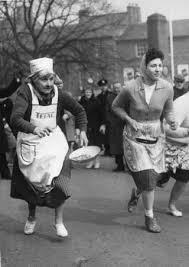
If eating pancakes wasn’t a celebration enough, the British turned it into a competitive sport.
Pancake racing has been held in villages across England since the 15th century. The most famous race takes place in Olney, Buckinghamshire, where women have competed since 1445.
Legend holds that a local woman was making pancakes when she heard the shriving bell calling her to confession. So rushed was she to reach the church that she ran through the streets still clutching her frying pan, pancake and all. Her neighbors found this so amusing that they made it an annual event.
The rules are strict: competitors must be women aged 18 or over who have lived in Olney for at least three months. They must wear an apron and headscarf, and flip their pancake at least three times during the 415-yard race from the Market Place to the Church of St. Peter and St. Paul. The winner receives a “Kiss of Peace” from the verger and, more importantly, eternal bragging rights.
Since 1950, Olney has competed against Liberal, Kansas, in an international pancake race. The two towns compare times, and the faster town holds the title until the following year. As of 2025, Liberal leads Olney 41-31.
Tips for Perfect Pancakes: Wisdom from the Edwardian Kitchen
Mrs. Patmore would have known these techniques instinctively, passed down from cook to cook through generations of kitchen training.
Add liquid slowly. Pour in your milk and eggs gradually, whisking constantly to prevent lumps. A smooth batter makes a smooth pancake.
Rest the batter. Twenty to thirty minutes minimum. This allows the flour’s starches to swell and relax, producing a more tender pancake with better texture. Mrs. Patmore would have mixed her batter first thing, letting it rest while she attended to other breakfast preparations.
Heat the pan properly. The pan should be hot enough that a drop of batter sizzles immediately but doesn’t burn. Between pancakes, let the pan recover its heat—impatient cooks yield pale, soggy results.
Use the right fat. Butter gives the best flavour but burns easily. Clarified butter or a mixture of butter and oil provides butter flavour with better heat tolerance. A well-seasoned pan needs only the lightest coating.
Flip with confidence. A hesitant flip produces a folded pancake. Commit to the motion—a sharp forward thrust of the wrist, then catch. If you’re nervous, a spatula works perfectly well. Mrs. Patmore wouldn’t have judged you; efficiency mattered more than showmanship in a working kitchen.
British Pancakes vs. American Pancakes
A note for my North American readers: British pancakes are not what you might expect.
English pancakes are thin, similar to French crêpes. They’re made from a simple batter of flour, eggs, and milk, cooked in a very thin layer until golden and slightly crispy at the edges. They’re served flat or rolled, with lemon juice and caster sugar as the traditional accompaniment.
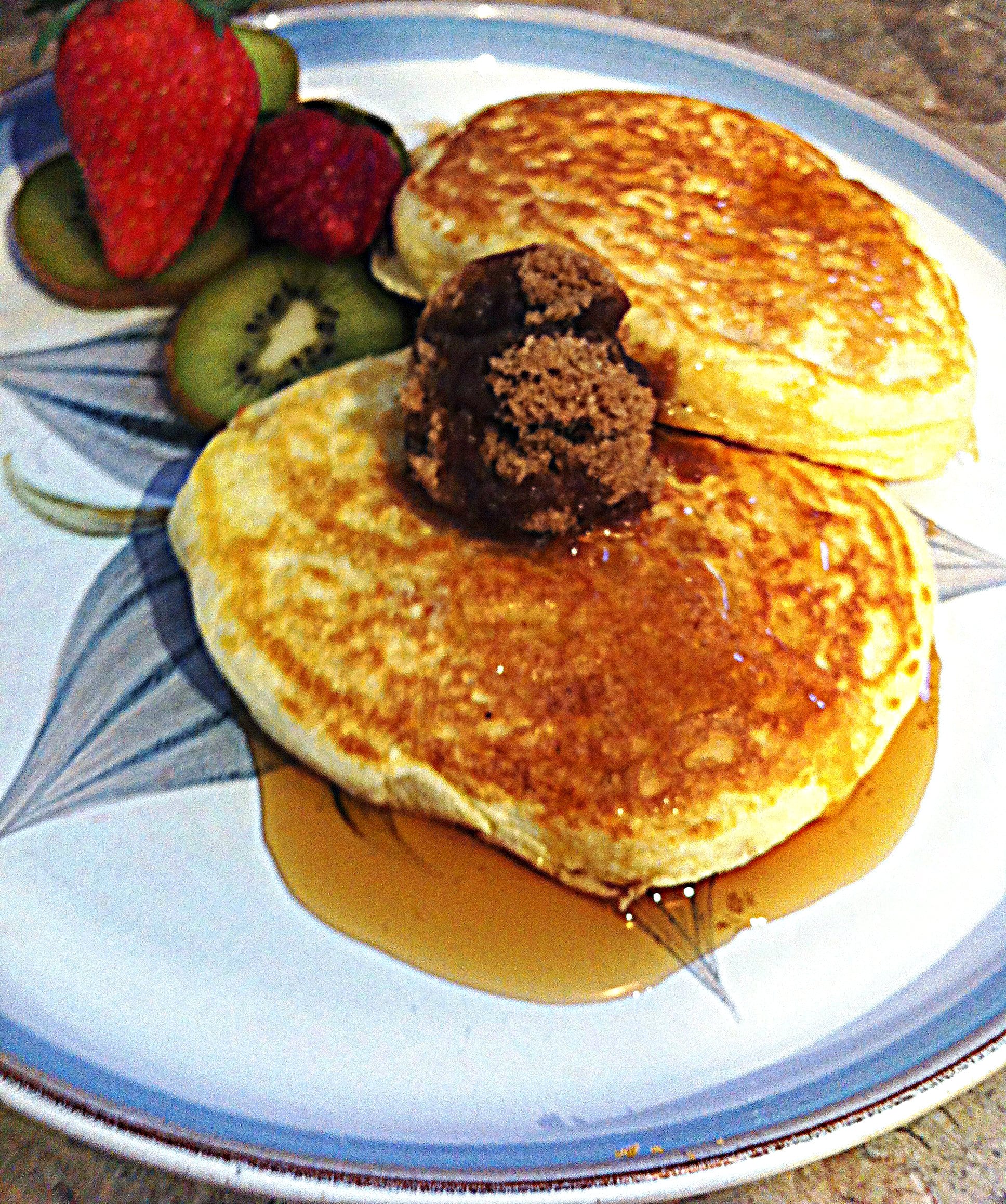
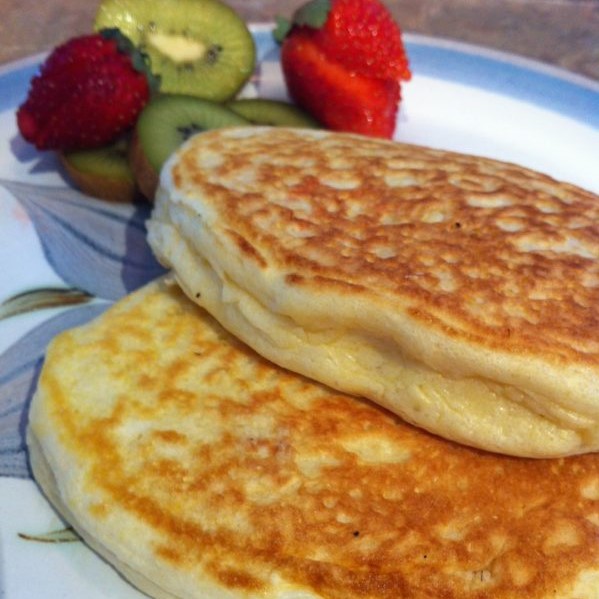
American pancakes (also called flapjacks or hotcakes) are thick, fluffy, and risen with baking powder or baking soda. They’re served stacked, with butter and maple syrup.
Both are delicious. Neither is “correct.” They’re simply different traditions. At Downton Abbey, only the British version would have appeared—though Carson might have raised an eyebrow at any pancake consumption in the dining room regardless of style.
Pancake Day Recipes to Try
I’ve developed numerous pancake recipes over the years, from traditional English pancakes to modern variations that Mrs. Patmore might have found intriguing (and possibly scandalous).
For traditionalists: Try the thin British Pancake for a change, or my Drop Scones (Scottish Pancakes) recipe, which yields the small, thick pancakes beloved at tea time. Perfect with butter and jam.
For health-conscious cooks: Try my Fluffy Low-Fat Pancakes or Keto Pancakes—proof that dietary restrictions needn’t mean sacrificing Pancake Day.
For something different: My Lemon Ricotta Pancakes bring Italian influence to the British tradition, while Orange Fluffy Pancakes add bright citrus flavour.
For savoury lovers: Zucchini Pancakes make an excellent light supper, dressed with sour cream and fresh herbs.
When Is Shrove Tuesday? Calculating the Date
Shrove Tuesday is a movable feast, falling on a different date each year because it’s tied to Easter. It always falls 47 days before Easter Sunday, so it can occur between February 3rd and March 9th.
Upcoming Shrove Tuesday dates:
- 2026: February 17
- 2027: February 9
- 2028: February 29
- 2029: February 13
- 2030: March 5
Frequently Asked Questions
Why do we eat pancakes on Shrove Tuesday? Pancakes provided a practical way to use up eggs, butter, and milk before the Lenten fast, when these rich foods were traditionally forbidden.
What is the difference between Shrove Tuesday and Pancake Day? They’re the same day. Shrove Tuesday is the traditional religious name; Pancake Day is the informal British term emphasizing the food tradition.
Are Shrove Tuesday and Mardi Gras the same? Yes, they fall on the same day. Shrove Tuesday is the English term; Mardi Gras is French, meaning “Fat Tuesday.”
What did Edwardians eat on Shrove Tuesday? Servants typically ate simple pancakes with lemon and sugar at breakfast. Wealthy families might enjoy crêpes Suzette or savoury-filled pancakes as part of a luncheon or dinner.
Why are British pancakes different from American pancakes? British pancakes follow an older European tradition of thin, unleavened crêpes. American pancakes developed separately, incorporating chemical leavening for a thicker, fluffier result.
When is the Olney Pancake Race? The Olney Pancake Race takes place every Shrove Tuesday at 11:55am. In 2026, that’s February 17th.